
MP: Democracy Must Be Guarded So It Does Not Lose Its Decency
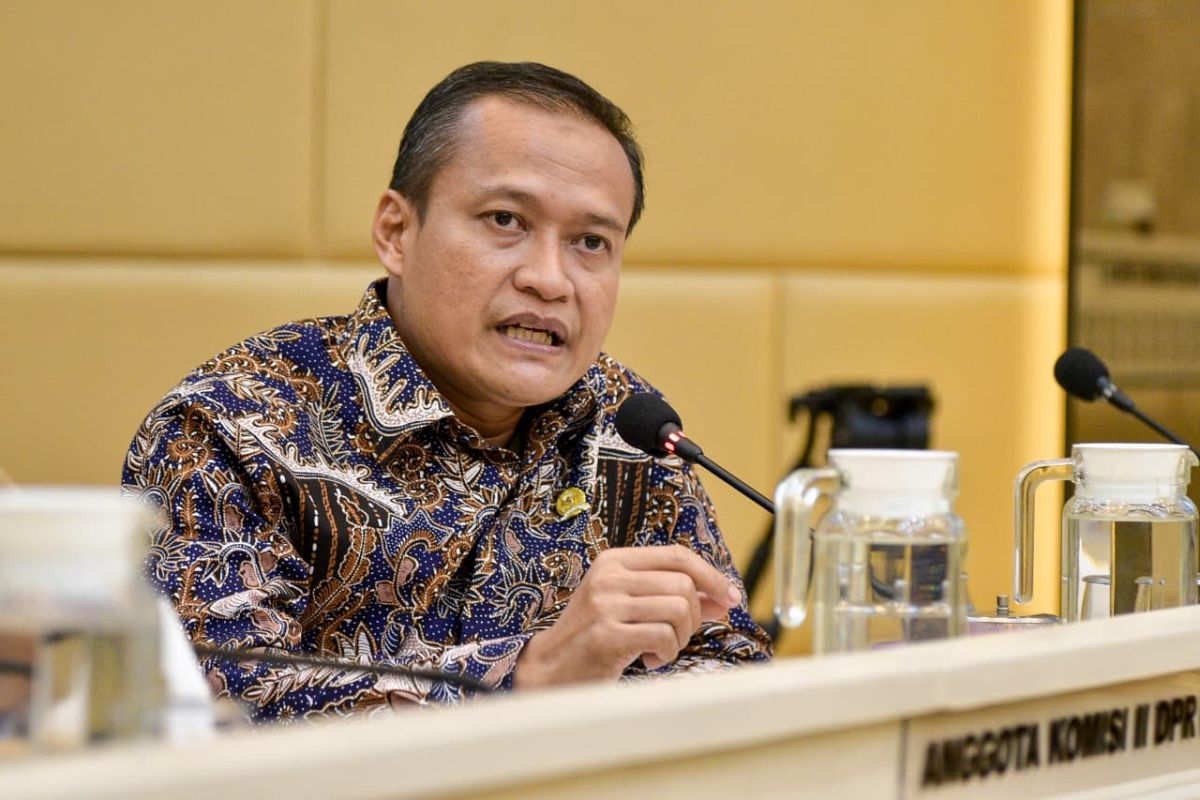
Jakarta (ANTARA) - Member of Commission II of the House of Representatives (DPR) Azis Subekti has reminded the public that democracy is not sufficiently safeguarded by freedom of speech alone, but must also be accompanied by decency, moral responsibility, and a willingness to seek the truth. Azis assessed that one of the major challenges of modern democracy is the decline in the quality of public conversation, even as spaces for freedom become increasingly open. “Democracy gives people the right to speak, but democracy never guarantees that people will use that right properly,” Azis said in a statement in Jakarta on Monday. According to him, this phenomenon is not unique to Indonesia but is also evident in various other democratic countries, including the United States and several European nations facing political polarisation, populism, and a crisis of trust in public institutions. Azis noted that the dynamics of Indonesia’s public sphere in recent years require collective reflection. He stated that criticism of the government is an essential part of democratic life. Demonstrations, media oversight, and the views of academics, activists, students, and civil society are healthy elements within a democracy. However, he cautioned that not all expressions in the public sphere can be classified as constructive criticism. “The problem arises when criticism loses its intention to improve and leaves only a desire to destroy,” he said. Azis drew a distinction between criticism and hatred. According to him, criticism asks what needs to be fixed, requires data, seeks solutions, and strengthens democracy. Hatred, on the other hand, tends to seek targets, requires no strong argumentation, and can erode democracy from within. He also highlighted the role of social media in accelerating the spread of anger. Azis noted that algorithms often give more space to information that provokes emotion rather than to complete and balanced explanations. “Anger spreads faster than wisdom. Accusations travel quicker than clarifications,” he said. In the Indonesian context, Azis noted that the current government is undergoing a phase of significant change, ranging from downstreaming natural resources, achieving food self-sufficiency, strengthening the defence industry, bureaucratic transformation, and digitising government services, to restructuring state revenue and managing strategic assets and resources. He stressed that any major policy can naturally be criticised, its effectiveness questioned, and its implementation tested. However, differences of opinion should not devolve into slander, insults, or character assassination. “People may disagree on the methods and execution. People may criticise its effectiveness. People may question the results. That is a democratic right,” he said. Azis also called on the Indonesian public, particularly Muslims, to recall the moral message in Surah Al-Hujurat, which emphasises the importance of verifying information, the prohibition of mockery, the prohibition of prejudice, and the necessity of building peace during conflict. He argued that these values are highly relevant to the modern public sphere, especially when unverified information can spread rapidly and damage a person’s reputation. “Democracy is not merely the right to speak. Democracy is the ability to use freedom without losing decency,” he said. Azis concluded that the great task of today’s generation is not only to keep democracy alive but also to ensure it retains its soul. “A democracy that meets with decency, knowledge, and wisdom will give birth to a nation mature enough to correct itself without destroying one another,” he said.