
MP Criticises Proposal to Move Women's Carriages on KRL: It Won't Reduce Collision Risks
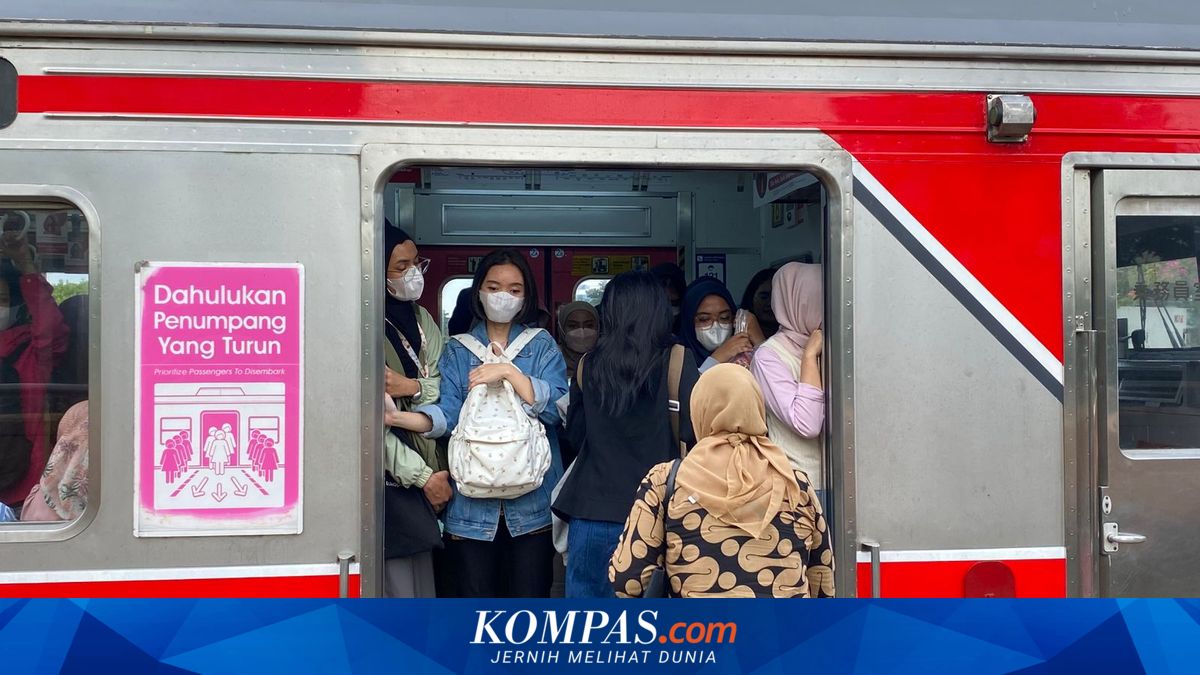
JAKARTA, KOMPAS.com - A member of Commission VIII of the House of Representatives from the Golkar faction, Derta Rohidin, has highlighted the proposal by the Minister of Women’s Empowerment and Child Protection (PPPA), Arifah Fauzi, to move the women’s exclusive carriage on KRL trains to the middle, rather than at the very back and front.
Derta emphasised that changing the position of the women’s carriage will not reduce the risk of collisions between trains.
“Based on data from the Ministry of Transportation in recent years, most train accidents in Indonesia are still triggered by human error and operational system disruptions, not by the configuration of passenger carriage positions. This means that changing the position of the women’s carriage does not directly reduce the risk of inter-train collisions,” said Derta in his statement on Wednesday (29/4/2026).
However, Derta stressed that the proposal does not touch on the actual root problems related to the current railway system governance.
“Such accident incidents are not just about operational technicalities, but also concern the governance of the railway system, which must be continuously improved comprehensively,” he explained.
Derta explained that the placement of women’s carriages is essentially an affirmative policy to provide a sense of security from potential harassment or gender-based violence in public spaces.
However, in the case of train accidents, the determining factors for safety are more related to the signalling and inter-train communication systems, operational discipline and safety procedures, the quality of rail infrastructure and train control technology, as well as integrated train traffic management between KRL and long-distance intercity trains.
“It could even create a misleading perception in society that women’s safety in public transportation can be sufficiently addressed by arranging carriage positions,” said Derta.
According to Derta, protection for women in public spaces must encompass broader aspects, such as preventing sexual harassment, effective surveillance systems, quick responses to victim reports, public education on ethics, and shared security.
Derta then urged the need for a comprehensive audit of the railway system, starting from signalling systems, inter-train communication, and operational controls to ensure there are no risk gaps.
“Public transportation safety is a shared responsibility that cannot be simplified to just one aspect. We certainly support the protection of women in public spaces. But the policies taken must be on target and based on the root problems,” he stated.
Previously, the Minister of Women’s Empowerment and Child Protection (PPPA), Arifah Fauzi, proposed moving the position of the exclusive women’s carriage on KRL Commuter Line to the middle of the train set.