
MP Backs 60-Day Oil Reserve Target, Explaining the Rationale
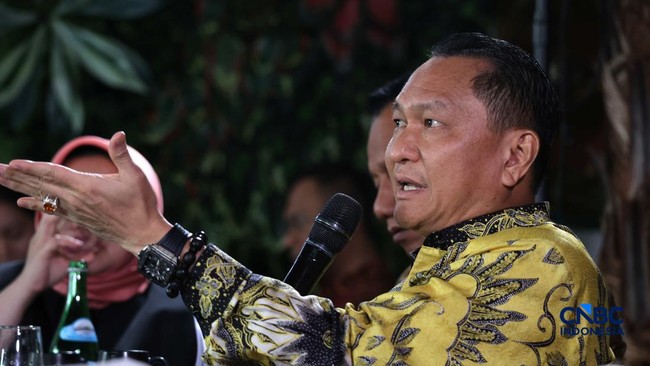
Jakarta, CNBC Indonesia — Bambang Patijaya, deputy chairman of the Golkar Party faction in the House of Representatives (DPR), has backed Energy and Mineral Resources Minister Bahlil Lahadalia’s plan to increase national oil storage capacity to the equivalent of 60 days’ demand. He said the policy was a strategic move to strengthen national energy resilience amid geopolitical uncertainty and fluctuations in global oil supplies.
“Energy security is determined not only by production capacity, but also by the readiness of storage infrastructure and energy reserves. That is why a target of oil storage capacity equivalent to 60 days is an important step towards strengthening the security of national energy supplies,” Bambang said in Jakarta on Thursday (5 November 2026).
Bambang, who represents the Bangka Belitung constituency, said plans to build crude oil storage facilities in several parts of Sumatra should be followed up promptly. The Energy and Mineral Resources Minister has said the project’s feasibility study is complete and the government will begin site inspections at the end of 2026.
Bambang said Indonesia’s dependence on oil supplies from abroad made it increasingly important to expand storage capacity. Adequate facilities would give the government greater flexibility to manage supplies, anticipate distribution disruptions and respond to volatility in global energy markets, he said.
He added that stronger oil storage infrastructure should be aligned with the implementation of Presidential Regulation No. 96 of 2024 on Energy Buffer Reserves (CPE). The regulation provides for the supply and management of national energy reserves, including crude oil, petrol and liquefied petroleum gas (LPG), as part of efforts to ensure national energy security.
Bambang said oil storage facilities in Sumatra could also create investment opportunities and strengthen the national energy and logistics industrial ecosystem. This would support the government’s previously promoted ambition to develop Indonesia into an oil storage hub for the ASEAN region.
“We want this infrastructure development not only to strengthen national energy reserves, but also to deliver broader economic benefits. Indonesia has a strategic geographical position from which to develop competitive energy storage and logistics infrastructure in the region,” Bambang said.