
Mourners Weep as Ayatollah Khamenei's Coffin Displayed for First Time
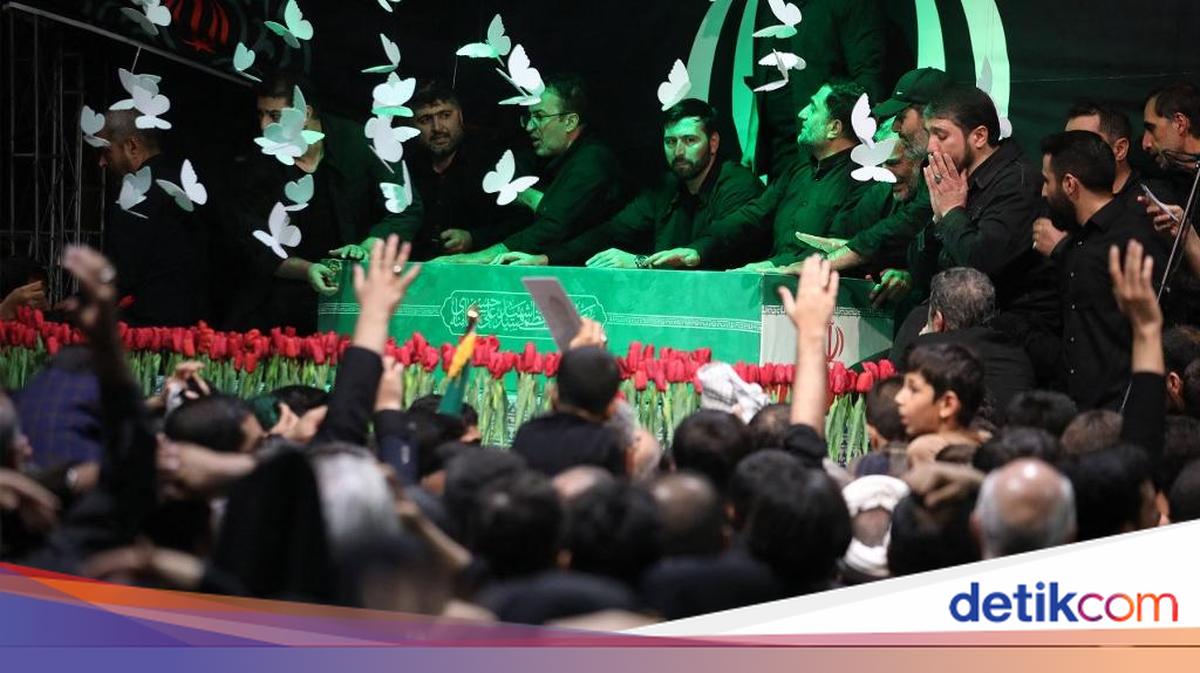
The coffin of Iran’s former Supreme Leader, Ayatollah Ali Khamenei, was presented to the public for the first time, with mourners weeping during the procession following his death in a US-Israeli airstrike at the end of February. According to reports on Saturday (4/7/2026), the mourners not only wept but also chanted religious slogans. Photographs released by Iranian media, as reported by AFP and The National News on Friday (3/7), showed mourners carrying Khamenei’s coffin, draped in the Iranian flag, as it entered the Grand Mosalla, officially known as the Imam Khomeini Mosalla, where the ceremony was held. Other images showed crowds dressed in black attending the pre-funeral event, with the coffin placed against a backdrop of red flowers and hanging white butterfly decorations. The coffin’s first public appearance occurred on Thursday (2/7) local time, when it was placed beside a husseiniyeh at the Grand Mosalla. The pre-funeral event, organised for the families of armed forces members and staff of the Supreme Leader’s office, allowed these selected groups to view the coffin for the first time. A spokesman for the funeral committee stated that the event provided an opportunity for the families of those who fell in the conflict to pay their final respects. The ceremony was largely restricted to invited guests, though state television broadcast the footage. Public funeral rites are set to commence on Saturday (4/7), with Khamenei’s body to lie in state at the Grand Mosalla complex in central Tehran, alongside the remains of family members also killed in the attack. The public will be able to pay their respects during farewell ceremonies scheduled for Saturday and Sunday in the capital. Tehran’s mayor described the upcoming events as the largest gathering in the capital’s history. The six-day funeral procession honours the man who served as the Islamic Republic’s linchpin for 37 years. Khamenei, 86, was killed along with several family members when a missile strike hit his residential and office complex in central Tehran on the first day of the Iran war, triggered by US and Israeli attacks on 28 February. The condition of the remains and the details of their recovery remain unknown. The final tribute, originally planned for early March, was postponed due to the war. Authorities announced the mourning schedule only after Washington and Tehran agreed to a fragile ceasefire, with organisers stating the events aim to strengthen national unity, though their effectiveness remains in question.