
Mount Sinabung Erupts, 650 Residents Affected and Schools Evacuated
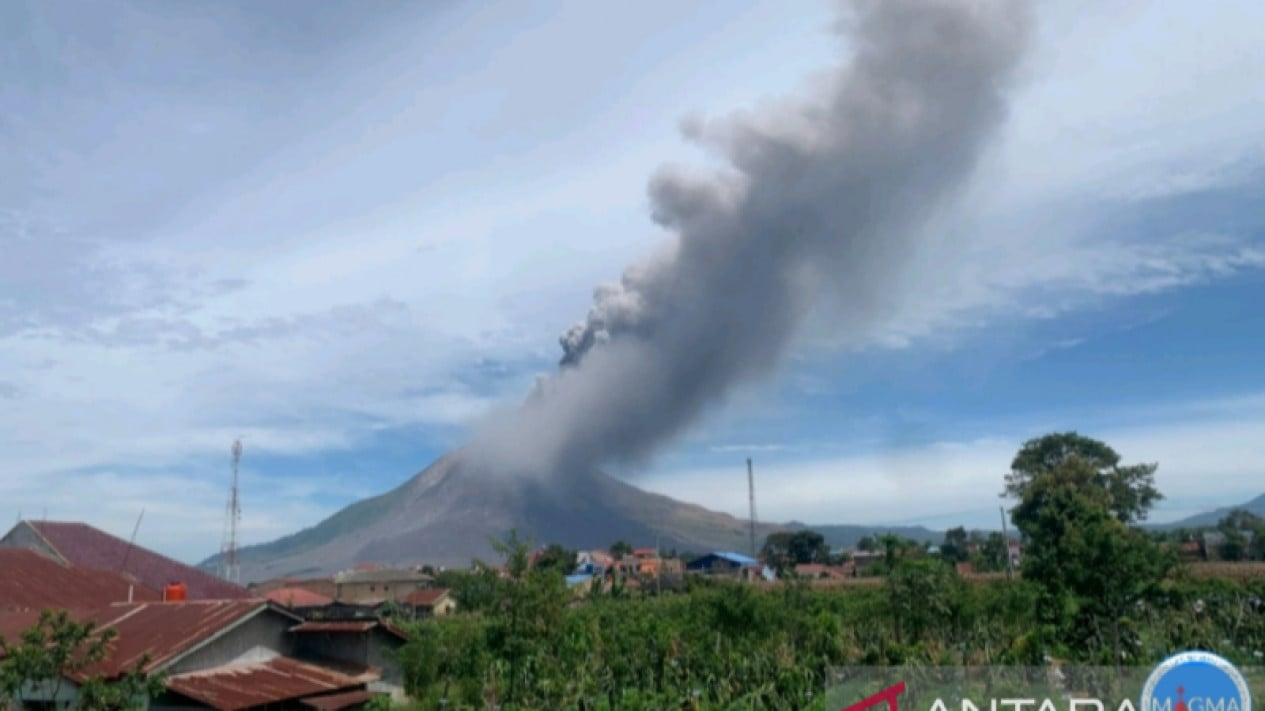
The activity of Mount Sinabung in Karo Regency, North Sumatra, has once again become a major concern. Several areas have been affected by volcanic ash following an increase in volcanic activity since the eruption on Monday, 31 August 2026.
Local government and relevant agencies are currently directing residents in the affected areas to move to safer locations. As of Friday, 4 September 2026, approximately 208 families, or 650 individuals, have been recorded as displaced persons.
Of this number, around 405 individuals are still located at the Jambur Arih Ersada Evacuation Post in Sukatepu Village, Naman Teran District. Local government data is being continuously updated to ensure the needs of the affected residents can be met.
“The activity of Mount Sinabung previously increased following the eruption on 31 August 2026 at approximately 12:00 WIB. At that time, the eruption column reached about 3,500 metres above the peak, or approximately 5,960 metres above sea level (masl),” said the Acting Head of the Disaster Data, Information, and Communication Centre of BNPB, Berton Panjaitan, on Saturday, 5 September 2026.
Based on visual and instrumental monitoring, the status of Mount Sinabung was subsequently raised from Level II (Alert) to Level III (Siaga/Standby) on 31 August 2026 at 12:30 WIB.
The impact of the volcanic activity has been felt in several areas, including Ndokum Siroga Village and Kuta Tengah Village in Simpang Empat District, as well as Payung Village in Payung District.
Residents of Kuta Tengah Village have been temporarily directed to evacuate to Sukatepu Village, Naman Teran District. Volcanic ash has also begun to impact local agricultural land.
However, the extent and level of damage to the land are still being assessed by the relevant authorities. The Karo Regency Regional Disaster Management Agency (BPBD) has taken several steps to assist the community.
One of these measures includes distributing masks to residents affected by volcanic dust. Mitigation efforts also include spraying water in areas with high population density and heavy traffic, including the centre of Berastagi.
“The local government has also activated public kitchens to meet the community’s consumption needs three times a day. Clean water and sanitation needs at the evacuation sites are also being prepared,” he added.
Supervision of the declared exclusion zones has been tightened. The BPBD is coordinating with the TNI (Indonesian National Armed Forces) and Polri (National Police), including through the Sinabung Volcano Observation Post in Ndokum Siroga Village.