
Mount Semeru Erupts 1 Kilometre, Secondary Explosion Warning Issued for Mining Areas
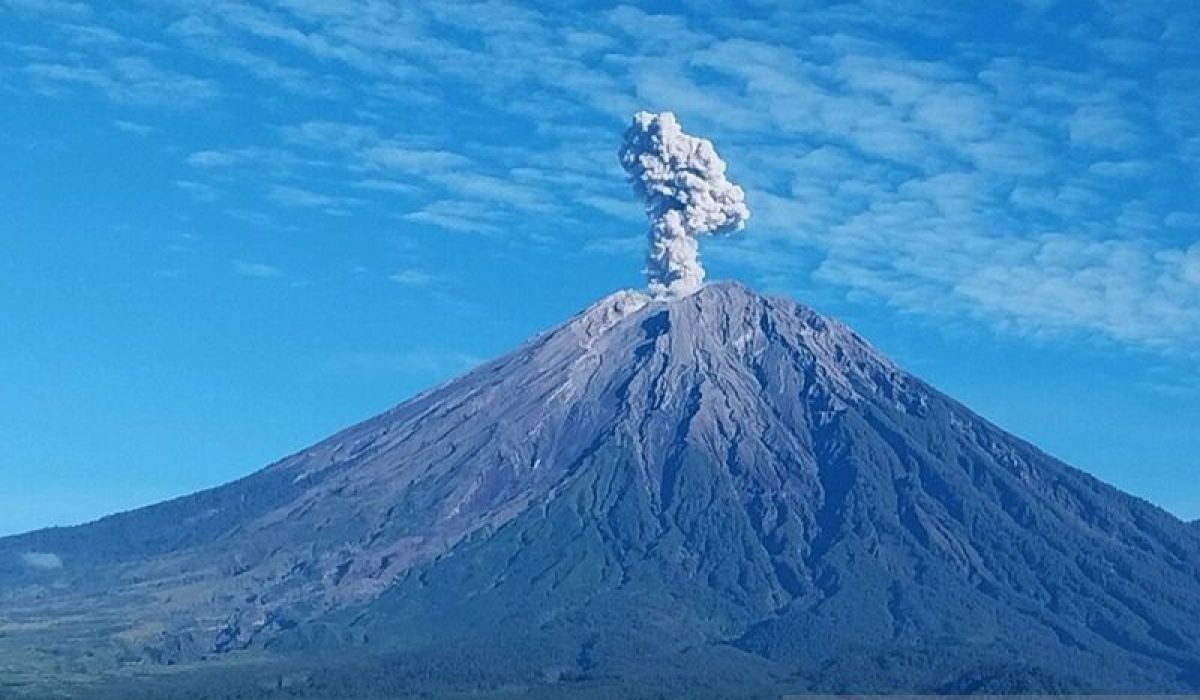
Mount Semeru, located on the border of Lumajang and Malang Regencies in East Java, has once again shown significant volcanic activity. On Monday morning, the highest mountain on Java Island experienced an eruption with an explosion height reaching 1 kilometre above the summit.
Yadi Yuliandi, an officer at the Mount Semeru Observation Post, reported that the eruption occurred precisely at 0_5:13 WIB. A thick, grey ash column was observed moving towards the north.
“The height of the eruption column was observed at approximately 1 kilometre above the summit, or 4,676 metres above sea level,” Yadi Yuliandi stated in a written report. The eruption was recorded on a seismograph with a maximum amplitude of 22 mm and a duration of 167 seconds.
Currently, the volcanic activity of Mount Semeru remains at Level III (Alert) status. Authorities have issued several strict recommendations to avoid casualties.
Yadi also urged the public to be wary of the potential for hot clouds, lava flows, and lahars along the river flows originating from the summit, such as Besuk Kobokan, Besuk Bang, Besuk Kembar, and Besuk Sat.
In addition to the direct threat of eruption, the Lumajang Regency Government has issued a specific warning to sand miners. The Regent of Lumajang, Indah Amperawati, emphasised the danger of secondary explosions from volcanic material that still retains heat in the mining areas.
“Never assume that the accumulation of material in the Semeru area is entirely safe. That material could still be hot and, under certain conditions, pose a danger to the community, especially miners,” Indah asserted.
According to her, material that appears stationary or has already settled in the Besuk Kobokan flow is not necessarily safe to approach. This risk can increase drastically when rain falls in the summit and slope areas, as rainwater can move this hot material and trigger secondary explosions and lahars.