
Mount Lewotolok Activity Declines, Status Remains at Level II
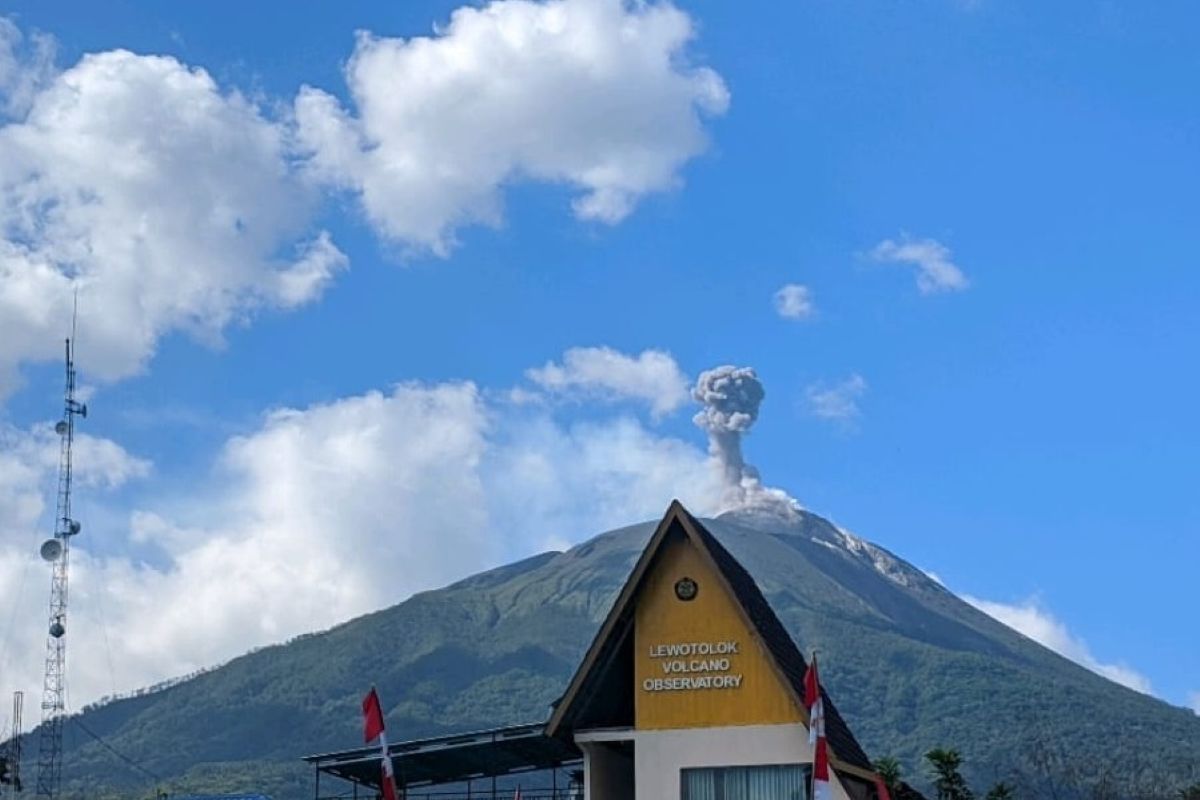
The Lewotolok Volcano Observation Post has reported that volcanic activity at Mount Ile Lewotolok in Lembata Regency, East Nusa Tenggara, showed a decline during the period of 16-31 July 2026, but its status remains at Level II (Alert) with a danger radius of two kilometres. Observer Stanislaus Ara Kian stated on Monday that an evaluation by the Geological Agency through the Centre for Volcanology and Geological Hazard Mitigation (PVMBG) indicated a decrease in eruption and emission activity, with eruption column heights reaching 600 metres from the summit. “Visual observations for the period 16-31 July 2026 show that eruption and emission activity has decreased. The eruption column height reached 600 metres, while the emission smoke column reached 200 metres from the summit,” he said. Eruptions were sometimes accompanied by rumbling and booming sounds of weak to moderate intensity. Officers also observed a glow at the summit and the ejection of incandescent material falling back into the crater during eruptions. No lava flow activity was observed during the period. Seismic observations recorded 821 eruption earthquakes, 154 avalanche earthquakes, 1,312 emission earthquakes, 15 harmonic tremors, and 17 non-harmonic tremors. Additionally, two low-frequency earthquakes, four hybrid earthquakes, seven shallow volcanic earthquakes, 27 deep volcanic earthquakes, 10 local tectonic earthquakes, and nine distant tectonic earthquakes were recorded. The PVMBG noted that seismicity generally decreased during the period, with emission earthquakes dominating the seismic records. Shallow and deep volcanic earthquakes were still recorded in relatively stable numbers, indicating rock fracturing processes due to magma supply from depth moving to shallower levels. “This condition could increase pressure within the body of Mount Ile Lewotolok,” he said. Meanwhile, deformation monitoring using the Electronic Distance Measurements (EDM) method showed fluctuating slope distances that tended to lengthen. Deformation observations also indicated deflation of the volcano’s body, which is thought to be related to the substantial amount of eruptive material still being expelled during volcanic activity. The PVMBG recommends that residents and tourists refrain from entering and conducting activities within a two-kilometre radius of Mount Ili Lewotolok’s activity centre. The public is also urged to be aware of potential lava avalanches or collapses and pyroclastic flows on the southern, southeastern, western, and northeastern sectors of the volcano. The PVMBG reminded the public not to panic upon hearing rumbling or booming sounds from the crater, as this phenomenon is part of the volcano’s eruptive phase. To anticipate the impact of volcanic ash, residents are advised to use protective masks for the nose and mouth, as well as equipment to protect the eyes and skin.