
Mount Lewotobi Laki-laki Raised to Level III Alert
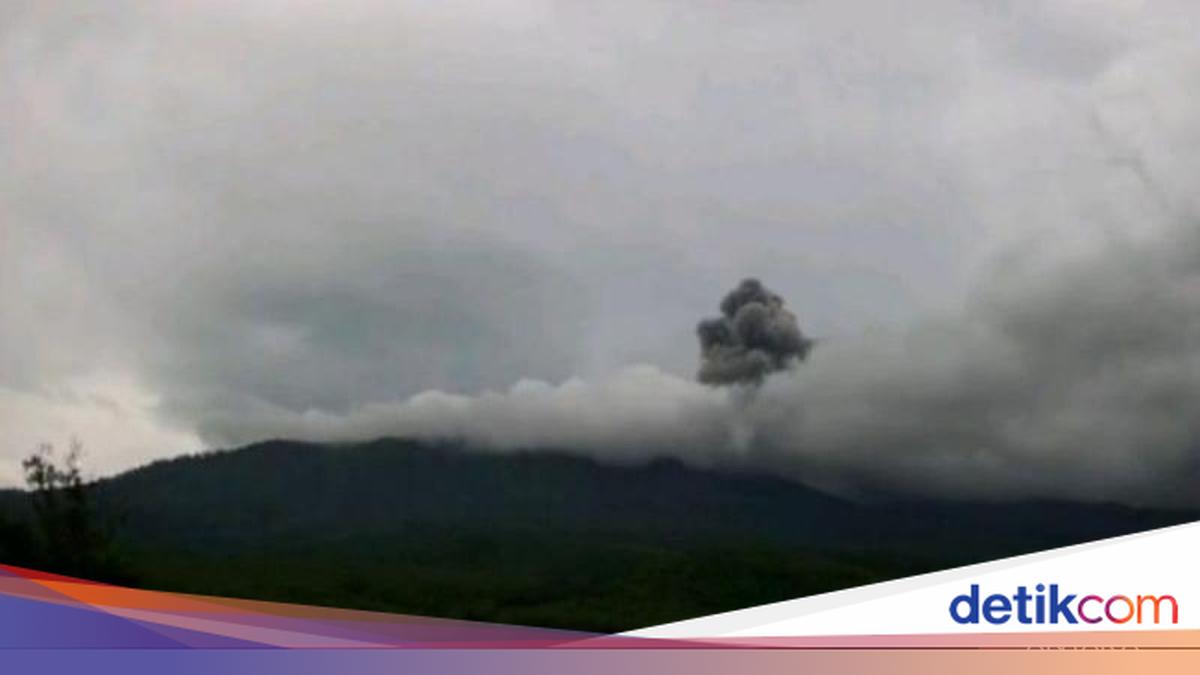
Mount Lewotobi Laki-laki changed its status from Level II Alert to Level III Alert today, Tuesday (12/5/2026), at 13:00 WITA.
Acting Head of the Geological Agency, Lana Saria, stated that the status upgrade was carried out after the activity of Mount Lewotobi Laki-laki showed a significant increase during the period of 1-11 May 2026, particularly in deep seismicity parameters.
That activity, Lana explained, was dominated by deep volcanic earthquakes (VA) reaching 21-32 events per day at the start of the period, especially on 1-4 May 2026.
This increase in VA, Lana clarified, indicates the presence of magma or magmatic fluid supply from sufficient depth towards the volcanic system. After peaking in early May, the number of VA decreased gradually to around 8-12 events per day towards 10 May. However, that number is still above the previous normal conditions, indicating that the magma recharge process is still ongoing.
“Therefore, the Activity Level of Mount Lewotobi Laki-laki, NTT, is raised from Level II Alert to Level III Alert on 12 May 2026 at 13:00 WITA,” Lana said in an official statement on Tuesday.
Tremor Activity Remains High
In addition to deep volcanic earthquakes, non-harmonic tremor earthquake activity was also recorded in high and relatively persistent numbers during that period, ranging from 17-27 events per day. Even on 9 May, the number increased to 27 events.
The dominance of non-harmonic tremors indicates that the fluid system in the shallow part is still active and experiencing continuous movement. Meanwhile, low-frequency (LF) earthquakes remain relatively low. This condition indicates that pressure from depth is beginning to elicit a response in the shallow part.
“Surface activity has not yet shown much emergence of avalanches and emissions on several observation days, particularly on 2-3 May and 6 May. This activity indicates that internal pressure is beginning to affect the surface crater area,” she added.
Meanwhile, solfatara smoke was not visible in the central crater and only appeared in the northeast sector. Local and distant tectonic earthquake activity was recorded as fluctuating but did not show a dominant influence on the main volcanic activity increase during this period.
Activity Pattern Similar to Pre-Eruption
“Deformation data from the Wolorona tiltmeter (WLR2) shows a very important pattern in interpreting the current activity. On the Y axis, a consistent upward trend is seen that is strengthening towards early May 2026, indicating inflation due to pressure accumulation inside the volcanic body. Meanwhile, the X axis shows a progressive downward trend indicating lateral deformation changes. The combination of WLR2 inflation and high VA activity indicates that the Lewotobi magmatic system is in an active pressure recharge phase,” she explained.
Lana compared the historical pattern from 2024 data. According to her, the current conditions are similar to the initial phase of activity increase before the eruption, particularly marked by an increase in deep volcanic earthquakes (VA) followed by inflation deformation and high harmonic or non-harmonic tremors.
Nevertheless, shallow parameters such as LF and shallow volcanic (VB) earthquakes have not yet developed strongly as in the major explosive phase of 2025.
“Therefore, the current activity of Mount Lewotobi Laki-laki is interpreted as being in a phase of increasing magmatic pressure with the potential to develop into small to medium-scale eruptions if the pressure continues to accumulate and begins to distribute more strongly to the shallow part of the volcanic system,” she emphasised.