
Mount Ile Lewotolok Erupts 270 Times in 24 Hours, Alert Status Maintained
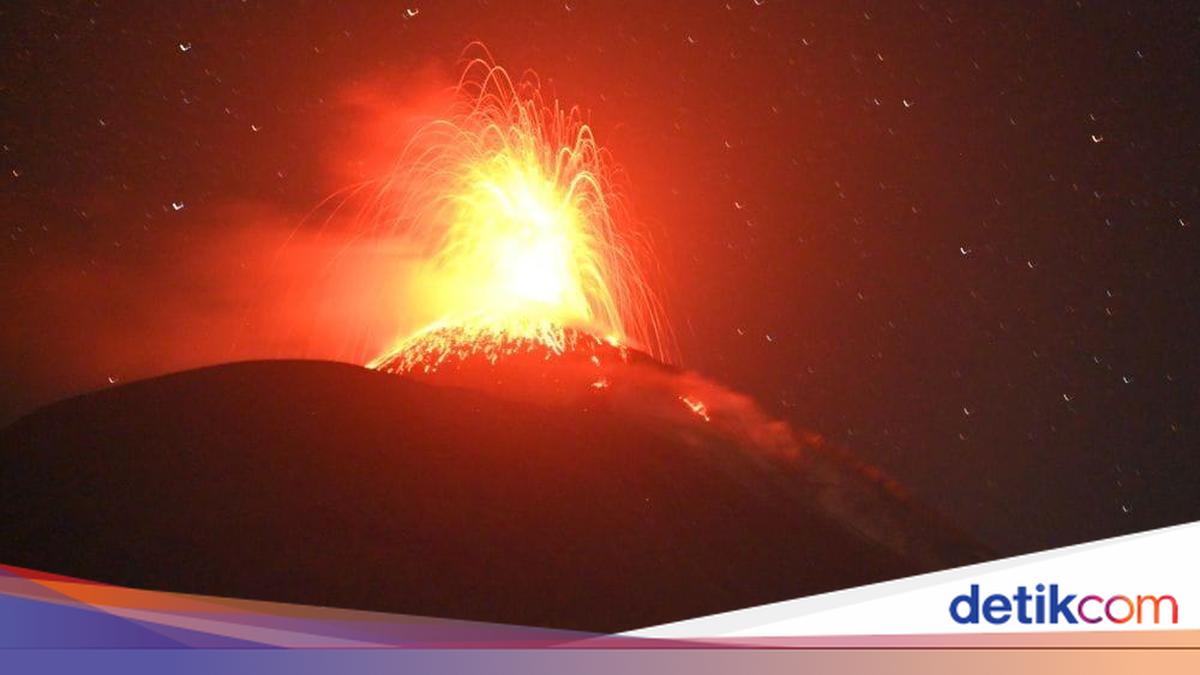
Mount Ile Lewotolok in Lembata Regency, East Nusa Tenggara (NTT), experienced 270 eruptions over the last 24 hours, specifically between 00:00 and 24:00 WITA on Tuesday (15/09/2026). Incandescent eruption glows from Mount Ile Lewotolok were also visible on Tuesday night.
Nanda Pramtriwans Joshua Game, an officer at the Ile Lewotolok Volcanic Observatory (PGA), stated that the eruptions occurred during clear to cloudy weather. Winds were blowing weakly to moderately towards the southwest and west, with air temperatures ranging between 24-32 degrees Celsius.
“270 eruptions were observed with heights of 100-200 metres and white and grey smoke colours. The eruptions were accompanied by the projection of incandescent material and weak to moderate intensity explosions/rumblings. Incandescent lava projections were observed from the peak radius,” Nanda said in an official statement received on Wednesday (16/09/2026).
Nanda noted that during the eruptions, the volcano was clearly visible despite some mist. Low-pressure clouds of white smoke were also observed.
The eruptions were accompanied by 127 puffs, 2 collapses, 3 non-harmonic tremors, 5 hybrid or multi-phase events, as well as shallow, deep, and a single far-field tectonic volcanic event.
“The status of Mount Ile Lewotolok remains at Level II, Alert,” he added.
He urged residents living near Mount Ile Lewotolok, as well as hikers and visitors, to refrain from any activities within a 2-kilometre radius and 3 kilometres in the southern and south-eastern sectors of the eruption centre.
“Be vigilant regarding the potential danger of lava flows, landslides, or volcanic clouds in the southern, south-eastern, western, and north-eastern sectors of Mount Ile Lewotolok,” he said.
He also advised the community near Mount Ile Lewotolok to use protective masks for the mouth and nose, along with other equipment to protect the eyes and skin, to avoid respiratory issues. Furthermore, he urged residents to cover clean water reservoirs to prevent contamination from volcanic ash.