
Mount Anak Krakatau Erupts, Leaving Some Inhabitants Unable to Escape
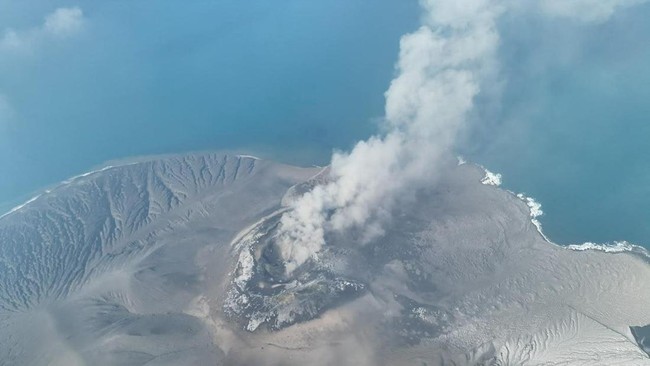
Mount Anak Krakatau in the Sunda Strait erupted again on Friday (4/9/2026). The eruption produced flying incandescent material and volcanic ash, disrupting community activities, including flights and operations in several areas around the Sunda Strait.
While there are no human settlements on the body of Mount Anak Krakatau, the volcanic island is not devoid of life. Anak Krakatau serves as a home to various types of birds, reptiles, insects, mammals, and invertebrates that form its ecosystem. Some of these inhabitants are residents of the archipelago who cannot leave or escape the island as quickly as humans can.
The Inhabitants of Krakatau
Despite being in the middle of the sea and undergoing continuous volcanic activity, the Krakatau area remains a home for diverse fauna. According to records from the Great Office for Natural Resources Conservation (BB) Lampung, the fauna in the Krakatau complex includes rats, fruit bats, reptiles such as monitor lizards and snakes, and approximately 40 species of birds, including tiger hawks, buff-spotted owlets, and sunbirds. The area also possesses hundreds of types of flora, ranging from seed plants, fungi, and ferns to lichens.
A biodiversity survey conducted by researchers from BKSDA Lampung and Lampung University in 2013 also found mammals, more than 10 bird species from various families, reptiles, insects, and non-insect invertebrates on Anak Krakatau. The latter group includes species of spiders, scorpions, and centipedes.
Other scientific records indicate that biodiversity in the Krakatau area continues to change through the process of succession. Research in the early 1980s found 109 fauna species on Rakata, Sertung, and Panjang, consisting of 47 types of birds, 17 reptiles, 19 types of bats, and six land mammals. Meanwhile, on Anak Krakatau itself at that time, the recorded fauna primarily consisted of birds and butterflies.
Interestingly, fauna in the Krakatau Islands are estimated to return gradually as vegetation begins to grow. Birds and bats are among the groups that arrive early, while other animals may reach the island by swimming, being carried by ocean currents, or even hitching a ride on visiting ships.
This diversity demonstrates that Anak Krakata has an evolving ecosystem despite being in an active volcanic zone. Therefore, every eruption not only alters the landscape but also tests the ability of wildlife to survive, migrate, or return after their habitat has been disturbed.
Not All Animals Can Save Themselves
When a major eruption occurs, the ability to survive depends heavily on the type of animal. Birds and winged animals have a greater chance of leaving the affected area. Meanwhile, land animals and small creatures that cannot easily move rely on the presence of rock crevices, soil, or parts of the habitat that remain safe.
The 1883 Krakatau eruption demonstrated the immense impact of such events. Post-eruption records mention that many horses and buffaloes were found dead among the debris along the Banten coast after the tsunami struck the Sunda Strait area.
Scientists have even debated whether any fauna truly managed to survive on Krakatau Island. When Edmond Cotteau visited Krakatau in May 1884, approximately nine months after the eruption, he found almost no animal life. One of the recorded findings was merely a single small spider spinning its web.
Biodiversity Returns and Ecosystems are Rebuilt
Krakatau does not remain empty forever. Over time, various species begin to recolonise the island and form new ecosystems. Studies on Krakatau fauna note that approximately 80% of the animals found in the early post-eruption period were winged fauna, suggesting that the ability to fly is one of the primary pathways for the return of life.
Young spiders, mites, and microfauna can also be carried by the wind, while reptiles such as snakes and crocodiles are believed to reach the island by swimming or being carried on driftwood from Java or Sumatra.
This process occurs alongside the recovery of vegetation. As pioneer plants begin to grow, habitats and food sources are formed. Insects return to find a place to live, subsequently becoming food sources for birds, reptiles, spiders, and other predators. Birds and bats also assist in seed dispersal, thereby accelerating the re-establishment of vegetation.
This makes Krakatau one of the most important locations for studying the process of ecological succession following major disturbances. The return of plants and animals demonstrates how biodiversity helps rebuild ecosystem functions that were once destroyed.
In the context of sustainability, this process highlights the importance of ecosystem resilience. Recovery is not just about the return of species numbers, but also the re-establishment of relationships between organisms that enable the ecosystem to function, adapt, and endure in the long term.
Source: jawawa.id (https://jawawa.id/newsitem/mount-anak-krakatau-erupts-leaving-some-inhabitants-unable-to-escape-1788879469)
Originally published by CNBC Indonesia (https://www.cnbcindonesia.com/research/20260907165903-128-765927/gunung-anak-krakatau-meletus-ada-penghuni-yang-tak-bisa-kabur), translated from Indonesian