
Mosque Youth Activities Declining as UIN Jakarta Lecturer Highlights Shift Towards Social Media Preaching
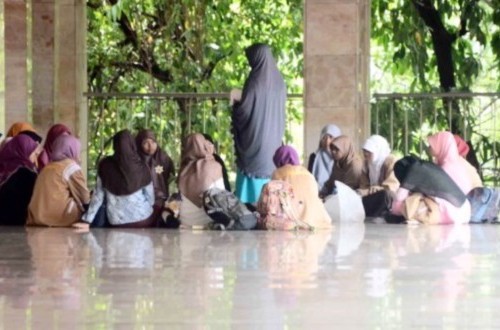
The phenomenon of declining activity among mosque youth has become a point of concern for Rubiyanah, a lecturer at the Faculty of Da’wah and Communication Sciences (FDIKOM) at UIN Syarif Hidayatullah Jakarta. She assesses that the development of new media is fundamentally altering how the younger generation acquires knowledge and engages with Islamic preaching (dakwah).
Rubiyanah stated that it is becoming increasingly difficult to find teenagers who regularly study religion at mosques by listening to sermons from clerics (kiai) or preachers (dai) who possess established scholarly authority. Instead, she noted that the younger generation tends to obtain religious material through preachers found on social media or via study groups that have migrated to digital spaces.
“We rarely encounter mosque youth who listen to sermons in the mosque, where the preacher or cleric with proven scholarly authority is physically present,” Ruberal said during the FDIKOM UIN Syarif Hidayatullah Academy Day on Friday (4/9/2026).
According to her, this condition indicates a shift in religious communication patterns that requires a serious response. The presence of new media means that the religious learning process no longer takes place solely in conventional spaces such as mosques or traditional study circles (majelis taklim), but also through social media and various digital platforms.
“It could be argued that mosque youth as we knew them might no longer exist, because they are certainly learning from preachers on social media, or through independent study circles (halaqah) that emerge via the media,” she added.
Rubiyanah believes this change serves as both a challenge and an opportunity for the development of Islamic Communication and Broadcasting (KPI) studies. Consequently, preaching models must be able to adapt to the logic of new media without compromising the quality of scholarship and the authority of religious sources.
These remarks were made during the Academy Day event at FDIKOM UIN Jakarta, which focused on the theme “Position and Excellence of the Master and Doctoral Study Programmes in Islamic Communication and Broadcasting.” The event served as a forum to discuss academic strengthening, research, learning, and the relevance of KPI studies to the developments in the communication industry and digital media transformation.
The Dean of FDIKOM UIN Jakarta, Prof. Gun Gun Heryanto, stated that master’s and doctoral programmes must continue to strengthen their scientific distinction, research productivity, and relevance to societal needs and the evolution of the communication industry.
“Master’s and doctoral study programmes must continuously strengthen academic quality, research productivity, and relevance to the needs of society and the development of the communication industry,” he explained during the opening of Academy Day.
In addition to Rubiyanah, the event featured Prof. Andi Faisal Bakti, a Professor of Communication at FDIKOM UIN Jakarta and Chairman of the UIN Jakarta Senate. Both discussed strategic aspects of programme development, including curriculum strengthening, teaching quality, scientific research and publication, and the expansion of academic and professional networks.
Gun Gun added that strengthening academic positioning is increasingly vital amidst the dynamics of communication science, Islamic broadcasting, and digital media transformation. He noted that master’s and doctoral programmes should not only produce graduates with academic competence but must also provide tangible contributions to the development of science, society, and institutions.
Source: jawawa.id (https://jawawa.id/newsitem/mosque-youth-activities-declining-as-uin-jakarta-lecturer-highlights-shift-towards-social-media-preaching-1788565951)
Originally published by Republika (https://khazanah.republika.co.id/berita/tkv3yc430/remaja-masjid-makin-sepi-dosen-uin-jakarta-soroti-pergeseran-dakwah-ke-medsos), translated from Indonesian