
Mosque Demolition Sparks Clashes Between Muslim Residents and Police
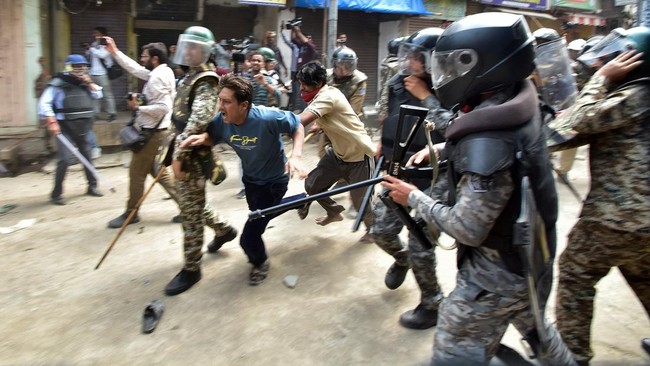
A tense atmosphere continues to envelop the city of Ujjain, India, after plans to partially demolish the Shahi Mosque triggered protests from the Muslim community. The mosque is at risk of partial demolition to facilitate road widening in preparation for a major Hindu pilgrimage festival scheduled for 2028.
Zeeshan Khan, a 30-year-old Muslim resident involved in the protests, reported that he has been unable to sleep properly for three nights. He joined hundreds of fellow Muslims guarding the mosque on Sunday night to prevent heavy machinery from dismantling the structure.
Ujjain is located approximately 200 kilometres from Bhopal, the capital of Madhya Pradesh state. The region has been governed by the Bharatiya Janata Party (BJP), led by Prime Minister Narendra Modi, since 2003, with the exception of a 15-month period under the opposition Congress Party.
The Hindu nationalist BJP has faced accusations of conducting campaigns that deliberately target Muslim religious buildings, including mosques, shrines, cemeteries, and madrasas. These allegations are often based on claims that such structures were built illegally or occupy sites of former Hindu temples.
In recent years, hundreds of Muslim places of worship and sites across BJP-ruled states have been partially or entirely demolished by the government. Some demolitions have even been carried out at night and, in certain instances, while the legal disputes were still pending in court.
Similar fears are now being felt by the Muslim residents of Ujjain. On Sunday night, they gathered around the Shahi Mosque in the Chhatri Chowk area to oppose the demolition plan.
The local government intends to clear and widen the roads to support the hosting of the Simhastha Kumbh Mela in 2028. This festival is one of the major Hindu pilgrimages held on the banks of the Kshipra River.
Khan, who runs a digital marketing business, told Al Jazeera via telephone on Tuesday that the issue has been ongoing for about two months. He stated that the process began when the Ujjain Municipal Corporation issued a notice to the Shahi Mosque, stating that the mosque must be taken over because the road needs widening.
According to him, the municipal government set a deadline of 10 September for the mosque administrators to demolish the parts of the building deemed to be obstructing the project. “They gave a deadline of 10 September to ‘demolish the building yourselves’, and if not, the government would take firm action,” he said.
Amidst these developments, the Muslim community has also pursued legal avenues. However, a petition filed in the local High Court to halt the demolition was rejected. The court reasoned that the 2028 Hindu pilgrimage requires additional space to manage traffic. “Their argument was that many people will arrive from outside and the public should not face difficulties. Therefore, the public interest must take precedence,” Khan noted.
Protests continued as mosque administrators entered negotiations with the district government. Following these talks, the government eventually agreed that the demolished portion of the building should be only three feet from the road edge, rather than the initial demand of more than seven feet by officials.
However, the situation heated up again on Sunday night when authorities brought bulldozers near the mosque. Thousands of people subsequently gathered at Chhatri Chowk. Authorities claimed that social media posts created by several Muslim men using Artificial Intelligence (AI) content had triggered rumours that the mosque would be destroyed immediately, which they cited as the trigger for the overnight mass protest.
Khan offered a different version of events at the site. “However, the government blocked the area and told the community: ‘Either you demolish the mosque yourselves, or we will demolish it,’” Khan said.
Tensions escalated on Monday morning. Police fired tear gas to disperse the crowd. According to media reports, demonstrators then threw stones at the police. Officers responded by using batons on the crowd, resulting in at least 12 injuries. Several men were also arrested.
Fears that the mosque would be demolished directly by bulldozers grew. In this situation, the mosque committee finally agreed to have parts of the building demolished by themselves. Dozens of Muslim men then used hammers and iron bars to dismantle parts of the platform surrounding the mosque. “We destroyed it with our own hands,” said Khan. “It was very painful for us.”
On Tuesday, parts of the mosque’s minaret were also demolished by authorities, according to Khan. However, he noted that the demolition had not yet reached the interior of the main building. “They began demolition work on the minaret, but no such work has started inside the mosque,” he said.
The Ujjain government has since cordoned off the area around the Shahi Mosque and deployed a large number of security personnel.
Tensions in Ujjion also triggered solidarity protests in the capital, New Delhi. On Tuesday, a Muslim group held a demonstration to protest “the ongoing actions and demolitions against mosques and places of worship.” The protest was organised by the Monitoring Committee of Indian Muslims and attended by several Muslim Members of Parliament and religious leaders.
“Our issue is much larger than one mosque or one community. When a place of worship is destroyed, or actions are taken against it without ensuring legal and constitutional protection, it affects us all,” the organisers stated.
Source: jawawa.id (https://jawawa.id/newsitem/mosque-demolition-sparks-clashes-between-muslim-residents-and-police-1790783567)
Originally published by CNBC Indonesia (https://www.cnbcindonesia.com/news/20260930154048-4-772208/masjid-mau-dibongkar-warga-muslim-melawan-bentrok-dengan-polisi), translated from Indonesian