
Morowali HPAL Project Projected to Strengthen EV Battery Supply Chain
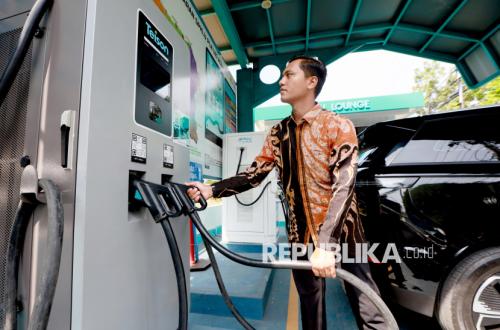
The High Pressure Acid Leaching (HPAL) Sambalagi project in Morowali, Central Sulawesi, with an investment value of 2 billion US dollars, is projected to strengthen nickel downstream processing in Indonesia. The facility, developed by PT Vale Indonesia Tbk (INCO), a member of the Mining Industry Holding MIND ID, is also expected to reinforce the supply chain for electric vehicle battery raw materials while driving regional economic growth.
The HPAL Sambalagi project is part of the Morowali Indonesia Growth Project (IGP), which is included in the national strategic projects for accelerating mineral downstream processing. Besides producing high-value-added nickel products, this project is targeted to create greater economic value for the industrial area and the surrounding community.
Environmental observer Irwan Ridwan stated that downstream projects like HPAL are, in principle, expected to boost the local economy while supporting national industrial development. According to him, this aspect has been a focus from the pre-feasibility study (Pra-FS) to the feasibility study (FS) stages.
“It should have a positive influence on the local economy and the improvement of the community’s social quality, and this has been discussed in the Pra-FS and FS of an investment project,” Irwan said on Wednesday (29/7/2026).
Irwan hopes that the commitment to improving the local economy and the community’s quality of life will be genuinely realised when the project begins operations, rather than merely fulfilling investment requirements. According to him, downstream projects also have the potential to create a multiplier effect on national economic development and the welfare of communities around the operational area.
Central Sulawesi Deputy Governor Reny Arniwaty Lamadjido stated that industrial area development must be accompanied by improvements in the community’s quality of life. According to her, involving local micro, small, and medium enterprises (MSMEs) and providing public facilities are important factors so that the benefits of investment can be felt more widely.
“Collaboration that provides space for local MSMEs and openness to public facilities is a model for inclusive and sustainable industrial area development for Central Sulawesi,” Reny said.
The impact of downstream processing is also reflected in Central Sulawesi’s economic performance. Based on data from the Central Statistics Agency (BPS), the province’s economy grew by 8.32 per cent year-on-year in the first quarter of 2026. By business field, the processing industry was the largest contributor to growth, with a rate of 15.09 per cent.