
Morowali HPAL Project Enters New Phase, Indonesia Poised to Become EV Battery Industry Leader
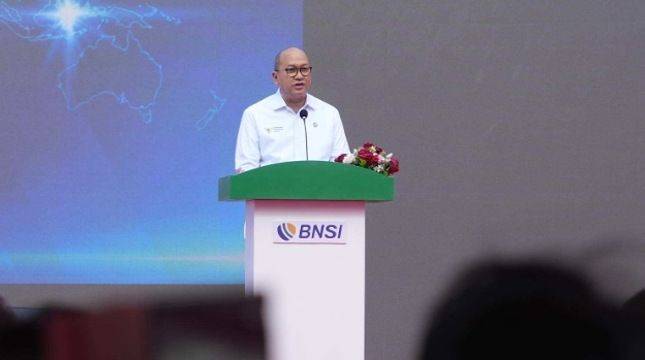
The government is accelerating mineral downstream processing to strengthen Indonesia’s position in the global electric vehicle (EV) supply chain. The latest milestone is the arrival of an autoclave, the main equipment for the Sambalagi High Pressure Acid Leaching (HPAL) project in Morowali, Central Sulawesi, which is part of a National Strategic Project (PSN). Minister of Investment and Downstreaming/Head of BKPM, Rosan Pereslani, stated that the Sambalagi HPAL project represents a new milestone in Indonesia’s nickel downstreaming. He noted that downstreaming is no longer just about generating mineral added value, but also about building an integrated, competitive, and sustainable EV battery ecosystem. “Sambalagi HPAL sets a new standard, not just following existing ones. This project is tangible proof that collaboration between Indonesia, South Korea, and China can align with national interests, namely building resource sovereignty, creating jobs, and improving public welfare,” Rosan said in a statement. The autoclave that arrived at the project site has a capacity of 1,268 cubic metres. According to data from GEM Co., Ltd., the unit is the largest capacity autoclave ever applied in an HPAL facility. The Sambalagi HPAL project is being developed by PT Bahodopi Nickel Smelting Indonesia (BNSI) through a partnership between PT Vale Indonesia Tbk, GEM Co. Ltd. (China), and EcoPro (South Korea). The facility is located within the Indonesia Green Industrial Park (IGIP) in Morowali. The plant will process limonite ore into Mixed Hydroxide Precipitate (MHP), the primary raw material for manufacturing EV batteries, with a production capacity of up to 90,000 tonnes of contained nickel per year. Beyond supporting downstreaming, the project is expected to have a significant impact on employment. During the construction phase, it is projected to absorb around 6,000 workers, while the operational phase will create approximately 3,600 jobs, including in mining and processing activities. Rosan explained that the construction of the HPAL facility is part of the government’s strategy to complete the national nickel industry supply chain, from MHP and nickel sulphate production to precursors, cathode active materials, and ultimately EV batteries. With this integrated industrial chain, Indonesia is expected to no longer be just an exporter of raw materials, but a major player in the global EV industry. “We have designed the green industry cluster from upstream to downstream, and HPAL is the first gateway,” he stated. The Sambalagi HPAL project also prioritises sustainability aspects. Since the planning stage, the facility has been designed to move towards Net Zero Emissions (NZE) through the utilisation of a waste heat recovery system and solar energy to support low-carbon operations. The government also appreciates the company’s commitment to providing benefits to the surrounding community through infrastructure development, social facilities, local workforce training, and the establishment of an HPAL Research Centre to strengthen domestic technological mastery. All innovations produced by the research centre are planned to be patented in Indonesia. Additionally, the company is preparing a scholarship programme in metallurgy for Indonesian talent and research collaborations with various national universities. Rosan emphasised that the arrival of the autoclave does not merely signify the construction of a factory, but an important step in building a stronger national downstreaming ecosystem. “Today we are indeed welcoming the arrival of the autoclave at Sambalagi HPAL. However, what we are truly building is not just an industrial facility. We are building a complete downstreaming ecosystem and a better future for the people of Central Sulawesi and Indonesia. This is the true meaning of downstreaming: creating value, creating opportunities, and creating hope,” Rosan concluded.