
More Than Just a Place to Eat, Warteg Becomes a Social Space Uniting Migrants
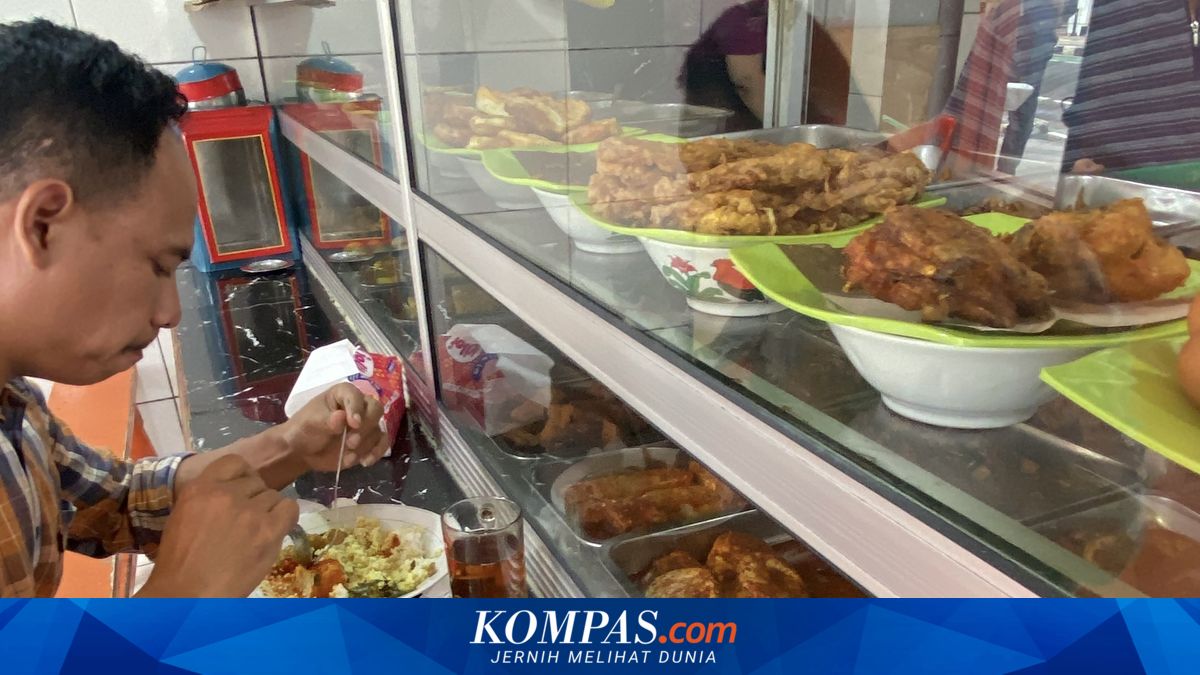
In the midst of fast-paced and segmented big cities, warteg emerges as a space that is never truly formal, yet it functions powerfully in the social lives of its inhabitants. From an anthropological perspective, warteg is not merely a cheap eating spot, but a living, fluid social space full of interactions that are often unnoticed. Imam Setyobudi, Head of the Cultural Anthropology Department at the Faculty of Culture and Media at ISBI Bandung, views warteg as a complex social phenomenon in the modern city. He emphasises that warteg cannot be understood solely as an economic activity, but as a space of human encounters with diverse social backgrounds. “From an anthropological perspective, warteg is not just a place for economic transactions (buying food), but a highly complex social space,” said Imam when contacted on Tuesday (22/4/2026). On the same long bench, people with different occupational backgrounds sit side by side without significant barriers. “Warteg is one of the few places in big cities where social class barriers collapse. On the same long bench, you can see construction labourers, online motorcycle taxi drivers, students, and office workers in ties sitting side by side,” said Imam. In that cramped space, physical closeness becomes unavoidable. Shoulders touch, hands brush past each other, and the distance between humans becomes very close. Yet it is precisely from there that social boundaries gradually melt away. “Because the space is narrow, physical contact occurs (shoulders touching) which forces recognition of the existence of others regardless of economic status,” he said. From there, small interactions often emerge unplanned. In the daily life of warteg, there is no special treatment based on social status. All customers are served in the same manner, without distinction between office workers, online motorcycle taxi drivers, or daily labourers. “Warteg employees also do not regard differences in socioeconomic status and economic social class. Everyone is served equally,” he said. At this point, warteg functions as a neutral space, where a person’s formal identity is seemingly shed as soon as they enter and choose dishes from the glass display case. Furthermore, Imam refers to warteg as a “third space” or third space, a space outside of home and workplace. In this space, a person is no longer bound by their formal daily roles. Warteg becomes a temporary stopover from the pressures of city life, from demanding jobs to cramped living quarters. “Warteg becomes a temporary escape from work pressures or the crampedness of boarding rooms. Here, people can shed their formal attributes,” he explained. The conversations that take place within are not rigidly patterned. Topics can shift from the prices of staple goods, work complaints, to light humour that arises in between meals. “Chats flow casually, from complaints about the prices of goods, current political issues, to just small talk about the weather,” said Imam.