
More Than Just a Maung in Cebu: It's Time for Indonesia to Stop Being the "Workshop of the World"
Indonesia has all the prerequisites to become an automotive giant in ASEAN, such as a large domestic market, a growing middle class, high mobility needs, and a vast territory that demands vehicles for logistics, agriculture, defence, and public transportation.
However, to date, Indonesia’s position has often been limited to two roles: as a consumer and an assembler for global brands.
Factories are built, foreign investment flows in, production figures rise, but the brands, key technologies, and highest value-added elements remain controlled from abroad.
This is where Indonesia’s paradox emerges. The country is one of the most promising automotive markets in the region, but it does not yet have a truly strong national automotive brand.
The size of the market does not automatically mean independence. Without a strategic leap, Indonesia risks continuing to be the “workshop of the world” that busily produces for others but has no name of its own on the cars exported abroad.
Amid this old pattern, the presence of the Pindad Maung is beginning to shift the narrative.
The Maung is not merely a tactical vehicle; it is a symbol that Indonesia’s sons and daughters are capable of designing and producing technologically advanced vehicles with a clear national identity.
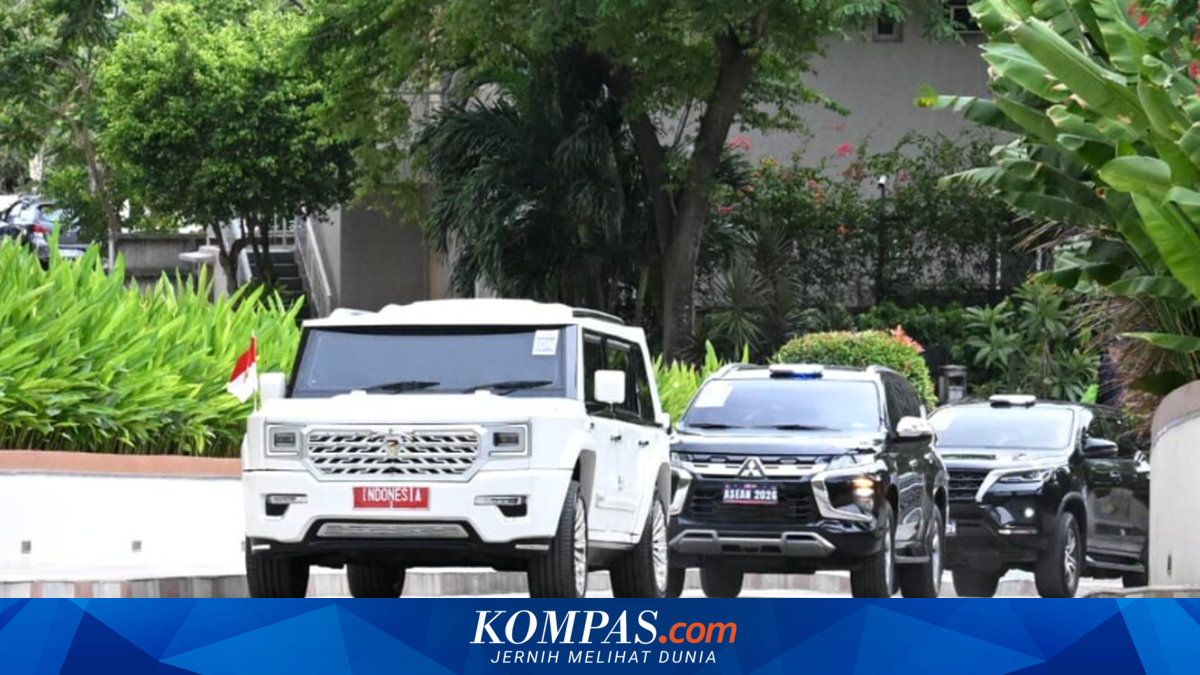
When the Maung was chosen as President Prabowo Subianto’s vehicle at the 48th ASEAN Summit in Cebu, Philippines, in 2026, the message conveyed went far beyond matters of automotive taste.
Amid a line-up of luxury European-made sedans and SUVs provided by the host, the appearance of the white-liveried Maung Garuda became a subtle statement that Indonesia does not wish to forever depend on imported prestige standards.
This symbolic choice in Cebu did not come from a vacuum.
Performance data from the Directorate of Maritime Industry, Transportation Equipment, and Defence Equipment (IMATAP) in the 2025 LAKIP shows a strengthening industrial foundation.
The export value of this sector exceeded 135 percent of the target, investment realisation surpassed more than 100 percent of the goal, and the number of companies achieving INDI 4.0 level above 3.0 also exceeded the target.
This means that behind the single Maung unit traversing the ASEAN Summit, there is an industrial ecosystem that is slowly learning to stand on its own, starting from factory digitalisation to strengthening export capabilities of high-tech products.
In the air, a similar story emerges through aircraft made by PT Dirgantara Indonesia that are operated by the Philippines, indicating that Indonesia’s strategic industry competitiveness is already recognised in the region.
However, all these achievements are still at an early stage. Indonesia once dreamed of a national car through the Timor project in the Soeharto era.
During Joko Widodo’s time, the name ASEMKA briefly heated up as a symbol of a car made by the nation’s children.
Now, both are more often mentioned in nostalgic conversations rather than as living pillars of an industrial ecosystem.
The important lesson is clear: giving birth to a national product is far easier than sustaining it.
While Indonesia grapples with shadows of the past, Vietnam has given birth to VinFast.