
More Than Hoes: AI and Soil Sensors Reach Indonesia’s Rice Fields
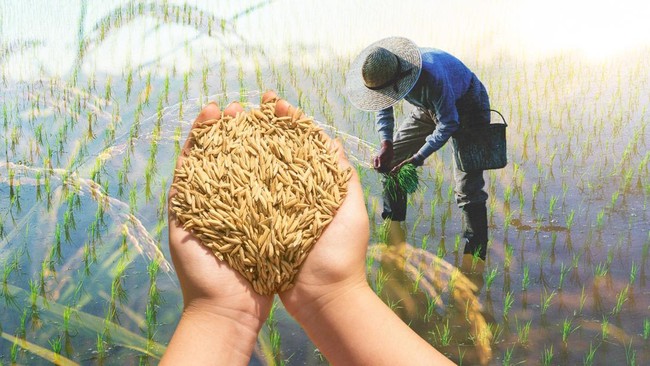
For Sumarno, a farmer from Pengkok village in Sragen regency, Central Java, fertiliser use is no longer based merely on guesswork. Internet of Things (IoT)-based soil sensors allow him to determine how much fertiliser his land needs according to its condition.
The results have been significant. Fertiliser use, previously around 1,600 kilograms per hectare, fell to 750 kilograms during June-November 2025, a reduction of 53%. Technology that may once have seemed remote from farmers’ lives is now helping Sumarno manage his land more efficiently.
Sumarno’s experience illustrates how the internet is beginning to change Indonesia’s agricultural sector.
Digital technology not only makes information easier to access; it also gives farmers opportunities to cut production costs, raise productivity and manage harvests more efficiently.
As climate change, increasingly unpredictable weather and food-price fluctuations pose growing challenges, the use of digital technology is becoming more relevant.
From soil sensors and smart irrigation systems to food-price monitoring, digitalisation could support a food system that is more productive, efficient and affordable.
However, its benefits still depend on more even connectivity, affordable technology and farmers’ ability to use data when making decisions.
To support this transformation, the Ministry of Communication and Digital Affairs (Komdigi) is also promoting the use of technology in rural areas so that farmers and aquaculture producers can benefit directly from digitalisation.
Communications and Digital Affairs Minister Meutya Hafid stressed that technology should not be concentrated in cities, but should also reach villages to support national food security.
“We want to ensure that digitalisation is applied directly in real-world use cases. Digital technology should not be enjoyed only in cities; it must reach villages to support the President’s food self-sufficiency programme,” Meutya said.
In the context of food security, digital transformation can support three main approaches.
First, it can improve agricultural efficiency and productivity through the use of technology.
Second, it can strengthen food-price and distribution monitoring through data-based information systems. Third, it can help ensure that social assistance reaches the right people, protecting their purchasing power.
These approaches complement one another. Agricultural technology helps strengthen food availability, price monitoring supports the government’s response to market volatility, and digital social protection helps vulnerable people maintain access to basic necessities.
More Than Hoes: AI and Soil Sensors Reach Indonesia’s Rice Fields
Technology once associated mainly with manufacturing and cities is beginning to find a place in farmland.
After soil sensors helped farmers adjust fertiliser use, digital technology has also begun to extend to irrigation management, crop monitoring and aquaculture management.
Its use is not confined to a single region. From smart irrigation systems in North Sumatra to pond-water quality monitoring in West Java, IoT technology is being tested and used to address a range of food-production challenges.
1. Soil Sensors and Smart Irrigation Improve Efficiency
One example is in Pengkok village, Sragen regency, Central Java. According to a Komdigi report in October 2026, the use of Jinawi agricultural sensors helped reduce fertiliser requirements from around 1,600 kilograms to 750 kilograms per hectare, a fall of about 53%.
The results show the potential of digital technology to improve fertiliser-use efficiency in response to soil conditions.
Beyond fertilisation, agricultural digitalisation can also involve automated irrigation, weather monitoring and the use of artificial intelligence to detect potential pest and crop-disease outbreaks.
These technologies can help farmers decide when to plant, manage water needs and anticipate risks to production.
Similar technology is also being developed through academic initiatives, beyond the applications reported by Komdigi. One example is in Sidomulyo village, Langkat regency, North Sumatra, where an IoT-based, solar-powered smart irrigation system has been introduced to help farmers manage water more efficiently.
A 2025 community-service project published in SELAPARANG: Journal of Community Service in Progress reported that the programme increased yields by around 31%, from 4.2 to 5.5 tonnes per hectare. Irrigation operating costs also fell by 60%, from Rp250,000 to Rp100,000 per season.
2. IoT Technology Boosts Tilapia Production
In the fisheries sector, Komdigi reported that the use of IoT increased tilapia production in Sukabumi, West Java, by up to 40%, based on results presented at a tilapia harvest event on 15 October 2025.
The government provided 60 IoT Microbubble Aerator devices to eight fish-farming groups to help maintain oxygen levels in ponds and monitor water conditions.
One beneficiary, the Cipancur Cimahi Farm Feed fish-farming group, was reported to produce around 40 tonnes of tilapia per harvest cycle and supply about 400 kilograms a week to the Free Nutritious Meals (MBG) programme.
“Tilapia production continues to grow thanks to the training and support provided with this technology,” fish farmer Abdullah Agus Salim was quoted as saying by Komdigi.
He is optimistic that Sukabumi can achieve tilapia self-sufficiency and supply other areas in the coming years.
National tilapia production has also shown an upward trend in recent years. Ministry of Marine Affairs and Fisheries (KKP) data show that production reached 1.56 million tonnes in 2024, up around 18.2% from 1.32 million tonnes in 2019.
Separately, KKP data put provisional national tilapia production at 1.22 million tonnes in 2026. The reporting period needs to be taken into account, so the figure cannot yet be directly compared with full-year production in earlier periods.
The increase in national production provides an indication of the growth of the tilapia-farming sector, while the use of IoT in Sukabumi is one example of how digital technology can help fish farmers increase output.
Nevertheless, the national rise in production cannot be attributed directly to IoT, as it is also influenced by various other factors.
3. Ngawi Prepares to Adopt Digital Agriculture
In Ngawi regency, East Java, Komdigi’s Directorate General of the Digital Ecosystem is preparing to digitalise agriculture and fisheries for rice, melon and tilapia production.
Preparations include a survey of potential sites, conducted on 11 February 2026, to assess infrastructure readiness and identify the farmer groups that will benefit.
The planned technologies include soil sensors, automated irrigation and fertilisation, and early-warning systems for extreme weather and pests. Unlike the initiatives in Sragen and Sukabumi, the Ngawi programme still requires implementation and evaluation before its results can be measured.
Even so, digitalising agriculture requires more than simply providing equipment. Farmers also need internet connectivity, technology support, financing and access to markets. Komdigi’s efforts to expand connectivity and digital literacy therefore need to be supported by collaboration with relevant ministries, local governments and the private sector.
In the future, integrating data on land conditions, production and harvest distribution could help improve efficiency and strengthen farmers’ position in the supply chain.
The challenge is to ensure that small-scale farmers also benefit, so that technology contributes to more inclusive food security.
Alongside supporting productivity in agriculture and fisheries, digital connectivity also helps widen public access to food-price information. In this respect, Komdigi’s work to strengthen connectivity and digital literacy is important to make such information easier to access and use, including for farmers and traders in regional areas.
Source: jawawa.id (https://jawawa.id/newsitem/more-than-hoes-ai-and-soil-sensors-reach-indonesias-rice-fields-1793353881)
Originally published by CNBC Indonesia (https://www.cnbcindonesia.com/research/20261030135904-128-780960/tak-cuma-cangkul-ai-hingga-sensor-tanah-kini-masuk-sawah-indonesia), translated from Indonesian