
More Than Grandeur: Sustainability and Financial Strategy in the Manner of the Prophet Yusuf
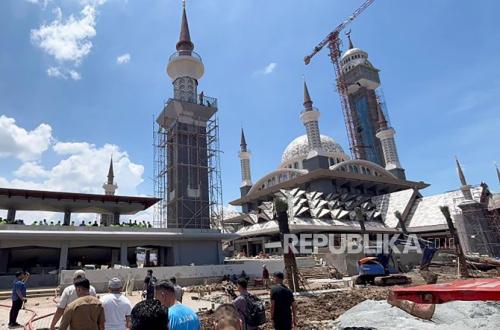
Imagine a grand mosque worth tens of billions of rupiah, built with donations from a former official. Its marble gleams, its chandeliers are luxurious, and its air conditioning keeps the interior cool. While the donor was still in office, the building was a source of pride and was meticulously maintained.
But after the donor left office, the scene grew bleak. Moss crept across the walls, unpleasant odours rose from blocked ablution facilities, and dust thickened on the carpets. The donations collected after Friday prayers proved nowhere near enough to cover the high maintenance costs of the vast building.
Elsewhere, a mosque in an affluent housing estate has faced a similar, though not identical, fate. Its coffers once overflowed because most residents were at the peak of their earning years and financially comfortable. Now, as the first generation begins to retire or pass away and their children move out, the mosque’s income has fallen sharply.
These two real-life stories reveal an irony: the continuity of houses of God is often entrusted to temporary generosity or a demographic dividend among worshippers that time can erode. We are very good at raising money to build, but often struggle to plan how a building can sustain its activities and remain supported in the future.
The essence of sustaining a mosque: more than constructing a building
The Qur’an provides a clear foundation for the vision behind mosque development. A mosque should be maintained in a way that preserves its dignity, not merely serve as a monument to a donor’s grandeur. It must be kept thriving, as God says in the Qur’an:
“Only those who believe in God and the Last Day maintain the mosques of God.” (Surah At-Tawbah [9]:18).
In his commentary, Imam Ibn Kathir explains that the word ya‘muru (to maintain or enliven) does not refer only to physical construction. It includes upkeep, cleanliness, and fostering an intellectual and social ecosystem within the mosque. A noble intention to donate tens of billions of rupiah should therefore be accompanied by a strategic question: where will the money for electricity, water and renovations come from over the next ten to fifty years?
The Prophet Yusuf’s foresight and Umar’s productive waqf
A brilliant lesson in economic governance is recorded in the strategy of the Prophet Yusuf (Joseph), peace be upon him, as he faced Egypt’s economic cycle:
“He said, ‘You will sow for seven consecutive years. Then leave what you harvest in its ears, except for a little of it which you will eat.’” (Surah Yusuf [12]:47).
The Prophet Yusuf taught that a period of abundance is not a time to spend all available resources, but an opportunity to save assets for difficult times. In managing a mosque, a time when donations are plentiful—such as when a new mosque is inaugurated or when worshippers are still of working age—is the equivalent of “seven years of harvest”. The surplus should not all be spent on embellishing the building with features that depreciate in value.
The solution is to turn that surplus into productive waqf, or endowment. Its basis lies in the instruction of the Prophet Muhammad ﷺ to Umar ibn al-Khattab concerning fertile land in Khaybar: “If you wish, retain the principal and give its yield in charity.” (Reported by al-Bukhari and Muslim).
Instead of spending the full Rp20 billion endowment solely on the building, a donor or construction committee could allocate it proportionately: for example, Rp15 billion for the main building and Rp5 billion invested in productive assets, such as shop-houses for rent, boarding houses near a university or industrial centre, or a guest house. The capital would remain intact, while rental income would provide a lasting stream of revenue to meet the mosque’s operating expenses (OpEx). The mosque could become self-sufficient, no longer anxiously awaiting small donations in the Friday collection box.
Rethinking mosque finances today
For mosques that have already been built, or those located in housing estates, financial independence can begin now.
The first step is a simple operational audit. Calculate average monthly expenses and project major repair needs over the next five years.
Second, introduce transparency and diversification. Keep the operational fund, drawn from daily donations, separate from the endowment fund. Transparent bookkeeping is a way of safeguarding a trust (Surah An-Nisa [4]:58). Credible and accountable reporting will naturally encourage public participation in investing in waqf instruments managed by the mosque.
Ultimately, from the perspective of maqashid sharia (the objectives of Islamic law), safeguarding a mosque’s continuity is a practical expression of hifz al-mal (the protection of wealth): ensuring that the community’s funds do not evaporate into liabilities, but instead circulate to generate lasting benefit. A mosque’s grandeur is not inherently wrong, but it should be measured against the congregation’s financial means. Moreover, returns from productive waqf can support study circles, youth development and economic empowerment for disadvantaged people living near the mosque.
A mosque’s success is not measured by how brightly its marble shines on opening day. A true mosque is one whose life continues to pulse decades after its founders have passed away: it remains clean and well maintained, its rooms are filled with worshippers and seekers of knowledge, and it helps empower the local economy.
So do not wait until the roof leaks and the coffers run dry before worrying about the future of the house of God. Let us change our approach today: stop taking pride merely in “building a mosque” and take responsibility for “keeping it alive”. Start developing productive waqf management at your mosque now. Let this charitable endowment become a spring that flows continuously, generating lasting benefit that does not fade with time.
Source: jawawa.id (https://jawawa.id/newsitem/more-than-grandeur-sustainability-and-financial-strategy-in-the-manner-of-the-prophet-yusuf-1791985954)
Originally published by Republika (https://opini.republika.co.id/berita/tmwawv393/tidak-sekadar-megah-visi-keberlanjutan-dan-strategi-finansial-ala-nabi-yusuf), translated from Indonesian