
More Than Financing: BRI Strengthens the Food Ecosystem from Upstream to Downstream to Support Protein Self-Sufficiency
Jakarta (ANTARA) - PT Bank Rakyat Indonesia (Persero) Tbk, or BRI, is continuing to strengthen its contribution to national food security by providing financing across the food ecosystem, from upstream to downstream. The commitment aligns with the government’s agenda to strengthen national protein self-sufficiency, including through the development of fisheries, livestock, MSMEs, cooperatives and the food-processing industry.
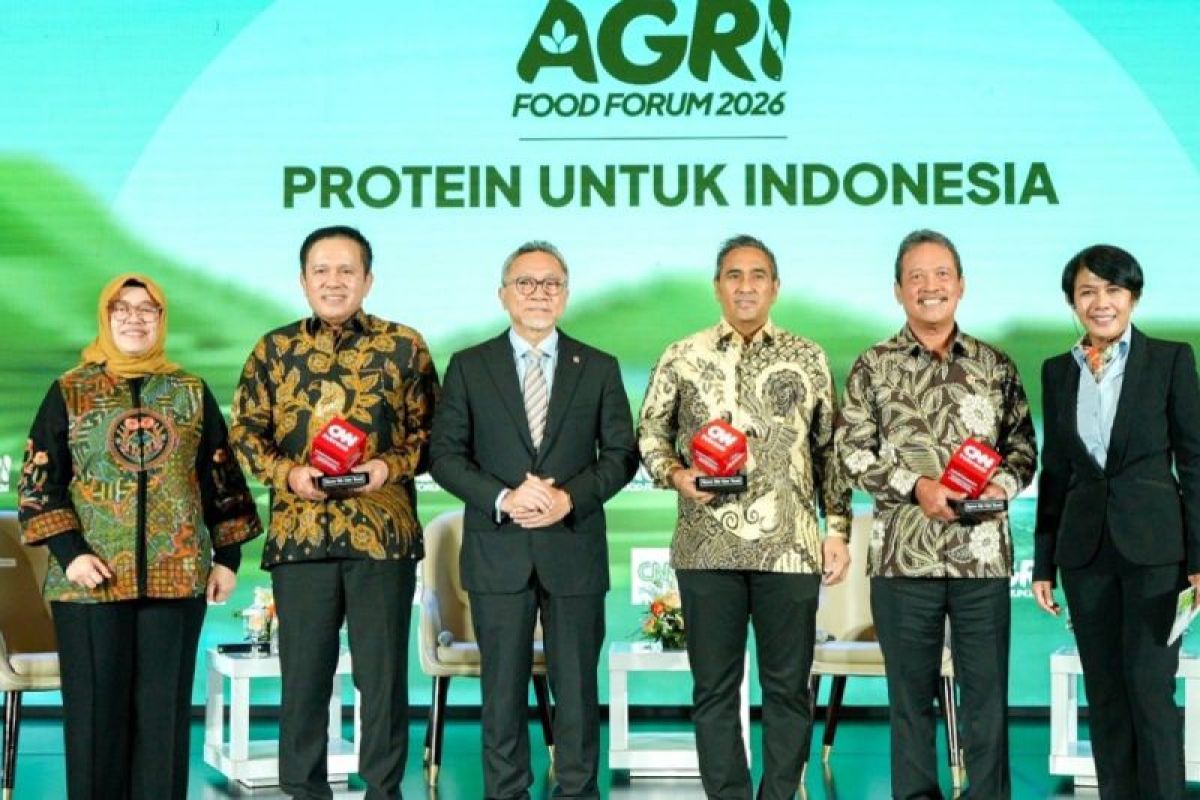
The issue was discussed at the CNN Indonesia Agrifood Forum 2026, themed “Protein Self-Sufficiency Amid Global Food Challenges”, held in Jakarta on Monday (19 October). The forum brought together Coordinating Minister for Food Zulkifli Hasan, Marine Affairs and Fisheries Minister Sakti Wahyu Trenggono, Minister of Villages and Development of Disadvantaged Regions Yandri Susanto, Deputy Agriculture Minister Saleh Mustafa, BRI Micro Director Akhmad Purwakajaya and several state-owned enterprise executives.
Coordinating Minister for Food Zulkifli Hasan stressed that food self-sufficiency is not merely about meeting domestic demand, but is also linked to national sovereignty. He said efforts to strengthen the food sector must be accompanied by support for businesses at the grassroots, including fishers and fish farmers.
“Fishers suffer the most; they are the poorest. We have to think of them first,” Zulkifli said at the forum. He also highlighted the need for infrastructure such as cold storage and access to financing to improve the productivity and welfare of food-sector businesses.
Marine Affairs and Fisheries Minister Sakti Wahyu Trenggono said the fisheries sector has a strategic role in meeting people’s protein needs. Fish and seafood, he said, can be developed into a range of higher-value food products that are more accessible to the public.
“When it comes to fish, there is no question — almost all of it [has potential],” Trenggono said, discussing the considerable potential of seafood-based food. He said innovation in processing fishery products was an important step towards making this source of protein more widely available and affordable.
In this context, BRI Micro Director Akhmad Purwakajaya said the bank was well placed to support the development of the food ecosystem through financing that serves not only established businesses but also people just starting out.
“When we talk about financing, BRI serves everyone from people who have only just decided to start a business to those running large enterprises. At the ultra-micro level there is PNM, then Pegadaian, followed by the micro, small and corporate segments. This allows us to see the ecosystem more comprehensively,” Akhmad said.
Akhmad said an ecosystem-based approach was important because financing needs in the food sector do not end at the production stage. Funding is needed upstream — for example, for seeds, feed and increased production capacity — as well as for processing, including investment, packaging and working capital, and downstream for distributors, traders and stock requirements.
One example is the dairy farming ecosystem in Malang. BRI can finance farmers as producers, support cooperatives with cold-storage facilities, and also finance the industry or offtakers that purchase their output. With this approach, financing is not provided in isolation but is linked to a value chain that supports business continuity.
At the end of the second quarter of 2026, BRI’s total loan portfolio stood at Rp1,645 trillion, with around 75.1% channelled to the MSME segment. During the second quarter of 2026, about 44% of its KUR lending was directed to agriculture and fisheries, sectors that play an important role in strengthening the national food and protein ecosystem.
Akhmad emphasised that lending to MSMEs would remain a BRI priority. “It must not fall below 75%; that has to go to MSMEs,” he said.
BRI also has around 30,000 field marketing staff specialising in various sectors, including livestock, fisheries, agriculture and trade. This capability enables the bank to understand business characteristics and financing needs at close range.
“We can get involved from the start. We can finance the upstream stages, then the processing, all the way through to downstream. So it is not just about providing credit, but about how financing can help the business ecosystem grow,” Akhmad said.
Through this approach, BRI is continuing to strengthen the role of banking intermediation as part of the national food ecosystem. Financing is intended not only to drive business growth but also to strengthen links between participants in the supply chain, creating a productive, inclusive and sustainable food ecosystem.
Source: jawawa.id (https://jawawa.id/newsitem/more-than-financing-bri-strengthens-the-food-ecosystem-from-upstream-to-downstream-to-support-protein-self-1793595309)
Originally published by Antara (Indonesian) (https://www.antaranews.com/berita/5825719/bukan-sekadar-pembiayaan-bri-perkuat-ekosistem-pangan-dari-hulu-hingga-hilir-untuk-dukung-swasembada-protein), translated from Indonesian