
Monthly Salary of Rp14 Million Now Eligible for Subsidised Housing, Here Are the New Rules
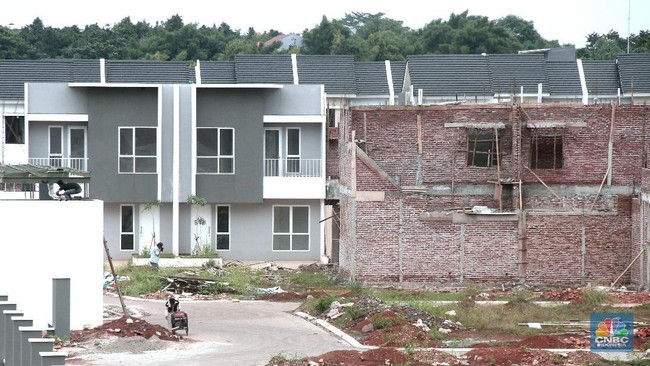
The government is set to change the rules to expand the maximum income limit for prospective recipients of subsidised housing. Under this rule, people earning up to Rp14 million per month fall into the category of low-income communities (MBR) and are thus entitled to subsidised housing.
"Expanding the MBR definition, which previously had only two zones, to four zones. The income value for MBR recipients has also increased. For example, in Zone 1, it has risen from around Rp7 million to Rp8 million, while in DKI Jakarta and its surroundings, it can reach Rp12 million," said Home Affairs Minister Muhammad Tito Karnavian during a meeting at the Ministry of Home Affairs on Friday (19/6/2026).
The policy was actually already regulated through Minister of Housing and Settlement Areas Regulation Number 5 of 2025. However, the rule is now being strengthened through a Joint Decree (SKB) of two ministers, which will officially come into effect soon.
In the latest regulation, Indonesia is divided into four zones with different MBR income limits. For the Greater Jakarta area, or Zone 4, single individuals earning up to Rp12 million per month are still entitled to buy subsidised housing. Meanwhile, for those who are married or are participants in the Public Housing Savings Agency (Tapera), the income limit becomes Rp14 million per month.
Zone 1, which covers Java outside Greater Jakarta, Sumatra, West Nusa Tenggara, and East Nusa Tenggara, sets an income limit of Rp8.5 million for singles and Rp10 million for married individuals.
Zone 2, encompassing Kalimantan, Sulawesi, Bali, the Riau Islands, Bangka Belitung, Maluku, and North Maluku, sets an income limit of Rp9 million for singles and Rp11 million for married individuals and Tapera participants.
Meanwhile, Zone 3, covering the entire Papua region, sets an income limit of Rp10.5 million for singles and Rp12 million for married individuals and Tapera participants.
Minister of Housing and Settlement Areas Maruarar Sirait explained that the income limits were based on a study by the Central Statistics Agency (BPS), which considered inflation, public purchasing power, and differing economic conditions in each region.
"There are considerations of inflation, purchasing power, and regionality. Because conditions in each region are different, the income limits cannot be uniform. Previously, it was only divided into Papua and non-Papua, now it is four zones," said Maruarar.
In addition to expanding the coverage of subsidised housing recipients, the Joint Decree also regulates several other incentives. The government will accelerate the process of issuing Building Approvals (PBG) to a maximum of 10 days.
Furthermore, low-income communities are also exempted from PBG fees and the Land and Building Title Transfer Duty (BPHTB). The BPHTB incentive applies nationally regardless of the domicile stated on the ID card. This means that people with MBR status can still enjoy the BPHTB exemption even if they purchase a subsidised house in a different area from the residential address listed on their identity document.