
Monkey Troops in Gunungkidul’s Tepus Attack Fields if Feeding Is Delayed
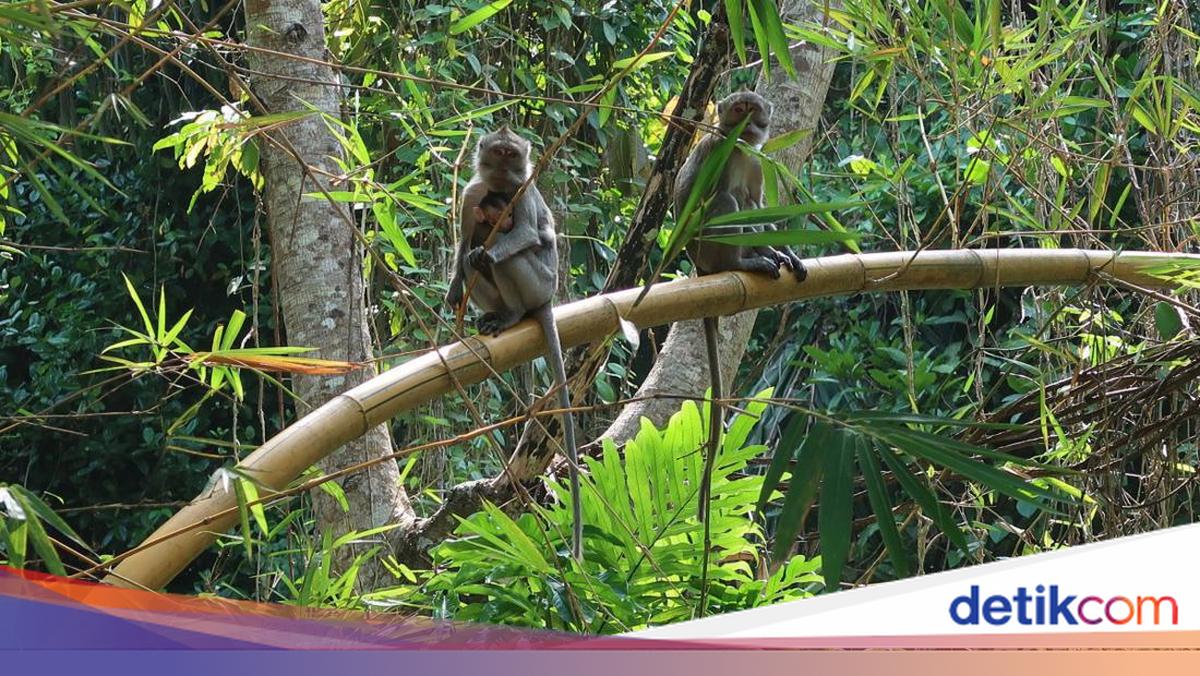
Gunungkidul’s Environmental Agency (DLH) said it had taken steps to address attacks by long-tailed macaques, including providing them with food in Tepus subdistrict. The measure has not proved effective, however, as the troops attack fields if their food is provided late.
“This year, one of the measures has been to provide food for long-tailed macaques in Tepus,” Gunungkidul DLH head Edy Basuki told detikJogja on Saturday (14 November 2026).
Edy said the food consists of fruit, such as bananas, placed in locations where monkey attacks frequently occur. In Tepus, these include the villages of Tepus, Purwodadi and Sidoharjo.
“But the results have not been as expected, because when feeding is delayed, the macaques become aggressive and damage residents’ farmland,” he said.
Edy said the DLH would no longer feed the troops next year and would pursue other measures.
“So there will be no more feeding next year. One planned measure is vasectomy, but that is still only a proposal,” he said.
Previously, troops of monkeys raided farmland in Panggang, Gunungkidul, taking seeds that farmers had just planted.
“It happened on Saturday. The planting had just finished when the long-tailed macaques came and disturbed the land,” Panggang III hamlet head Agung told detikJogja on Sunday (8 November 2026).
The incident, which took place around Alas Tlogo in Girisuko, Panggang, Gunungkidul, went viral on social media. A video showed the troops taking over residents’ fields.
“After the planting, the monkeys immediately took the seeds. There were a lot of them,” he said.
The attacks have been happening for about a year. Despite their losses, farmers have continued trying to replant.
“Most of the farmland in Panggang has been affected. The attacks damage the fields and force farmers to plant again because the monkeys take the seeds,” he said.
Extreme weather suspected
Gunungkidul Agriculture and Food Agency head Rismiyadi said monkeys are found in several subdistricts across the regency. He said the attacks on farmland were believed to be linked to weather conditions.
“Extreme weather is suspected of driving monkey populations into residents’ ready-to-plant fields. In Panggang, for example, they may be taking seeds that have just been planted,” Rismiyadi said.
Preventive measures
Mitigation and preventive measures are already under way. Rismiyadi said the regency administration was working with the Yogyakarta Natural Resources Conservation Agency (BKSDA) and academics from Gadjah Mada University (UGM) to determine how to respond.
“The BKSDA and DLH are planting various fruit trees in areas such as the Paliyan Wildlife Reserve to provide natural food inside the forest,” he said.
Trials have also been carried out to provide supplementary food, such as cassava, along the forest boundary to keep the macaques from moving into residents’ fields. Farmers have also installed rattling barriers or used firecrackers to scare the troops away.
“Population-control options are also being discussed and studied, including relocation, sterilisation and legally authorised quotas for capture or population reduction under conservation regulations,” he said.