
Monitoring the Movements of Thousands of Hajj Pilgrims from the Control Room in Mecca
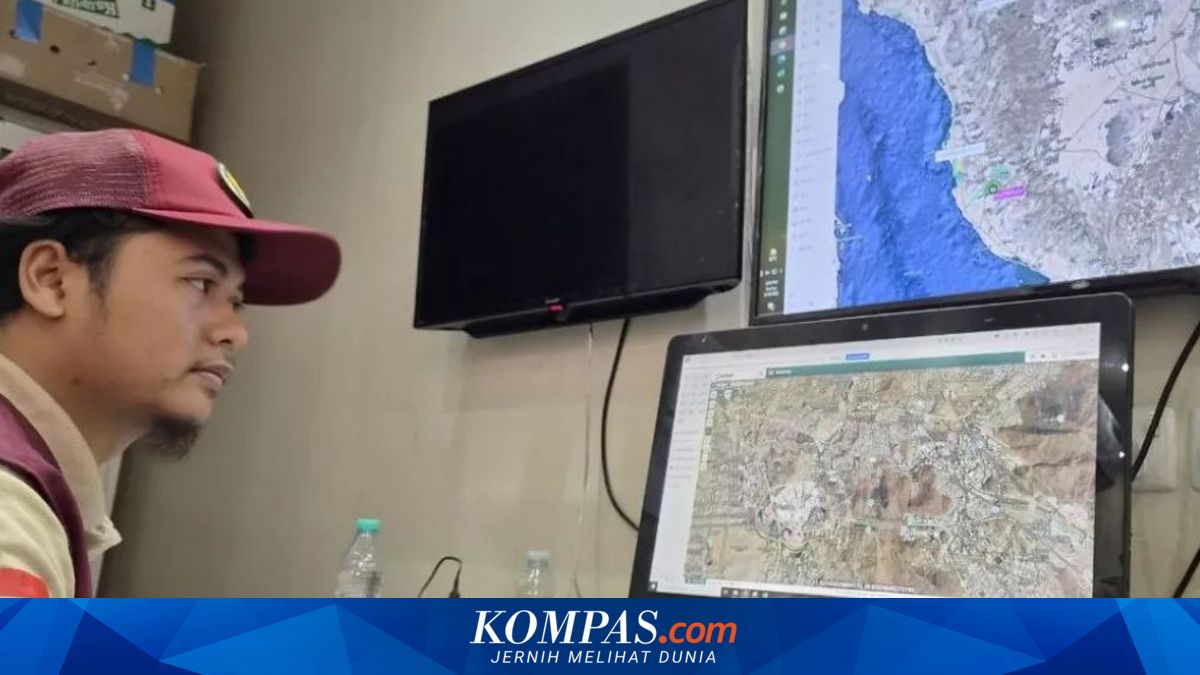
MECCA, KOMPAS.com - Behind the smooth movement of thousands of Indonesian Hajj pilgrims lies a room dedicated to controlling their mobility. This is the transportation service room that operates non-stop for 24 hours every day. The room is relatively small, measuring just 6x4 metres, and is located directly opposite the reception desk of the Indonesian Hajj Affairs Office for the Mecca Working Area (Daker Makkah). Despite its limited size, the room’s function is crucial. Five large monitor screens glow continuously, displaying real-time coordinate points that are more than just digital numbers. What is being monitored are the thousands of lives of the first wave of pilgrims currently moving from Medina to the holy city of Mecca using the City Inter-City Hajj Transport Fleet (AKAP) buses. Records show that since morning, 132 buses have been deployed to carry 7,838 pilgrims from 20 clusters departing from Medina. Amid the bustle of monitoring the fleet, Arudi, one of the transportation service officers, appears very busy. His hand tightly grips the handy talky (HT), familiarly called ‘Bravo’. Other officers are seen monitoring GPS, particularly the movement of pilgrims from Cluster 29 of the Solo Embarkation (SOC 29). This extra communication is mandatory to ensure that when the pilgrims arrive, hotel rooms and catering services are ready to welcome them. “The benchmark is the bus position at what kilometre relative to the hotel distance. For example, if the position is at a certain kilometre, it will arrive at the sector in about two hours, so they prepare,” said Arudi, explaining the field coordination techniques. The key to the accuracy of timing and information lies in the application of digital technology. Moh Afifuddin Zuhri, Head of the Transportation Section of the PPIH Daker Makkah, revealed that the bus monitoring system is now integrated with GPS technology and a special application. Afifuddin realises that schedule estimates on paper cannot always be used as a rigid benchmark.