
Momentum to strengthen integrity of law enforcement
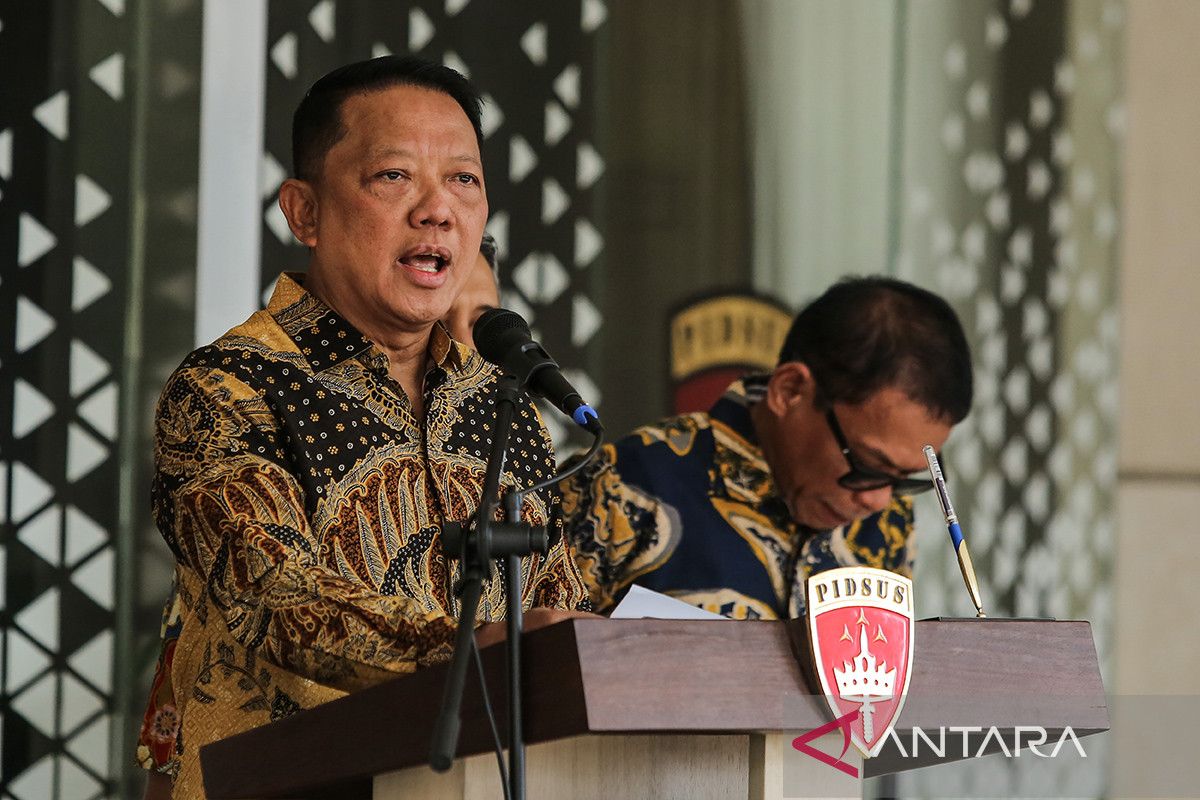
The investigation into alleged corruption in coal supply governance, which reportedly caused power outages in several regions, has drawn public attention after police searched over a dozen locations in Jakarta and West Java. From the series of searches, investigators seized cash in various currencies, gold bars, and a number of documents and electronic devices believed to be related to the case.
At nearly the same time, the residence of an official within the prosecutor’s office was guarded by Indonesian Military personnel under a protection mechanism for prosecutors carrying out their duties. This situation sparked various speculations in the public sphere, especially since one of the searched locations had previously been linked to an incident involving the official. However, both the police and the prosecutor’s office have asked the public to respect the legal process and uphold the presumption of innocence.
These developments represent a crucial test for law enforcement in Indonesia. On one hand, the public expects every alleged criminal act to be investigated professionally and without discrimination. On the other hand, the legal process must also be conducted transparently, accountably, and free from prejudice so that public trust in law enforcement institutions is maintained.
A state of law is not only measured by the number of cases uncovered, but also by the manner in which the law is enforced. Article 1 paragraph (3) of the 1945 Constitution of the Republic of Indonesia affirms that Indonesia is a state of law. Consequently, every law enforcement process must be carried out based on the law, not based on interests, pressure, or developing public perception. Integrity is a prerequisite to ensure that the authority possessed by law enforcement officers does not turn into a tool of power, but remains an instrument for upholding justice.
Dynamics involving fellow law enforcement officers should not be viewed as an inter-agency battle. On the contrary, if the entire process is carried out according to their respective authorities, it reflects the functioning of the checks and balances mechanism within the law enforcement system. No institution is immune to oversight, just as no institution may be intervened with in carrying out its constitutional duties. The principle of equality before the law requires that every person, including officials, be treated equally before the law.
The integrity of law enforcement must be interpreted more broadly than just the courage to investigate cases. Integrity is also reflected in respect for the presumption of innocence, professionalism in investigations, and the ability of each institution to maintain its independence without creating conflicts that erode public trust. It is under these conditions that the quality of a state of law is truly tested.