
Molicel Capitalises on Hybrid Car Demand Surge with Next-Gen Battery Cell
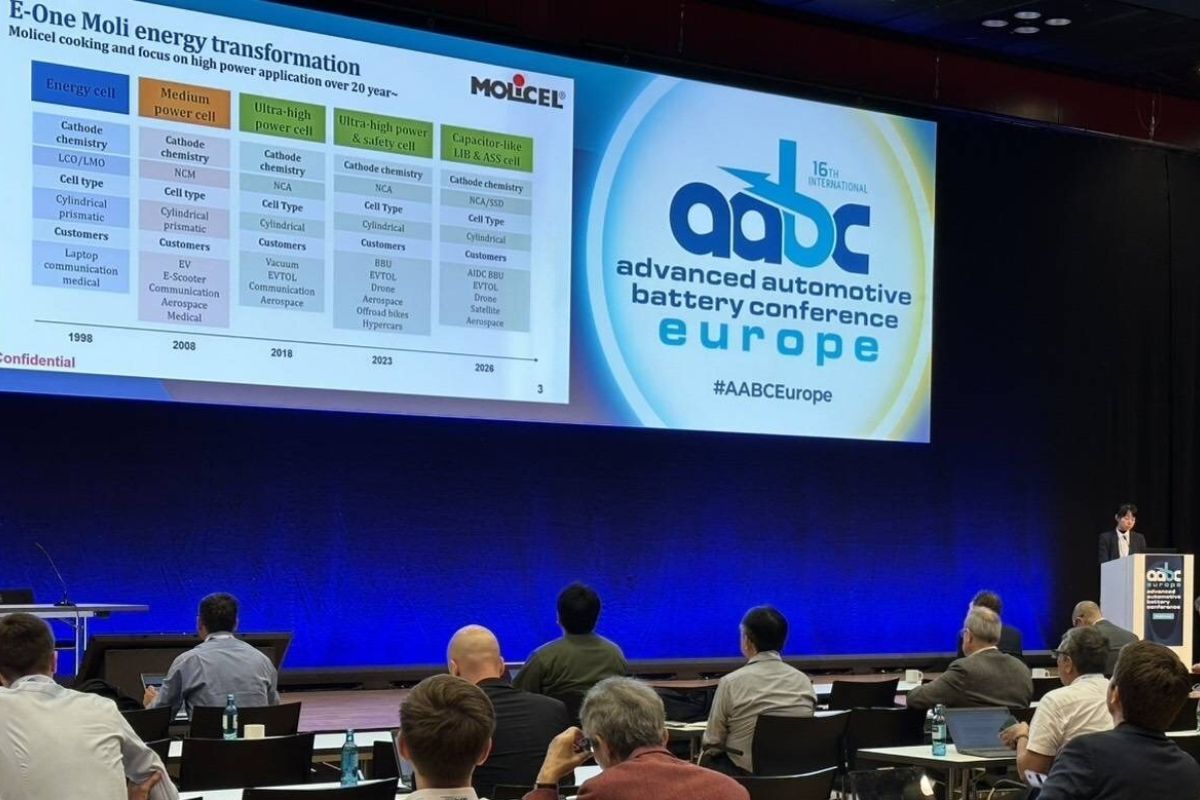
Molicel, a pioneer in ultra-high-power battery cell development, has reinforced its technology leadership at the Advanced Automotive Battery Conference (AABC) Europe 2026 by introducing the INR-21700-P70X, the latest flagship product in its PX series. This next-generation cell merges the advantages of lithium-ion batteries and supercapacitors, setting a new industry benchmark with a 7,000 mAh capacity, an energy density of 340 Wh/kg, and high-rate continuous discharge capability up to 30C.
The launch of the INR-21700-P70X comes as the global automotive industry pivots increasingly towards hybrid vehicles amid slowing growth in the battery electric vehicle (BEV) market. According to 2026 projections from the International Energy Agency (IEA), automotive manufacturers worldwide are prioritising hybrid vehicle development as a core growth strategy. This trend is evident across regions: in the United States, hybrid vehicles accounted for nearly 20 percent of new car sales by the end of 2025, according to CNBC. In Europe, the market share reached 24 percent, based on data from the International Council on Clean Transportation (ICCT). Meanwhile, the Asia-Pacific region dominates the global hybrid vehicle market, commanding a 51.73 percent value share across all segments, from mild hybrid and full hybrid to plug-in hybrid. This growth is expected to drive the global hybrid vehicle market value from US$335.21 billion in 2026 to US$570.78 billion by 2034.
The surge in hybrid vehicle demand is reshaping battery technology requirements. Next-generation hybrid vehicles require batteries capable of storing large amounts of energy while delivering high power instantly. Addressing this need, Molicel’s INR-21700-P70X overcomes the limitations of conventional batteries in balancing energy density and power performance. Capable of delivering 900 watts of peak power for five seconds, the cell provides instantaneous current for rapid acceleration, such as during overtaking, and optimally absorbs energy during regenerative braking. The cell can also switch to high-power output in less than 200 microseconds, delivering a response equivalent to a supercapacitor. This capability allows the vehicle to respond stably to high-frequency power pulses without performance degradation.
“The global automotive landscape is becoming increasingly diverse, while the need for instantaneous, high-frequency power supply continues to grow,” said Casey Shiue, President of Molicel. “The next-generation PX series is more than just a technological refinement. By combining supercapacitor-like response speed with the high energy density of lithium-ion batteries, we are fundamentally transforming the performance, driving safety, and service life of hybrid powertrain systems.”
Molicel has also set a new standard in driving safety by meeting the stringent UL9540A thermal runaway requirements, a rigorous international safety standard for energy storage systems and critical electrical infrastructure. Thanks to its proprietary single-crystal technology, Molicel’s cells can reduce heat release from exothermic reactions by nearly 50 percent compared to conventional poly-crystal materials. This advantage is clearly demonstrated in abuse tests simulating extreme conditions, where Molicel cells did not immediately experience a massive explosion like typical batteries, but instead only emitted smoke. This characteristic significantly slows and limits thermal propagation, reducing the risk of heat spreading to adjacent cells. This level of protection has become a critical advantage for battery backup units (BBU) in data centres handling critical workloads, and provides greater safety assurance for automotive manufacturers developing next-generation hybrid electric vehicles (HEVs).
In terms of durability, hybrid vehicle batteries face different challenges compared to battery electric vehicle (BEV) batteries. While BEV batteries typically undergo full charge and discharge cycles daily, hybrid vehicle batteries must endure hundreds of thousands of charge and discharge pulses in a short period with relatively small capacity changes. In tests simulating this scenario using a supercapacitor profile, Molicel’s PX series retained 96 percent of its capacity after one million cycles (+10C for 10 seconds / -2C for 110 seconds, with a cut-off temperature of 83°C). This durability suggests the battery system’s service life could outlast the vehicle itself, thereby reducing warranty burdens for automotive manufacturers.
By combining the energy density of conventional lithium-ion batteries with microsecond-level response, lower thermal characteristics, and the one-million-cycle durability of a supercapacitor under high-power pulse conditions, Molicel is strengthening its position as a technology partner supporting the acceleration of the transition to hybrid vehicles in the global market.