
Moldovan Prime Minister Abruptly Resigns, Government Dissolved
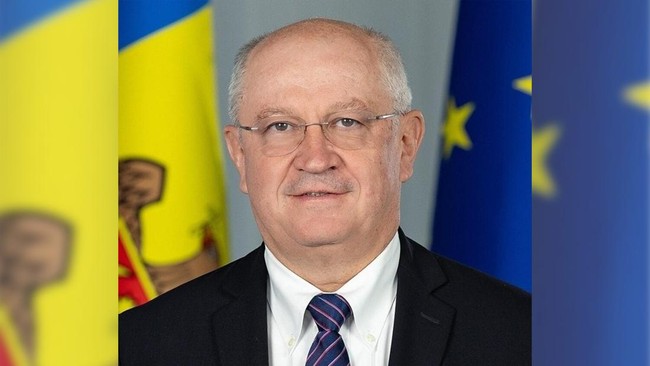
Moldovan Prime Minister Alexandru Munteanu unexpectedly announced his resignation on Friday (3/7/2026). The decision automatically results in the dissolution of the government of the EU candidate member state, although the cabinet will continue to perform its duties as an interim government until an official successor is appointed.
Munteanu’s resignation comes less than a year after he was sworn in to lead the pro-Western administration following a fierce election, which was viewed as a battle for Moldova’s future direction—between closer integration with Europe or remaining under Russian influence.
In a statement posted via social media, Munteanu did not provide detailed reasons for his decision. He only emphasised that he chose to step down because he felt he could no longer carry out his mandate in accordance with his principles and beliefs.
“Today I am ending my term as Prime Minister,” Munteanu wrote. “As I realised that I could no longer carry out my mandate according to my principles and beliefs, I chose to resign.”
Munteanu also stated that since initially accepting the position, he had a strong determination to bring change to his country. “I accepted the offer to become Prime Minister with full responsibility and a strong belief that I could contribute to changing the situation for the better,” he said.
Under Moldovan regulations, the resignation of a Prime Minister takes effect immediately upon announcement. However, the cabinet continues to function in a governmental capacity as an interim administration until a new government is formed.
Moldovan President Maia Sandu responded to the resignation by expressing appreciation for Munteanu’s leadership while facing the various challenges confronting the nation. In an official statement, Sandu noted that Munteanu had led Moldova through a “complex period”. However, she also hinted that the government requires more active leadership in addressing various issues.
“I am grateful for his leadership during a complex period for Moldova,” Sandu said, as reported by The Associated Press. Nevertheless, she added that she expects “greater involvement in complex decision-making, as well as greater openness to listening to the people.”
Sandu confirmed that the process of forming a new government will begin shortly. Next week, she will hold consultations with various parliamentary groups to determine the next Prime Minister candidate. “We have an obligation to succeed in bringing Moldova into the European Union and helping this country,” Sandu added.
However, she acknowledged that finding the right figure to lead the government would not be an easy task. “I do not know how long the process will take, but we must succeed in forming a government as quickly as possible,” she continued.
Moldova is a country situated between Ukraine to the east and Romania to the west. The nation was previously part of the Soviet Union until declaring its independence in 1991.
In recent years, Moldova has increasingly oriented its foreign policy towards the West, including obtaining candidate status for European Union membership. This move has positioned Moldova as an arena for geopolitical competition between Russia and European nations, particularly since the war in Ukraine has heightened tensions in the Eastern European region.