
Mojtaba Khamenei's Secret Letter Leaked, Shaking Iran's Elite
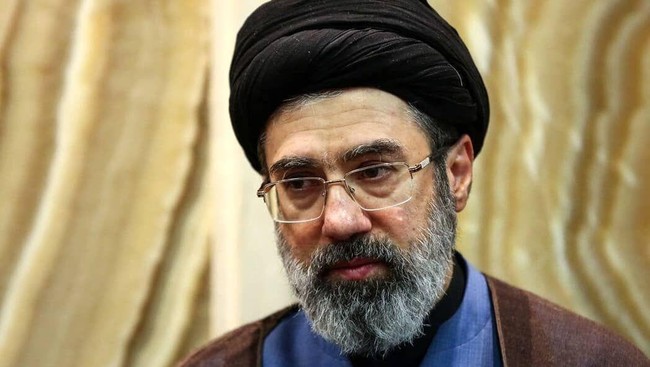
A major controversy is shaking Iran’s political elite after a former member of the country’s negotiating team revealed the contents of a letter claimed to be secret correspondence from Iran’s Supreme Leader concerning negotiations with the United States. The disclosure has triggered threats of legal action, demands for dismissals from parliament, and the resignation of a senior state broadcasting official.
Mahmoud Nabavian, who was a member of Iran’s negotiation team in a previous round of talks with the US in Islamabad, is now facing mounting political pressure after appearing on Iranian national television and divulging what he called the contents of secret letters from the Supreme Leader. Nabavian currently serves as deputy chairman of Iran’s National Security Council. In an interview broadcast by state television, he claimed to have seen secret correspondence written by Mojtaba Khamenei, which he said indicated that the Supreme Leader believed the negotiating team had exceeded its mandate.
The broadcast was abruptly cut off, but only after Nabavian had made sensitive claims about the correspondence. Shortly after the incident, the interview archive was removed from the state broadcasting platform. About an hour after the censored broadcast, a senior official at the state broadcasting institution was also reported to have resigned.
Nabavian’s statement immediately drew sharp reactions from various parties. A spokesman for Iran’s negotiating team rejected the claims, calling them old information that had been twisted. Meanwhile, Iranian state television stated that Nabavian’s comments could be categorised as a legal violation. The state broadcaster described his statement as evidence of a legal breach and worthy of prosecution.
On the other hand, figures in the camp of Mohammad Bagher Ghalibaf, Iran’s chief negotiator in the latest talks in Switzerland, demanded that the party who leaked the classified information be identified immediately. Centrist and reformist circles also renewed their criticism of Iran’s state broadcasting institution, IRIB. They have for years accused the state media of acting as a political tool for hardline groups affiliated with the Paydari Front, or Stability Front, a group that Nabavian has long supported.
Regardless of the document leak controversy, the incident is also seen as lifting the veil on the extent of the Supreme Leader’s involvement in the negotiation process with the US. Many have long assumed Khamenei only provided general direction. However, Nabavian’s disclosure indicates that the Supreme Leader is directly involved in the details of the negotiations. Reports circulating suggest the negotiating team once waited up to two weeks to obtain guidance on the next steps in the talks. During this process, Khamenei is said to have sent various detailed questions to the negotiators.
The Supreme Leader himself has made few public appearances since the start of the latest talks. He has not issued any voice recordings or public speeches and has more often conveyed his views through written statements. In a letter to Iranian President Masoud Pezeshkian published last Thursday, Khamenei acknowledged that he held different views on the outcome of the negotiations compared to the president, but chose to respect Pezeshkian’s judgement under certain conditions.
According to Nabavian, the Supreme Leader actually set 11 conditions that must be met before negotiations could proceed. These conditions include compensation from the US, recognition of Iran’s right to continue enriching uranium, the lifting of sanctions, the release of frozen Iranian assets abroad, and full recognition of Iran’s sovereignty over the Strait of Hormuz. Nabavian claimed Khamenei specifically emphasised Iran’s position on the strategic shipping lane. According to him, Khamenei stressed the importance of Iran’s monopoly over the management of the Strait of Hormuz, the collection of fees from passing ships, restrictions on enemy vessels, and the allocation of revenue from these fees to the people, the families of martyrs, and veterans. He also claimed that the reopening of the Strait of Hormuz should only occur if the United States first agreed to pay compensation to Iran. The United States has indeed agreed to the establishment of a $350 billion development fund, but Washington has stressed it will not be a contributor to the fund.
Nabavian further claimed that Khamenei once sent a message to the negotiating team containing sharp criticism of the results of previous talks. According to Nabavian, the message read: ‘What was agreed in the Pakistan negotiations is completely different from what should have happened and is a condition for the legitimacy of the negotiations, so the negotiations must be stopped.’ The statement referred to the talks in Islamabad, which in practice did discuss several aspects of Iran’s nuclear programme. After the television interview was halted, Nabavian continued his argument via his Telegram channel. He denied leaking classified documents and insisted he was only conveying facts to the public. According to Nabavian, based on a previously drafted memorandum of understanding, there were four main conditions that had to be implemented before official negotiations could begin. These four points were the end of the occupation in Lebanon and a full withdrawal, the unblocking of Iranian funds by the US, the lifting of the blockade, and the temporary lifting of sanctions. He then questioned whether these four conditions had truly been met before officials from the Ministry of Foreign Affairs proceeded.