
Mojtaba Khamenei Suddenly Appears, Delivering Message to America
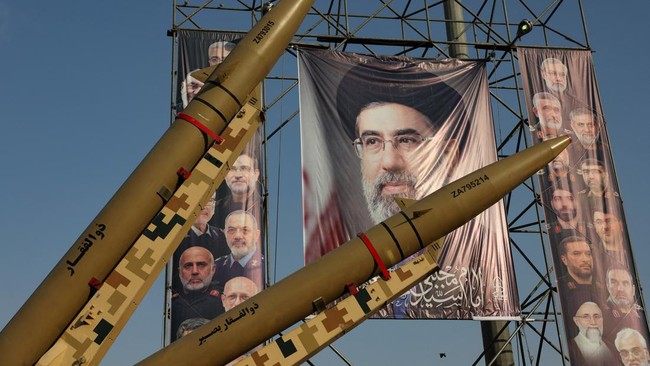
Iran’s Supreme Leader Mojtaba Khamenei has asserted that the United States will be forced to leave the Middle East after suffering a devastating and painful blow.
Quoting Channel News Asia (CNA) on Tuesday (29/09/2026), the statement was delivered via government television broadcasts on Monday local time. Khamenei, who has not been seen in public since the start of the Middle East war in late February, issued this harsh warning amidst intensifying efforts to revive negotiations to end the fighting.
“Today, after suffering a painful blow at the hands of brave fighters and the guardians of the Strait of Hormues, they (the enemy) do not dare to cross the Arabian Sea,” he stated firmly in a written statement without explicitly naming the US.
“Whenever they take this risk, they only bring loss upon themselves. Before long, the Arabian Sea will also be free from their presence,” Khamenei added.
The Arabian Sea, which stretches from the Arabian Peninsula to India in the east, is a vital maritime corridor leading to the Iranian coast and the Strait of Hormuz. Iran and the US have continued to struggle for control over Hormuz since the war broke out following US-Israeli attacks on Iran in February.
Prior to the outbreak of war, this strategic shipping route supported approximately one-fifth of the world’s total oil and gas supply. However, Tehran immediately imposed a blockade in Hormuz after the war began, which was subsequently met by Washington blockading all Iranian ports.
Regarding diplomatic efforts, Iranian Foreign Minister Abbas Araghchi in New York revealed on Monday that his country has informed the US and the international community of the conditions set by his Supreme Leader for reopening the Strait of Hormuz. Araghchi mentioned that Iran has discussed various ideas with Qatari mediators and is now awaiting a final response from Washington via Doha.
“If the American side claims they are seeking a deal or a peaceful solution, we have presented that solution,” he explained.
Last week, US President Donald Trump flatly rejected Iran’s proposal for a seven-day ceasefire followed by the reopening of the Strait of Hormuz. This initiative was raised by Iran at the UN General Assembly in New York through Qatari mediators.
“They want to make a deal to open the Strait of Hormuz immediately because they have suffered a crushing defeat,” Trump said shortly before departing for Tennessee.
“We are winning big,” said Trump. Nevertheless, he predicted that negotiations with Iran would continue this week.
Analysts remain sceptical that this latest diplomatic manoeuvre will result in an instant breakthrough, given that Washington and Tehran remain sharply divided over the terms of any potential agreement. Kamran Bokhari, a strategic analyst from the non-profit Middle East Policy Council, highlighted the fact that this diplomatic push is coming purely from Tehran.
“This time, Iran is the one proposing the plan,” he noted.
“And it is not surprising; they must be suffering economically, which was expected given the blockade,” Bokary concluded.
Furthermore, Bokhari added that while there is always room for compromise, from Washington’s perspective, there has been no change in their primary demands, which require Iran to cease uranium enrichment and stop arming its proxy groups in the region.