
Moestar Urges Indonesians to Strengthen Dialogue and Democratic Maturity
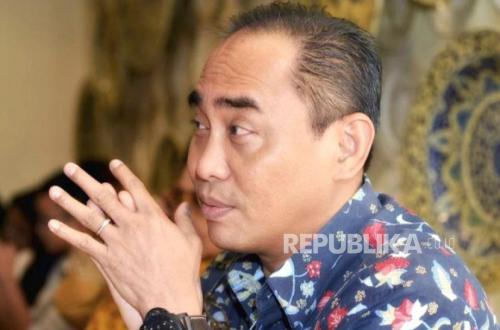
JAKARTA — A wave of demonstrations in several European countries, from France and Italy to Serbia, serves as a warning to Indonesia about the importance of government sensitivity to public concerns. Grievances that are not addressed promptly could develop into greater social unrest, particularly when people feel the state is no longer listening to their aspirations.
Moestar Putra Jaya, chair of the Jayabaya University Foundation, said social stability could not be maintained solely through government action once demonstrations or riots had already occurred. In his view, public calm must be built well in advance through sound policies, open communication and a willingness by the government to listen to the various problems people face.
“Calm must be built well beforehand, through sound policies, open communication and a willingness to listen to the public,” Moestar said in a statement in Jakarta.
Moestar pointed to a range of issues underlying demonstrations in several European countries. These included rising living costs, limited job opportunities, education conditions, the quality of public services and demands for government accountability.
In some countries, demonstrations have escalated into clashes and damage to property. Moestar said these developments should concern Indonesia, not as a cause for alarm but as a lesson about the risks of allowing social problems to persist.
“This is not to frighten the public, but to serve as a reminder that social problems that are not handled well can grow into wider problems,” he said.
He stressed that Indonesia has a different social character, history and political dynamics from European countries. Conditions abroad therefore cannot simply be equated with those in Indonesia.
Nevertheless, the experience of other countries remains relevant as a basis for evaluation and for strengthening democracy, improving welfare and maintaining relations between the government and the public.
“The government needs to listen before people feel they are no longer being heard,” Moestar said.
Public grievances do not always begin with politics
Moestar explained that public dissatisfaction does not always stem from political issues. In many cases, anxiety arises from everyday problems that directly affect people’s lives.
The cost of basic necessities, the availability of jobs, education costs, access to healthcare and uncertainty about the future can all become sources of concern if they do not receive adequate attention from the government.
The government’s success in responding to public concerns should therefore not be measured solely by how quickly officials make statements during demonstrations.
According to Moestar, what matters more fundamentally is the government’s ability to identify problems before they develop into widespread dissatisfaction.
“What matters far more is how quickly fundamental problems are recognised, how openly the government explains its policies and how tangibly people feel the effects of improvements,” he said.
He acknowledged that the government cannot always meet every public demand immediately. Every decision involves considerations, budget constraints and consequences that must be weighed carefully.
However, these constraints should not be used as a reason to deny the public’s right to transparent, rational and accountable explanations.
“If a policy is not yet right, reviewing it is not a sign of weakness, but part of the responsibilities of government,” he said.
Moestar said leaders’ sensitivity was an important factor in preventing public dissatisfaction from growing. The government, he argued, should not wait for grievances to spread before taking steps to resolve them.
Once dissatisfaction has taken hold, opportunities for dialogue may narrow, while public trust in the government may decline.
To prevent this, Moestar urged that public communication and complaints channels be made genuinely effective.
Dialogue with students, civil society organisations, workers, businesspeople and vulnerable communities must lead to concrete follow-up, rather than merely serving as a formal government exercise.
“We need to recognise that preventing unrest is far wiser than being preoccupied with restoring conditions after damage has been done,” he said.
Criticism is part of democracy; violence must be avoided
Moestar also cautioned that responsibility for safeguarding stability and democratic life does not rest with the government alone. The public, too, has a duty to express its aspirations responsibly.
He stressed that demonstrations are a citizen’s right in a democracy. Criticism of government policy should not be interpreted as a lack of love for the country.
On the contrary, criticism may reflect public concern about the state of the country and a desire for the government to make improvements.
Nevertheless, the expression of aspirations must respect the law, public safety and the wider public interest.
“What we must ensure is that differences of opinion do not turn into hatred, and that anger does not justify actions that harm others,” Moestar said.
He highlighted the damage to public facilities and the disruption of economic activity when demonstrations turn violent.
Public facilities that are damaged must ultimately be repaired at a cost borne, in part, by the public. Meanwhile, disruption to economic activity can put direct pressure on small traders and daily workers.
People with limited financial means may be among those who feel the negative effects of unrest most quickly.
Moestar therefore urged the public to exercise sound judgement, verify information and avoid being easily swayed by unverified reports.
He also called on public figures to be careful in their statements, particularly when social tensions emerge.
“Public figures should set an example by expressing their views responsibly, rather than heightening tensions,” he said.
Source: jawawa.id (https://jawawa.id/newsitem/moestar-urges-indonesians-to-strengthen-dialogue-and-democratic-maturity-1792943472)
Originally published by Republika (https://news.republika.co.id/berita/tngw03451/moestar-ajak-bangsa-indonesia-perkuat-dialog-dan-kedewasaan-demokrasi), translated from Indonesian