
Moeldoko Expresses Concerns to Parliament Over Ban on Electric Cars and Motorcycles on Sea Vessels
The distribution of electric vehicles via sea routes continues to face significant challenges. The electric vehicle industry has highlighted growing concerns regarding the risk of battery fires when electric vehicles are transported using ships.
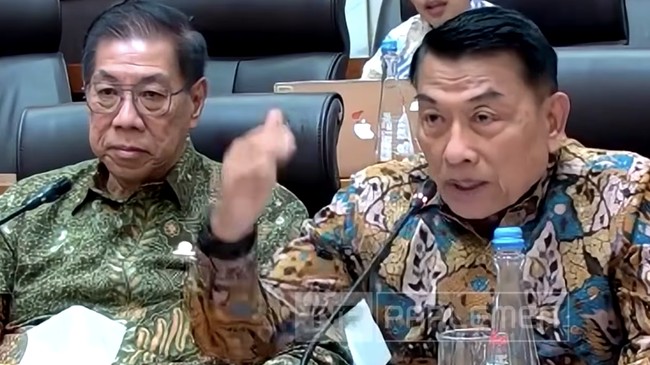
“Standard Operating Procedures (SOP) are needed for the transport of electric motor vehicles, including motorcycles, passenger cars, and commercial vehicles, via both land and sea,” stated Moeldoko, Chairman of the Indonesian Electric Vehicle Industry Association (Periklindo), during a working meeting with Commission VII of the Indonesian House of Representatives (DPR RI) on Monday (21/09/2026).
According to him, business players are currently facing difficulties when attempting to ship electric vehicles using sea vessels. “Because currently, entrepreneurs in this sector, when they want to send motorcycles, trucks, or passenger vehicles, there is a prohibition on sea vessels,” he said.
These distribution issues are particularly burdensome for small-scale industries. Unlike large manufacturers who possess greater capacity, small industries cannot afford to prepare their own ships solely for transporting their vehicles. “Unless it is BYD, as that manufacturer brings its own ship. But small industries require distribution in smaller quantities and cannot possibly prepare an entire ship,” Moeldoko added.
On the other hand, Moeldoko noted that safety standards for electric vehicles must be strengthened. He highlighted the specific characteristics of lithium batteries, which require specialised handling in the event of a fire. “Because lithium is not something that can be extinguished simply by pouring water on it. It cannot use conventional fire extinguishing equipment,” he explained.
Consequently, specific standards are required to handle lithium battery fires, including during the transportation of electric vehicles. He also emphasised the need for clear SOPs for transporting electric vehicles via land and sea so that safety aspects and industrial distribution needs can proceed in tandem. “Therefore, a specific standard is also needed to resolve lithium battery fires,” said Moeldoko.
Previously, the Ministry of Transportation revealed that some ship operators remain reluctant to transport electric cars. One of the reasons relates to compliance with safety regulations set by the government. These safety provisions currently refer to circular letters issued by the Ministry of Transportation.
Samsuddin, Director of Shipping and Seafaring at the Ministry of Transportation, stated that they are still receiving reports of several operators being unwilling to transport electric vehicles. “Indeed, we are still receiving information that some operators are still reluctant to transport electric vehicles,” he told CNBC Indonesia at the Ministry of Transportation recently.
Source: jawawa.id (https://jawawa.id/newsitem/moeldoko-expresses-concerns-to-parliament-over-ban-on-electric-cars-and-motorcycles-on-sea-vessels-1789998748)
Originally published by CNBC Indonesia (https://www.cnbcindonesia.com/news/20260921162551-4-769651/moeldoko-curhat-ke-dpr-mobil-motor-listrik-dilarang-naik-kapal-laut), translated from Indonesian