
Modernisation Requires Long-Term Partners
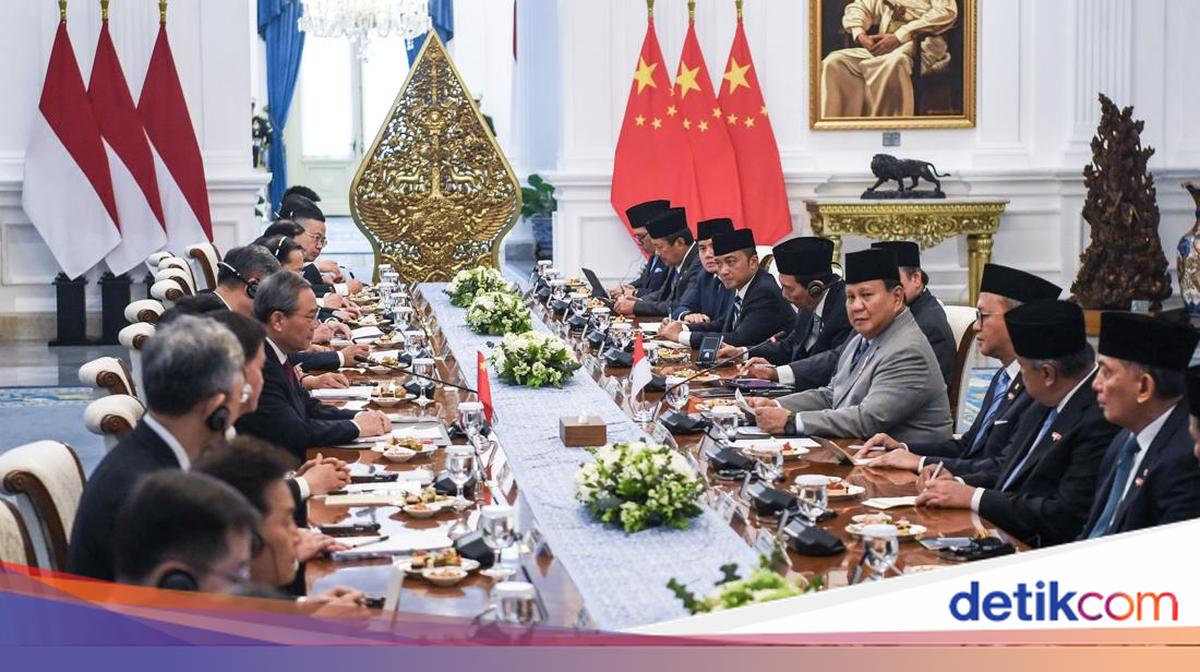
Recently, debate over a number of industrial policies, mineral resource management, and the investment climate in Indonesia has intensified. Several long-term investors, including through associations and chambers of commerce, have raised concerns about policy predictability, legal certainty, the effectiveness of coordination among government agencies, and operational costs for businesses. These inputs cover a range of issues, from mining production quotas, management of export proceeds, taxation and levies, forestry permits, to labour policies.
At the same time, another narrative has emerged in Chinese-language digital spaces. A number of articles and short videos portray various real obstacles faced by Chinese companies as signs of a ‘mass exodus of Chinese investment’ or even the ‘collapse of Indonesian industry’. Some directly link industrial policy adjustments to ‘anti-Chinese’ sentiment.
However, available information shows that although some Chinese companies are indeed facing pressure in the form of limited raw material supply, rising costs, and production capacity adjustments, these conditions do not necessarily mean that Chinese companies as a whole are leaving Indonesia. Moreover, this is not sufficient grounds to conclude that the direction of Indonesia-China economic and trade cooperation has fundamentally changed.
If the debate stops only at the question of whether ‘Indonesian policy is friendly or not towards Chinese companies’, a much larger context risks being overlooked: Indonesia is undergoing a profound economic transformation. At the same time, Indonesia-China economic and trade cooperation is also moving from a phase of rapid expansion towards a new stage that increasingly emphasises institutional quality, social responsibility, and long-term sustainability.
Downstreaming and Openness Are Not Contradictory
Indonesia’s resource downstreaming policy is not a temporary policy choice. From restrictions on raw mineral exports and the development of mineral processing capacity to the development of electric vehicles and the battery industry chain, the fundamental goal is to transform natural resource advantages into industrial capacity, employment, technological mastery, and higher domestic value added.
Under President Prabowo’s administration, this direction has not changed. Importantly, the Indonesian government also does not view downstreaming and efforts to attract foreign investment as two contradictory goals.
In April 2026, President Prabowo called for the investment climate to be continuously improved, for various regulations that hinder investment to be cut, and for governance to be enhanced with reference to international standards. Minister of Investment and Downstreaming Rosan Roeslani stated at the same time that investor interest in Indonesia remains strong.
The policy message is quite clear: Indonesia does not merely need capital flows, but investment that aligns with the national industrial strategy—investment capable of creating jobs, driving industrialisation, bringing technology, and building industrial capacity over the long term.
In 2025, Indonesia’s investment realisation exceeded the set target, while investment in the downstreaming sector recorded significant growth compared to the previous year. In the first quarter of 2026, investment realisation reached Rp498.8 trillion, growing 7.2 percent year-on-year and creating more than 700,000 jobs.
The proportion of foreign and domestic investment was relatively balanced, while investment outside Java was slightly higher than in Java. This data shows that investment and downstreaming remain important instruments for Indonesia to drive growth as well as more equitable development across regions.
Thus, the main issue is not whether Indonesia must choose between industrial transformation and international investment, but rather how the two can proceed in tandem and reinforce each other.
Industrial transformation requires capital, technology, markets, and management capability. Conversely, long-term investment requires a clear development direction, stable regulation, and calculable return prospects. The two are not naturally conflicting interests, but rather two agendas that must proceed together on Indonesia’s journey towards Golden Indonesia 2045.
Long-Term Investment Requires Measured Change
No industrial policy in any country will remain unchanged forever. Economic structures, international markets, technological developments, and societal needs continue to move. Policy adjustments in resource management, taxation, environmental standards, and industrial planning are a normal part of modern economic governance.
Long-term investors also do not expect the policies of the countries where they invest to never change.
What truly affects business decisions is why a policy changes, how the change is carried out, when new rules take effect, and whether businesses are given adequate time to adjust. For mining, manufacturing, and infrastructure projects with investment horizons of ten years, twenty years, or even longer, the most difficult issue to manage is often not the cost itself, but uncertainty.
Therefore, what long-term investment actually needs is not ‘policies that never change’, but predictable change.
This means that every major policy needs to have a clear legal basis and objective; government agencies need to maintain coordination and consistency in implementation; new obligations and standards need to be accompanied by a reasonable transition period; and when companies do adjust, the rules of the game should not shift arbitrarily mid-course.