
Modern Intelligence Must Analyse Digital Opinion Traffic
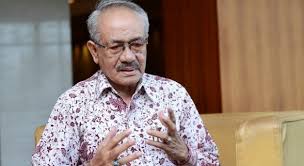
Intelligence and geopolitics analyst Amir Hamzah has observed that recent waves of social media attacks on President Prabowo Subianto display an unusual pattern. He states that assaults on platforms including Facebook, X (Twitter), YouTube, Instagram, and Threads appear systematic, massive, and structured.
In the modern intelligence perspective, digital opinion warfare is no longer mere political supporter debates. Continuous attacks with uniform narratives and near-simultaneous timing can be classified as political delegitimisation operations.
‘If we look at the pattern, this is not just spontaneous public criticism. There is narrative orchestration, issue repetition, public emotion manipulation, and the primary target is to undermine President Prabowo’s legitimacy in the eyes of the people,’ Amir said on Thursday, 28 May 2026.
He considers one indicator of structured digital operations is the simultaneous emergence of the same issues across multiple platforms within a short timeframe. Narratives are then reinforced by anonymous accounts, political influencers, short videos, memes, and comments designed to shape specific perceptions.
In intelligence terms, Amir explains, such operations are known as psychological operations or digital psyops — a form of psychological warfare to massively shape public perception. ‘The ultimate goal is not merely to criticise the government, but to create widespread public distrust. That is what we call delegitimisation,’ he said.
Amir notes that the attack pattern against Prabowo resembles digital operations seen in other countries when governments are destabilised through opinion warfare prior to greater political pressure.
He explained that in modern geopolitical theory, warfare is no longer confined to conventional weapons. Attacks can be waged through the economy, information, social media, and public perception manipulation.
‘Now it’s hybrid war. The battlefield is not just military but also social media. If public opinion is controlled, political stability can be shaken without deploying troops,’ he said.
According to Amir, the digital attacks on Prabowo also indicate substantial resources behind the operation. He suspects the activity requires significant funding due to its sustained, cross-platform nature.
‘This operation is expensive. It requires buzzers, content production teams, issue distribution, algorithm reinforcement, and trending topic management. So if it’s massive and consistent, it’s hard to call organic,’ he said.
Amir even suspects the involvement of elite groups with intelligence and information warfare experience.
He stressed that current digital operation patterns rarely occur in isolation and often relate to power elite interest struggles.
He also highlighted how certain issues are repeatedly manipulated to form negative perceptions of President Prabowo. Some issues, he said, are deliberately fabricated to cause psychological fatigue and loss of public trust in the government.
‘If the public is fed negative narratives daily, over time a perception of national failure emerges. That’s a classic perception operation technique,’ he said.
Amir warned the government not to underestimate social media opinion warfare. Modern political destabilisation often begins with seemingly simple narrative wars that gradually erode government legitimacy.
He assessed that the government needs to strengthen early detection of digital operations, including mapping issue dissemination networks, key actors, and funding sources. ‘Modern intelligence must analyse digital opinion traffic. Because today, attacks on the nation can start from algorithms,’ he said.