
Modern, a Moving Spirit
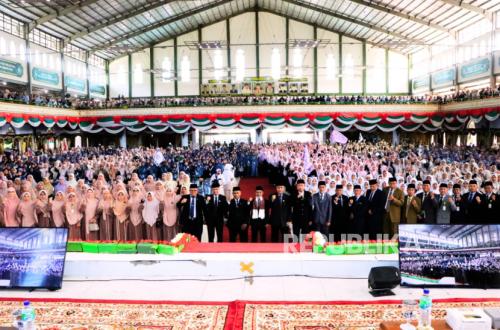
The word ‘Modern’ in the name Pondok Modern Darussalam Gontor is not merely the identity of an educational institution, but a statement about the direction of its struggle. It affirms that Islamic education must be able to engage in dialogue with its era without losing the values that form its foundation. Therefore, understanding Gontor cannot be achieved merely by looking at its educational system; one must also understand the spirit contained in the name it bears.
Interestingly, the designation ‘Modern’ was not initially given by the founders of the Pondok. The name emerged in the early days of its establishment, after a priest visited and witnessed the life of the Pondok, which was far different from most pesantren of its time: students wore ties and suits, lived disciplined lives, mastered foreign languages, and were active in sports, arts, skills, scouting, student organisations, and speech training. The entire life of the Pondok appeared lively, dynamic, and educational. From that admiration, the designation ‘Modern’ was born.
However, the founders of the Pondok did not stop at that outward impression. They filled the word ‘Modern’ with a much deeper meaning. Modern is not merely a manner of dress or a form of renewal that follows the currents of the age. Modern is a spirit that keeps moving, keeps learning, keeps improving itself, and keeps serving. From this, a designation turned into a philosophy, then transformed into a living culture that shaped the entire educational system of Gontor.
Modern Is a Spirit
The Pekan Perkenalan handbook explains that modern means ‘menjaman’ (being of the times). Being of the times does not mean dissolving into change, but rather having the sensitivity to read the age, understand its anxieties, and then answer them with knowledge, wisdom, and action—not submit to them.
Muhammad Iqbal viewed life as a movement that continually perfects itself; Ibn Khaldun reminded that progress will only endure if it has a spirit that guards the direction of its journey. Gontor combines both: modernity here is not built upon admiration for change, but upon the conviction that every change must be grounded in faith, adab (proper conduct), and the aspiration to build Islamic civilisation.
Modern Is Movement
The handbook emphasises that ‘Modern means active, not passive.’ This sentence teaches that life is movement, effort, and responsibility. The people of Gontor do not wait for change to come; rather, they prepare themselves to become agents of change who bring benefit. Being active is not merely being busy, but moving with the right purpose and in the right way.
In the perspective of Sufism, that movement is mujahadah; an unceasing struggle against one’s own weaknesses. Movement must be guided by sincerity so that it does not turn into ambition, and sincerity must be realised in action so that it does not become an excuse for inaction. Therefore, Gontor forges individuals who work hard without losing sincerity, and who serve without expecting reward.
That spirit is formulated in the philosophy of the Pondok:
المحافظة على القيم والتغيير إلى الكمال
‘Preserving values, and continually making changes towards perfection.’
This is the core of Gontor’s modernity. Islamic values remain a solid foundation, while the means of realising them must be continually perfected. Values become the roots that preserve identity, change becomes the effort that gives life, and al-kamal (perfection) becomes the horizon that is always pursued; never finished being chased, for it is precisely there that its eternal movement lies.