
Models of Image-Building and the Sin of Hypocrisy
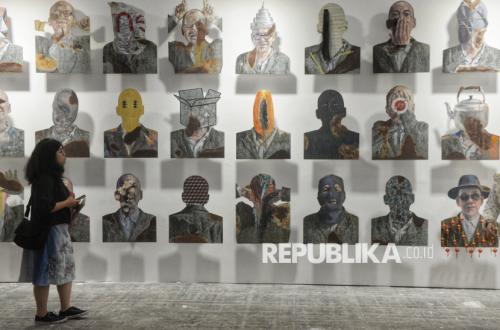
REPUBLIKA.CO.ID, JAKARTA – In this era, image-building has become a powerful social language, especially with the advent of social media. People not only want to be good, but also desire to appear good, whether consciously or not. They don’t just want to work, but to seem the hardest-working in a particular environment. They don’t just want to care, but to be photographed as the most caring in a situation. This is where the problem begins when goodness no longer stems from the heart, but from the need to be perceived as perfect and virtuous by others. Image-building is not inherently bad. In social interactions, everyone presents themselves according to their role, position, and responsibilities. A teacher wants to appear worthy of emulation. A leader aims to project authority and confidence. A public official seeks to seem close to the people and deeply concerned for their welfare. A religious figure strives to uphold moral conduct. To some extent, impression management is part of social etiquette. The issue arises when the image constructed no longer reflects inner thoughts and actual actions. In social psychology, Erving Goffman in his book The Presentation of Self in Everyday Life describes social life as a stage. People perform roles in front of others. The front region or front stage is where individuals present themselves to an audience, showcasing the impression they wish to convey. Conversely, the back region or backstage is where true nature, interests, and hidden motives are more visible. Image-building becomes dangerous when the front stage is filled with piety, compassion, and honesty, while the backstage is rife with manipulation, greed, and betrayal, thereby fostering hypocrisy. The image-building models typically have several patterns. First, symbolic image-building. Someone displays symbols of goodness: simple clothing, religious language, a people-oriented lifestyle, or empathetic social media posts. These symbols are important but can be deceptive if not accompanied by substance. Someone may appear simple, yet their policies harm the public. They may seem religious, yet their actions betray trust. Second, performative image-building. In this model, good deeds are done primarily for an audience. Aid is given when cameras are present. Concern emerges only when media is covering the event. Apologies are issued after going viral. Goodness turns into a performance. True moral value, however, is tested when there’s no applause, no public spotlight, and no social gain to be harvested. Third, defensive image-building. This is done to cover up mistakes. Someone facing ethical scrutiny suddenly appears more religious, friendly, generous, or nationalistic. The image is used as a shield. The public is shown a made-up face, not the wounds being concealed. In such cases, image-building is not merely a communication strategy but a form of obscuring the truth. Fourth, populist image-building. This often appears in political and bureaucratic life. Leaders appear among the people, hugging the poor, eating at small eateries, or using simple language. All this could be genuine. But if policies continue to favour the powerful, the people become mere moral decoration. They feature in photos but are absent from decisions. This is where image-building meets hypocrisy. A hypocrite is not merely someone whose words differ from actions. A hypocrite consciously creates a gap between outward appearance and inner reality. They speak well to conceal ill intentions. They promise trustworthiness while harbouring betrayal. They use moral language to pursue personal interests. The Quran issues a stern warning about hypocrisy. In Surah Al-Baqarah, verses 8–9, it states that some people say, “We believe in Allah and the Last Day,” though they are not believers. They seek to deceive Allah and the faithful, but only deceive themselves without realising it. This verse is powerful: hypocrisy is not just deceiving others, but also deceiving oneself. In Surah An-Nisa, verse 145, Allah states that hypocrites will be in the lowest depths of Hell. This shows the severity of the sin of hypocrisy. Why? Because hypocrisy erodes trust. A non-believer’s stance is clear. Openly evil individuals are easily identified. But hypocrites are dangerous as they present a face of goodness while hiding evil. The Prophet’s hadith also outlines signs of hypocrisy: when speaking, they lie; when promising, they break their word; when trusted, they betray. These three signs are highly relevant today. Many speak eloquently about integrity but easily lie. Many make promises readily but easily renege. Many entrusted with responsibilities turn them into opportunities for personal gain. The problem is that image-building often gains the spotlight faster than honesty. With social media, appearances can be trusted more than reality. Photos can override facts. Narratives can surpass evidence. Those skilled at managing impressions can seem more noble than those quietly working with sincerity. As a result, society gradually struggles to distinguish between genuine goodness and staged performances. Therefore, we must rebuild moral honesty. Goodness should not be measured by words alone, but by consistent actions. Do not judge people solely by their public persona, but by their track record when entrusted with responsibilities. Do not be easily dazzled by symbols, for symbols can be used by anyone.