
Mobile Phone Sellers Struggle as Sales Dry Up, with Only One Brand Selling Well
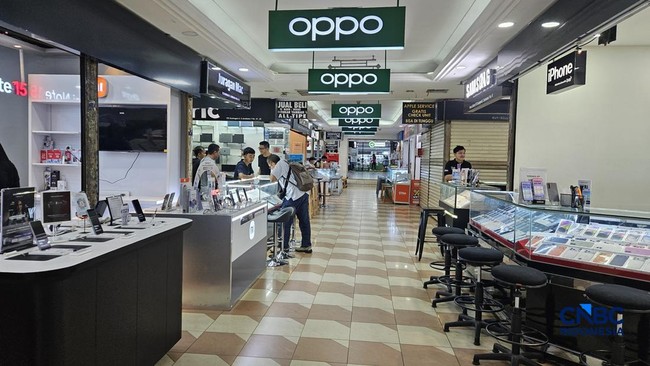
Jakarta, CNBC Indonesia — The global smartphone industry is in severe difficulty. Worldwide smartphone shipments fell by 20% year on year in the third quarter of 2026, reaching their lowest level for a third quarter since 2012.
The crisis has been driven by severe shortages and soaring prices for memory components (DRAM and NAND), following large-scale purchases for artificial intelligence (AI) infrastructure projects. Component costs have consequently surged, forcing manufacturers to raise retail prices by an average of 20% during 2026.
As the downturn has battered the mass market, the global competitive landscape has diverged sharply. Several Chinese vendors have suffered steep falls, while technology giants Samsung and Apple have set records and strengthened their dominance through premium-segment strategies.
Chinese phone makers hit hard; Xiaomi plunges
A new report from Counterpoint Research found that leading Chinese brands such as Xiaomi, OPPO and vivo have been among the worst affected, owing to their reliance on sales volumes in the entry-level and mid-range segments.
Xiaomi recorded the steepest decline among major players, with shipments plunging by more than 30% year on year. Its market share was eroded to 10%. The company has been forced to scale back production of low-cost phones and cut overseas expansion to avoid operating losses caused by uneconomic margins.
OPPO — including its OnePlus and realme lines — and vivo also saw shipments fall by more than 20% year on year, shrinking their respective market shares to 9% and 8%. OPPO has had to consolidate operations across its brands to improve efficiency, while vivo has been forced to sacrifice its low-cost Y-series models, which have been pushed out of the affordable price range.
Samsung and Apple shine
In contrast to Chinese competitors facing margin pressures, Samsung and Apple have demonstrated considerable resilience, thanks to the strength of their ecosystems and their dominance in the high-end flagship segment.
Samsung retained its position as the global market leader, securing a 23% market share — the largest share gain among manufacturers.
Although Samsung’s shipment volume edged down 3% year on year, its revenues remained strong, supported by high demand for its flagship Galaxy Z Fold8 foldable phone. A stable component supply chain also helped safeguard sales of the Galaxy A series in developing countries, as Chinese rivals pulled back.
Apple, meanwhile, achieved a record milestone. The Cupertino-based company’s market share reached 22%, its highest-ever level for a third quarter.
Although shipments were initially constrained by the absence of a standard iPhone 18 model during the launch phase, strong sales of the iPhone 18 Pro range — particularly in China and India — helped shore up and drive Apple’s performance.
Below is a summary of global smartphone shipment market-share data (sell-in) for the third quarter of 2026, according to Counterpoint Research:
The outlook remains bleak
Counterpoint forecasts that the smartphone industry will not emerge from the red in the near future. Manufacturers are expected to continue pursuing conservative strategies: cutting production volumes, streamlining their product ranges and relying heavily on flagship segments.
For price-sensitive consumers, pressure is expected to intensify as device prices remain high and component availability limited, until global supply chains have fully recovered.
Source: jawawa.id (https://jawawa.id/newsitem/mobile-phone-sellers-struggle-as-sales-dry-up-with-only-one-brand-selling-well-1791967824)
Originally published by CNBC Indonesia (https://www.cnbcindonesia.com/tech/20261014112422-37-776041/nasib-pedagang-hp-miris-jualan-tak-laku-cuma-merek-ini-yang-laris), translated from Indonesian