
Mobile Phone Prices Skyrocket, ITC Traders Cry Poor Sales
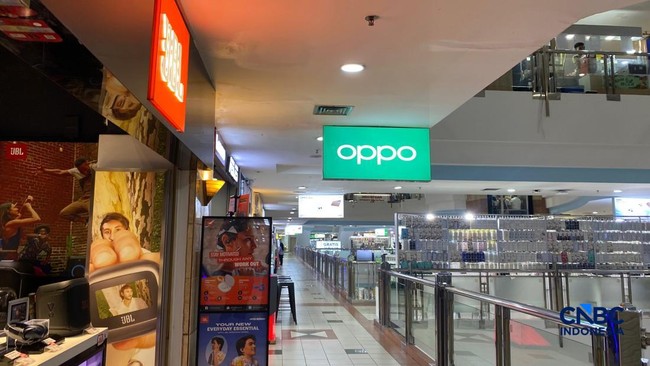
The weakening of the rupiah against the US dollar has begun to trigger price increases for a number of electronic products in the domestic market. Traders at ITC Kuningan say the prices of various electronic devices, from smartphones to memory cards, have continued to rise in recent months. They also predict the upward price trend will persist along with the strengthening of the US dollar and increasing component costs, including chips. The chip shortage crisis has been occurring since late 2025. The cause is a surge in demand for artificial intelligence (AI) chips, which has led manufacturers to sideline conventional chip production for consumer electronic devices such as mobile phones, laptops, game consoles, and household electronics. An employee at a shop in ITC Kuningan said the price increase trend has been felt since March to April 2026 and has impacted almost all categories of electronic devices. “In the future it will rise again, because it follows our dollar rate. It could go up every two weeks, because of the dollar and AI chipsets,” he said. He noted that price increases are not only occurring for mobile phones, but also for tablets, laptops, smartwatches and memory cards. In a worst-case scenario, the prices of some products could even multiply several times over. “All phones, electronics, even memory cards, could go up threefold. What used to be Rp100 now becomes Rp300,” he said. According to him, the price increases happen gradually. For mid-range products like the Redmi series, the increase is usually in the range of Rp100,000 to Rp200,000. However, for flagship lines, the jump can be much larger. “For Xiaomi’s flagship series, a single increase can be Rp500,000. For the regular series, it’s at most Rp100,000 to Rp200,000,” he explained. Similar complaints were also voiced by another shop employee at ITC Kuningan. He said the price increase does not only apply to new products, but also to used or second-hand devices. “Yes, everything has gone up. All the new ones have gone up too, the increases are severe, everything is expensive,” he said. For used devices like iPhones, the price increase is said to range from Rp200,000 to Rp300,000 per unit. Meanwhile, new products experienced a larger increase, around Rp400,000 to Rp500,000. The trader estimated that the upward price trend began to be felt since 24 May and covers almost all electronic products, from iPads, MacBooks, to phones and laptops. “Everything, iPads, MacBooks, all have gone up the same,” he said. The continuous price increases have also had a direct impact on sales activity. According to the traders, consumers are increasingly holding back on spending because prices keep moving upwards. “Yes, it’s not just quiet, it’s terrible,” said the shopkeeper when asked about sales conditions amid rising electronic prices. Amid pressure from the US dollar exchange rate and rising global component costs, traders predict mobile phone prices will continue to rise for some time to come. This condition means consumers planning to buy new electronic devices must be prepared to face increasingly expensive prices. Selling mobile phones is getting harder. The global memory chip shortage is said to have the most impact on the Asia-Pacific market, as cheap mobile phones dominate this region. These phones generally take thin margins, leaving little room to cope with wildly rising memory chip prices. Research firm Counterpoint has slashed its global mobile phone shipment growth projection for 2026 to minus 2.1%. Chinese manufacturers such as Honor, Oppo, and Vivo received the sharpest shipment revisions, with all three forecast to record negative growth of more than 1% to less than 4%. Memory chip prices still have the potential to rise by 40% throughout Q2-2026, which could increase production costs by around 8%-15%. The possibility is that manufacturers must swallow this risk themselves or share the burden by raising retail prices to consumers. “In the lower price segment, sharp price increases on mobile phones are not sustainable,” said Counterpoint Senior Analyst Yang Wang. “And if the cost pass-through mechanism is not feasible, OEMs will start trimming some of their portfolios. That is what we are actually starting to see with significantly reduced volume on lower-end SKUs,” he added. The average selling price of mobile phones is forecast to rise 6.9% year-on-year in 2026, up from a previous projection in September 2025 of a 3.6% increase. For markets like Southeast Asia and India, where devices priced below $200 drive sales volume, this represents a fundamental shift in affordability dynamics. According to a Q1 2026 report from research firms IDC and Counterpoint, mobile phone shipment figures have declined. While shipment numbers do not specifically refer to actual sales figures in the market, they often serve as an indication of high product demand. Overall, Counterpoint recorded global mobile phone shipments fell 6% year-on-year, while IDC cited a 4.1% year-on-year decline. Based on IDC’s report for Q1 2026, global mobile phone shipments totalled 289.7 million units, ending a growth trend lasting 10 consecutive quarters experienced by the market since mid-2023. “We anticipate this first-quarter slowdown will be a mild harbinger of what is to come in 2026 as memory-related supply constraints and price increases increasingly hamper market growth,” the IDC report stated. Amidst this crisis, IDC noted Samsung remains the world’s mobile phone ‘king’ with positive growth of 3.6% year-on-year and a 21.7% market share, successfully shipping 62.8 million units in Q1 2026. In second place is Apple, with positive growth of 3.3%. Apple shipped 61.1 million iPhone units and captured a 21.1% market share.