
Mobile Batching Plant: West Java Government’s Solution for Building Village Roads in Remote Areas
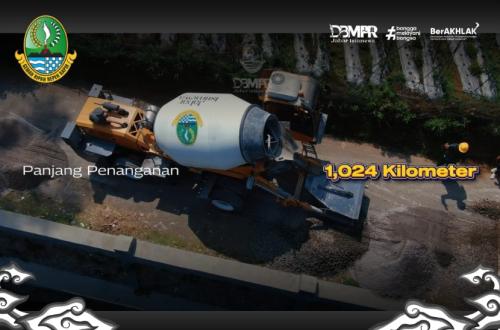
BANDUNG, REPUBLIKA.CO.ID — Building village roads in remote or hard-to-reach areas of West Java is no longer a problem. The West Java Provincial Government has provided 18 self-loading concrete mixer units, known as mobile batching plants, vehicles capable of producing concrete at project sites.
With this equipment, roadworks are no longer hampered by distance or access to the site. Roads can still be built and repaired even when they are far from a concrete plant.
Agung Wahyudi, head of the West Java Highways and Spatial Planning Agency, said a mobile batching plant is a multi-purpose heavy vehicle combining the functions of loading, weighing and mixing concrete materials, as well as transporting the concrete, all in one unit.
The equipment is designed to produce quality fresh concrete automatically and independently at the project site. It has several advantages over manual methods or conventional mixer trucks, including more efficient use of labour.
It is designed to be operated by a single person. The entire process, from loading to pouring, is controlled from inside the cabin.
The equipment is also highly mobile and flexible. “Its compact design and robust wheel drive make it reliable for projects on difficult terrain, narrow roads or in remote locations inaccessible to large concrete mixer trucks,” Agung said on Monday (12 October 2026).
Using a large shovel at the front, the machine can collect raw materials for concrete, such as sand, gravel and cement, directly from stockpiles without the help of an external wheel loader.
The materials are then weighed using a sensor-based digital weighing system to ensure the quantities match the specified concrete quality formula.
The integrated digital weighing sensors minimise the risk of incorrect quantities caused by human error, helping maintain the quality of the resulting concrete.
The mobile batching plant then mixes all the materials with water from its integrated tank in the mixer drum until the mixture is homogeneous.
“The materials can be mixed on the road while the unit is moving towards the pouring site. This cuts the waiting time for concrete deliveries from an external batching plant,” Agung said.
Finally, the machine transports fresh concrete directly to the pouring point at the project site and discharges it precisely.
West Java Governor Dedi Mulyadi, also known as KDM, said the vehicles were part of his administration’s efforts to accelerate the fulfilment of people’s basic needs.
“These are vehicles designed to build concrete roads, so the concrete no longer has to be prepared at a plant,” KDM said.
He stressed that the mobile batching plants were not bought with his personal funds, but with government budget money sourced from tax revenue.
“This is one way for the government to return tax money to the public by providing public facilities,” he said.
The mobile batching plants have already been used for road construction in several locations, including Margamulya village in Pangalengan district, Bandung regency; Pamoyanan sub-district in Cianjur district; and Dukuh village in Bandung regency.