
MLFF Trial Scenarios Continue to Be Finalised
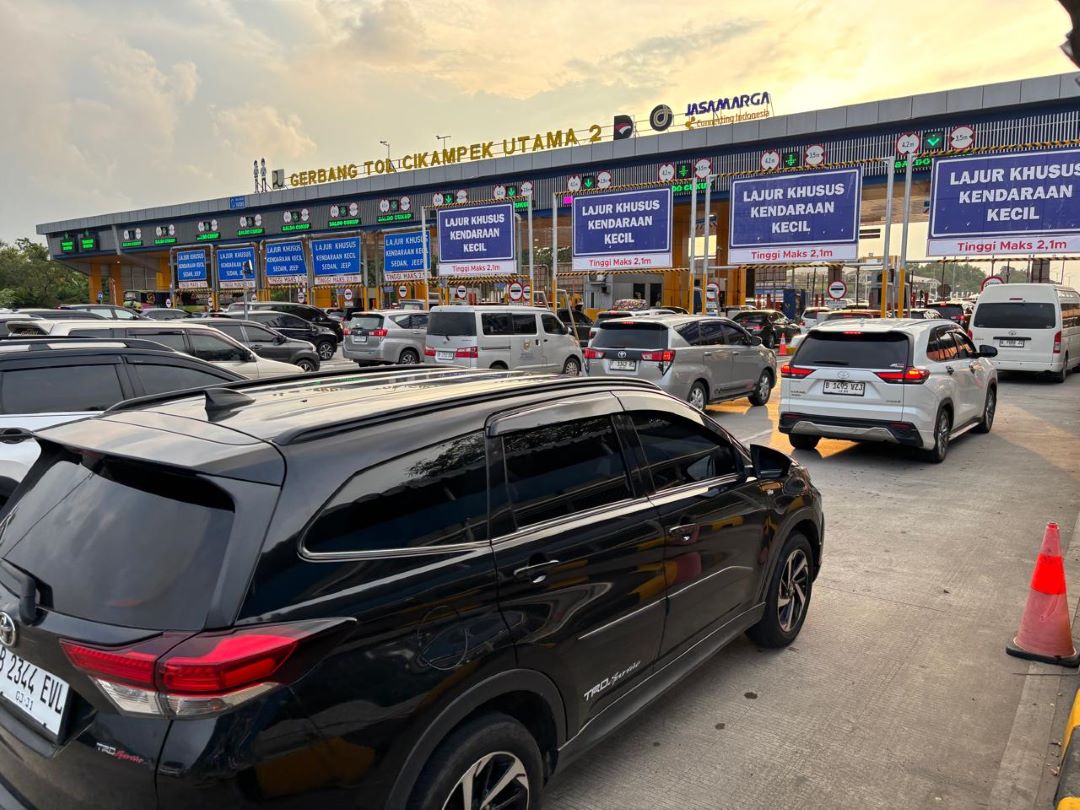
PT Roatex Indonesia Toll System (RITS) has welcomed the government’s plan to promptly finalise the testing scenario for the non-stop, contactless toll payment system known as multi lane free flow (MLFF). The move is intended to ensure technological readiness and its suitability with Indonesia’s toll road ecosystem before broader application.
RITS Director Renaldi Utomo supports the government in drafting technical scenarios for the testing execution. Various technical scenarios are being discussed, covering both ideal conditions and situations that could potentially cause obstacles in the field.
According to Renaldi, coordination between the government and the investor is proceeding well. He also assessed that the Ministry of Public Works has demonstrated a strong commitment to the project’s continuation.
As an investor and government partner, he said, RITS has a vested interest in ensuring the project proceeds according to plan. On the other hand, the company also observes the government’s seriousness in ensuring implementation is carried out cautiously and based on adequate testing.
Nevertheless, the schedule for the trial has not yet been set. Renaldi stated that his party is still awaiting the government’s decision regarding the location and timing of the test. Bali, which was initially projected as the pilot location, is considered to remain one of the options, although testing could also be conducted on other toll road sections.
“We are waiting for the government’s direction. From 2022 until now, we have always followed the direction given by the government,” he said in an official statement.
Renaldi affirmed that the cooperation contract held by RITS since receiving the work order letter from the government on 15 March 2022 still refers to the MLFF concept. However, during the transition period, the use of barriers at physical toll gates is still permitted.
“We have indeed agreed that during this transition process, we will still use barriers. So there is a transition concept and a final concept according to the MLFF design. The final decision, of course, rests with the government and we support it,” he said.
The review and drafting of the trial scenario constitute an important stage before the government decides on the continuation of MLFF implementation, a project that over the past few years has been expected to improve efficiency, reduce vehicle queues, and accelerate the digital transformation of national toll road services.
The MLFF project itself has been part of the national toll road transaction system modernisation agenda since 2018. The system is designed to replace electronic card-based transactions with technology that allows vehicles to keep moving without having to stop or significantly reduce speed when entering a toll road.
Acting Director General of Infrastructure Financing at the Ministry of Public Works, Ni Komang Rasminiati, said the government is currently still reviewing the feasibility of MLFF implementation. In addition to regulatory and operational aspects, the government is also conducting technical detailing to ensure the system’s reliability before nationwide application.
“At this stage, we are detailing preparations for the trial plan of this system, to see whether it can be applied to the toll road ecosystem in Indonesia,” said Komang.
Meanwhile, Transport Observer and Gadjah Mada University Professor Danang Parikesit assessed that the implementation of new technology on toll roads needs to be linked to the capability of toll road business entities to meet the Minimum Service Standards (SPM).
According to him, there are several external factors that can affect the achievement of these service standards. One example is the presence of over-dimension over-load (ODOL) vehicles that can accelerate toll road damage.
“SPM must be met if the capacity of the toll road business entity allows them to manage the variables that influence its fulfilment,” he said.
He stated that as long as business entities are unable to prohibit ODOL vehicles from entering toll roads and these vehicles cause premature damage, they may have grounds for not being able to meet the SPM.
Danang added that the implementation of MLFF will also impact various aspects of toll road services, from transaction processing time at toll gates to the management of supporting services such as rest areas. Therefore, comprehensive testing is considered important to ensure that changes to the payment system do not create new problems in toll road operations.