
MKMK Not Authorized to Adjudicate Three Complaints Alleging Adies Kadir's Violations of the Code of Ethics
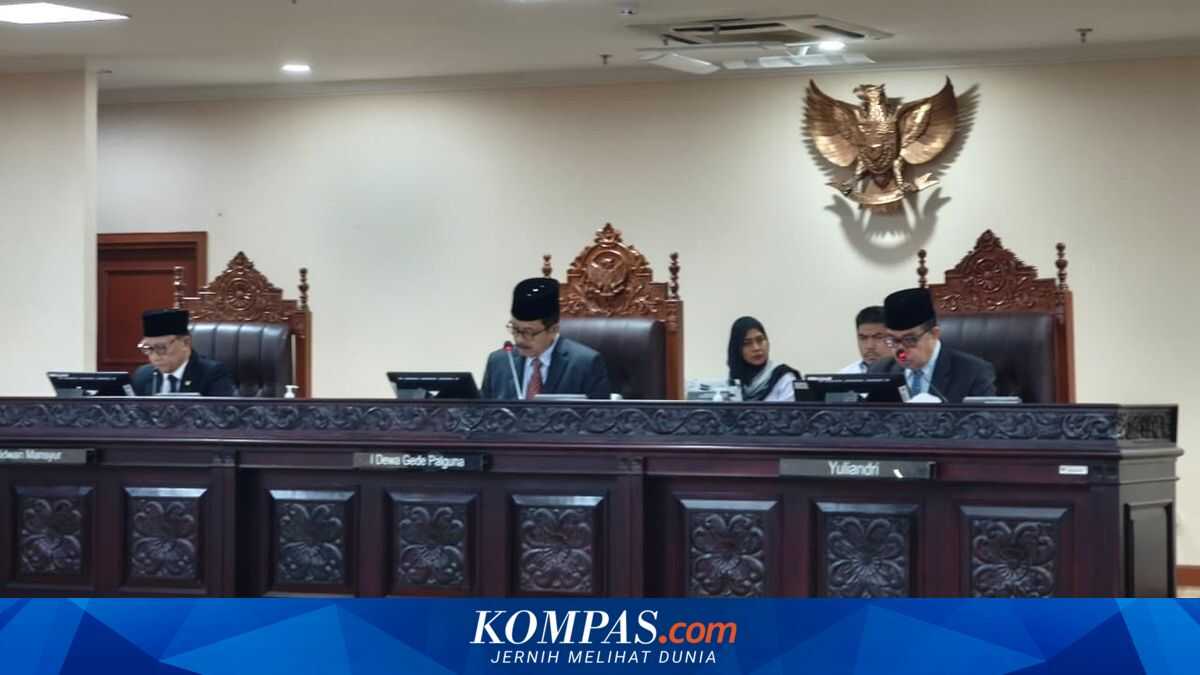
JAKARTA, KOMPAS.com - The Honorary Council of the Constitutional Court (MKMK) does not have authority to adjudicate three complaints concerning alleged breaches of the Code of Ethics by Constitutional Court Judge Adies Kadir. The three complaint reports were ruled on by the Chair of the MKMK, I Dewa Gede Palguna, together with MKMK judges Ridwan Mansyur and Yuliandri at the MK Building, Jakarta, on Thursday (5 March 2026).
In the session, the MKMK emphasised that it is not authorised to review, adjudicate, and rule on the reports related to the alleged breaches of Adies’ ethics code, because the process relates to Adies Kadir’s nomination to the Indonesian House of Representatives (DPR RI) and his status as a Constitutional Court judge has not yet been sworn in.
“The Honorary Council is not authorised to examine, adjudicate, and decide the report at issue,” said Palguna, the chair of the panel.
However, a MKMK judge expressed concern that the complainants’ allegations do not constitute facts about actions taken by Adies as the respondent judge.
The second matter was registered under number 02/MKMK/L/02/2026 and was reported by Edy Rudyanto (advocate/student).
However, the Honorary Council judges considered the arguments in this case to be the same as those in case number 01/MKMK/L/02/2026 and therefore the decision is the same.
“Therefore, the considerations and decision of the Honorary Council in Decision No. 01/MKMK/L/02/2026 insofar as it concerns the Respondent Judge (Adies Kadir), shall apply mutatis mutandis to the present report,” said Judge Ridwan.
For the third case registered under number 03/MKMK/L/02/2026, reported by the Constitutions and Administrative Law Society (CALS), which includes academics such as Susi Dwi Harijanti, Iwan Satriawan, and Denny Indrayana.
The MKMK judges also ruled the same as in the two previous cases because the complaints are still related to the process of selecting Adies Kadir as an MK judge.
In its considerations, MKMK emphasised respecting the jurisdictional limits of the bodies entitled to nominate constitutional court judges.
“It is very important for each competent state body to carefully ensure the fulfilment of principles that are objective, accountable, transparent, and open in the processes of nominating and electing constitutional court judges,” said Yuliandri.
“Thus, the public will see—and there will be no doubt—that the person elected as a constitutional court judge has truly met all the eligibility requirements and has undergone the entire proper selection process as prescribed, so that he can be accepted by the public as a constitutional court judge,” he added again.