
Mitrapak Eramandiri’s ESG Commitment Strengthens Global Standards in Personal Care
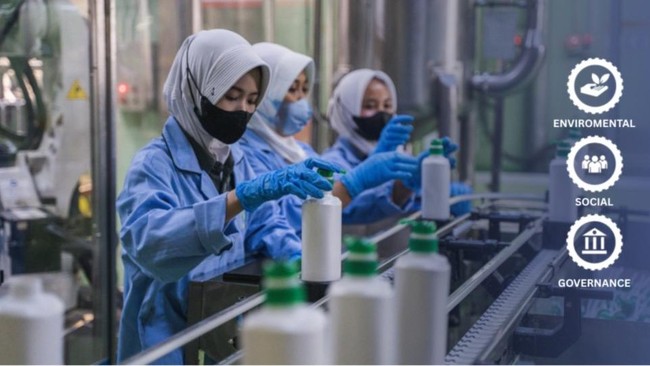
Jakarta, CNBC Indonesia – The implementation of Environmental, Social and Governance (ESG) principles is attracting growing attention in manufacturing, including the personal-care sector. Whereas product quality and production capacity were once the main considerations when choosing a manufacturing partner, many brand owners now also focus on corporate governance, responsible labour practices and compliance with international ESG standards.
The momentum behind ESG adoption coincides with a positive outlook for Indonesia’s personal-care industry. Statista forecasts that revenue in Indonesia’s Beauty & Personal Care market will reach around US$10.55 billion in 2026 and continue to grow by an average of 5.52% a year through 2031.
Personal Care is the largest segment, with a market value of around US$4.43 billion. This points to substantial opportunities as well as growing demand for manufacturing partners able to meet international quality and governance standards.
The shift towards ESG commitments is being driven by rising expectations among consumers, regulators and global companies for more transparent and sustainable supply chains. In the personal-care industry, responsible manufacturing is no longer seen merely as an added benefit; it is increasingly becoming part of the standard way of doing business.
One example of the implementation of these principles is PT Mitrapak Eramandiri, a contract manufacturer of personal-care, baby-care and home-care products, including household health supplies (PKRT), with factories in West and East Java.
PT Mitrapak Eramandiri president director Elizabeth said SMETA (Sedex Members Ethical Trade Audit) is a global social audit developed by SEDEX (Supplier Ethical Data Exchange), a global platform that helps companies manage data on sustainability and ethical supply-chain practices. The standard is not viewed merely as an audit requirement, but as part of the company’s commitment to developing responsible manufacturing practices.
“Brand owners today assess not only product quality, but also how the production process is carried out. The SEDEX-SMETA audit helps us ensure that labour, occupational health and safety, business ethics and operational governance are managed in line with internationally recognised practices. We believe this is an important foundation for building long-term trust with customers,” Elizabeth said.
She added that applying responsible sourcing standards is part of the company’s efforts to keep strengthening its competitiveness as a manufacturing partner able to meet the expectations of both domestic and global markets.
Amid increasingly complex global supply chains, companies able to demonstrate a commitment to responsible business practices are considered better positioned to secure partnerships with brand owners at home and abroad.
Alongside responsible sourcing, operational governance is being strengthened through the implementation of quality-management systems. Mitrapak holds ISO 22716:2007 certification, a Good Manufacturing Practices (GMP) guideline specifically for the cosmetics industry. The standard covers the entire production process, from raw-material controls and facility hygiene to documentation and traceability systems, to maintain product quality and safety.
The company also applies ISO 9001:2015, an international quality-management system standard focused on continuous quality improvement, business-process effectiveness and operational risk management. Applying this standard forms part of the foundation for good corporate governance, one of the main pillars of ESG.
The company’s commitment to production quality is further supported by Good Manufacturing Practices (GMP) certification from Indonesia’s Food and Drug Authority (BPOM), which provides guidance to ensure cosmetics production complies with regulatory requirements. Grade A certification for the Halal Product Assurance System also complements the company’s efforts to meet market needs and give consumers confidence in its production processes.
“PT Mitrapak Eramandiri has maintained BRCGS (British Retail Consortium Global Standards) certification for the Consumer Products (Household) category since 2016, as part of our commitment to manufacturing practices that meet domestic and international market expectations. For prospective brand owners, BRCGS certification provides assurance that every production process is documented and carried out to quality standards that help maintain consumer trust,” said Firman, operational director of PT Mitrapak Eramandiri Surabaya.
Going forward, ESG is expected to become an increasingly important part of manufacturing companies’ business strategies, as markets demand production partners that can deliver not only high-quality products but also responsible operations in line with international standards.
In this context, Mitrapak’s approach shows that adopting standards such as SEDEX-SMETA and ISO-based quality-management systems is intended not only to meet certification requirements, but also to strengthen the competitiveness of Indonesia’s personal-care manufacturing industry amid evolving global market demands.
Source: jawawa.id (https://jawawa.id/newsitem/mitrapak-eramandiris-esg-commitment-strengthens-global-standards-in-personal-care-1794286246)
Originally published by CNBC Indonesia (https://www.cnbcindonesia.com/news/20261110105838-4-783825/komitmen-esg-mitrapak-eramandiri-perkuat-standar-global-personal-care), translated from Indonesian