
MIT Researchers Warn of Major Catastrophe, Millions of Deaths Within 5 Years
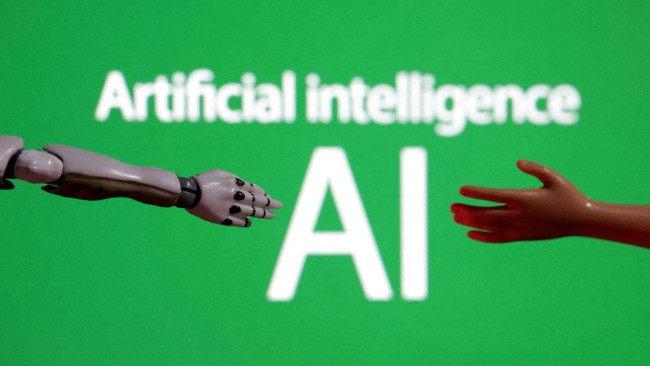
The development of artificial intelligence (AI) technology is creating a major dilemma for entrepreneurs seeking profit. On one hand, they are continuously racing to win the AI competition to dominate the market. On the other hand, AI has brought adverse impacts across various sectors. The spread of disinformation, water and electricity crises, and waves of layoffs are some of the serious problems already clearly visible. There are many other significant impacts that are less frequently publicised, such as increasingly sophisticated cyberattacks, the easier development of advanced military weapons, and other indirect effects.
A new study from MIT FutureTech and the University of Queensland offers a way to map this risk landscape. In a report titled ‘Prioritization of Risks From Artificial Intelligence’, a research team involving Neil Thompson, a principal research scientist at the MIT Sloan School of Management, asked 272 international AI experts to evaluate 24 AI risks based on their likelihood and severity. They also noted which sectors and actors are most vulnerable, and who should be responsible for addressing these risks.
The experts identified five main risks with the greatest potential to cause the most severe impact within the next five years. These are the emergence of dangerous capabilities, competitive pressures, weapons and cyberattacks, concentration of power, and false information. The information and financial sectors are considered highly vulnerable, and the people and organisations most susceptible to these risks are often not in a position to address them properly. ‘There are a lot of AI risks,’ said Peter Slattery, a research scientist at MIT FutureTech and one of the study’s co-authors. ‘One of the key points behind this research is trying to understand who needs to do what differently, and in what form of coordination,’ he explained.
The study used the Delphi method, a structured research process that gathers expert assessments through several stages to reach consensus and map points of difference more clearly. The researchers used these expert assessments to evaluate risks over a five-year time horizon (2025 to 2030) under two scenarios: ‘business as usual’, where organisations and governments continue their current approaches, and ‘pragmatic mitigation’, where organisations and governments make cost-effective efforts to reduce AI risks. Under the business-as-usual scenario, experts assessed that 18 out of 24 AI risk domains have at least a 10 per cent probability of triggering catastrophic outcomes within five years. Catastrophic outcomes were defined as losses including the potential for more than 1 million deaths, financial losses exceeding US$100 billion, or intangible damage on a civilisation scale.
Pragmatic mitigation lowered these estimates but did not eliminate the risks entirely. Even with efficient mitigation efforts, experts assessed that five domains still have at least a 10 per cent probability of triggering catastrophic outcomes: AI systems with dangerous capabilities (12 per cent probability), AI-powered weapons and cyberattacks or other mass-harm capabilities (12 per cent), environmental damage (12 per cent), social inequality and unemployment (11 per cent), and concentration of power and unfair distribution of AI benefits (11 per cent). AI-powered weapons and cyberattacks ranked highly because AI is highly suited for coding, pattern recognition, and information synthesis tasks, Slattery noted. Most modern infrastructure relies on software, which provides a large attack surface for systems that can help hackers identify vulnerabilities, generate code, or accelerate offensive cyber actions. ‘AI is very capable of attacking those aspects of society and causing harm,’ Slattery said. ‘Coding and hacking are some of the areas where we see the fastest growth in AI capabilities,’ he added.
Regarding dangerous capabilities, the scope is broader. While malicious actors can use AI systems to cause harm, advances in these systems can also make it much easier to carry out difficult and dangerous tasks, such as mass persuasion, surveillance, creating deepfakes, or even assisting in the development of chemical or biological weapons. ‘These are things that could be done before, but now they can be done much more easily,’ Slattery said. Competitive pressures are not a single dangerous use of AI, but rather a condition that can exacerbate other risks. When companies or nations believe that AI will provide a major economic or strategic advantage, they are driven to move fast, ignore guardrails, or underinvest in safety. ‘It’s an instrumental risk that creates other risks,’ Slattery stated. The study identified three sectors that experts consider most vulnerable to AI risks within five years: information, national security, and finance. Leaders in these sectors must understand that the risks they face are specific to their characteristics. For the information sector, risks are closely tied to content and data flows, including misinformation, disinformation, loss of privacy, manipulation, and the erosion of public trust in what they see and read.
Source: jawawa.id (https://jawawa.id/newsitem/mit-researchers-warn-of-major-catastrophe-millions-of-deaths-within-5-years-1785250361)
Originally published by CNBC Indonesia (https://www.cnbcindonesia.com/tech/20260728122427-37-754374/peneliti-mit-peringatkan-petaka-besar-jutaan-kematian-5-tahun-lagi), translated from Indonesian