
Misery in Tasikmalaya: A Single Tanker Fleet Forced to Quench the Thirst of Thousands
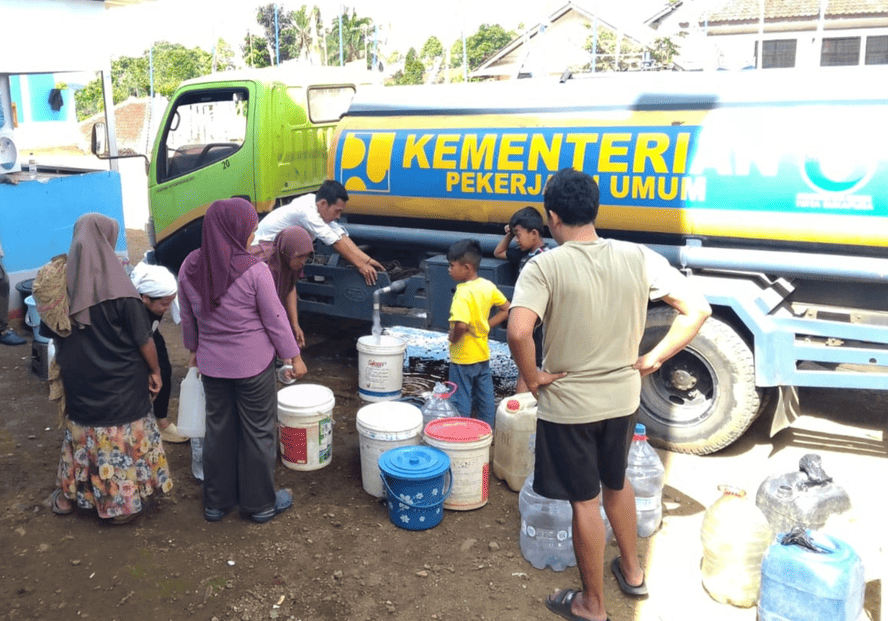
Under the scorching sun of Tasikmalaya Regency, West Java, the roar of the only water tanker engine belonging to the Regional Disaster Management Agency (BPBD) has become a sound that is both highly anticipated and heartbreaking. The truck never truly rests, moving from dawn until late at night, traversing hills to deliver litre after litre of life to residents whose wells have turned into dusty holes.
However, the reality on the ground far exceeds the capacity of the existing tanker. While the truck is serving residents in the remote areas of Bojonggambermir, thousands of people in Mangunreja and Singaparna must endure thirst for longer. A single fleet is forced to work beyond its limits, while bureaucratic approval for additional fleets from the central government has yet to arrive.
The dry season, which has persisted for the last three months, has triggered a widespread clean water crisis in Tasikmalaya. According to data from the Meteorology, Climatology, and Geophysics Agency (BMKG), this year’s dry season is predicted to last longer, directly impacting the depletion of surface water sources, residential wells, and the agricultural and fisheries sectors.
The Acting Head of BPBD Tasikmalaya Regency, Roni AKS, revealed that they currently rely on only one water tanker unit. Given the vast and hilly coverage of Tasikmalaya Regency, ideally, at least five additional units are needed to ensure maximum water distribution.
Efforts to increase fleet strength were actually initiated long ago. Roni explained that BPBD Tasikmalaya Regency has submitted requests for assistance for five water tanker units to the West Java Provincial Government and the National Disaster Management Agency (BNPB) since early January 2026.
“We submitted a request for 5 water tanker units in early January 2026 to the West Java Province and the central BNPB, but the assistance is still pending,” said Roni AKS on Monday (6/7/2026). This delay has resulted in sub-optimal water supplies to affected areas, particularly due to the long distances between locations and the difficult terrain in the highlands.
Despite the fleet constraints, BPBD continues to strive for cross-sectoral coordination. Cooperation is being established with Perumda Tirta Sukapura, the Department of Public Works and Spatial Planning (PUPR), the River Basin Organisation (BBWS), and the private sector to compensate for the lack of distribution facilities.
This water crisis is most acutely felt by residents in Bojonggambir District, where approximately 2,000 households are heavily dependent on clean water deliveries. To ensure that aid is targeted correctly, BPBD is urging Village Heads and Sub-district Heads to immediately submit official written requests for clean water assistance.
This step is required as an administrative basis for BPBD to map the priority scale for deliveries. “I urge Village Heads and Sub-district Heads to create formal requests for clean water assistance. BPBD will prepare the water tankers for the residents, even though vehicles are extremely minimal,” Roni added.
The water crisis in Tasikmalaya Regency is not merely an annual natural phenomenon, but a portrait of the limitations of emergency infrastructure in the region. With only one fleet operating 24 hours a day, field officers are racing against time and exhaustion. Hopes are now focused on the central and provincial governments to promptly realise the assistance for water tankers to prevent the residents’ suffering from prolonging amidst a dry season that shows no signs of ending.
Source: jawawa.id (https://jawawa.id/newsitem/misery-in-tasikmalaya-a-single-tanker-fleet-forced-to-quench-the-thirst-of-thousands-1783331421)
Originally published by Media Indonesia (https://mediaindonesia.com/nusantara/907954/nestapa-di-tasikmalaya-satu-armada-tangki-dipaksa-melayani-dahaga-ribuan-warga), translated from Indonesian