
Misbakhun's Testimony: IMF-World Bank Probes Danantara's Debt Management
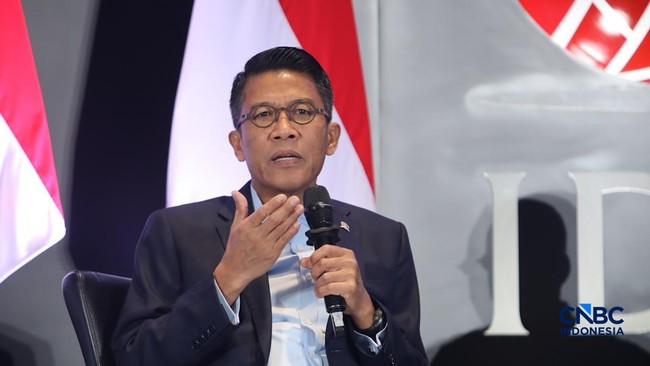
The IMF-World Bank Spring Meeting served as a platform for the government of President Prabowo Subianto to explain to the world its prudent fiscal management, in line with the State Finance Law’s guidelines, such as keeping the deficit below 3% and the debt-to-GDP ratio well under 60%. Held from 13 to 18 April 2026, the event saw DPR Commission XI accompanying the government, including its Chairman, Mukhamad Misbakhun. He stated that in meetings with various international institutions, the government received numerous questions about the prudence in managing public debt, including clarity on the separation between government debt and that of the new entity formed by President Prabowo Subianto to manage SOEs, namely BPI Danantara. “Danantara is something they seriously questioned regarding contingency debt. Whether Danantara’s debt would become government debt or not?” said Misbakhun on the CNBC Indonesia TV programme, quoted on Tuesday (28/4/2026). In response to those questions, Indonesia, according to Misbakhun, explained to the global institutions that the debt management of the two entities is certainly separate, so the financial burden that becomes Danantara’s responsibility will never create a new burden on the APBN. This certainty, said Misbakhun, is also evident from the release of non-tax state revenue (PNBP) positions that previously entered the APBN, where BUMN dividends in the form of state assets (KND) have been fully transferred to Danantara. Thus, the responsibility for the SOE debt burden will not be passed on to the APBN. “We conveyed that the accounting is separate. APBN risks are separate from Danantara; Danantara does not have a direct impact,” he explained. Nevertheless, he acknowledged that because Danantara is still managed by the government with majority share ownership, when there are public matters related to Danantara’s operations, the government could become directly involved, though limited in nature. “As a shareholder, the state is also responsible. Because there is a portion of APBN operations, namely public service obligations related to energy, food, and transportation, which concern public services, that still remains a responsibility,” he elaborated. Upon receiving that explanation, Misbakhun noted, the IMF-World Bank gave a response that, in his view, still requires detailed explanations from state officials. “And their response, in my opinion, requires our financial sector officials to provide more detailed explanations according to their respective fields,” said Misbakhun.