
Misbakhun Proposes Private Sector Management of State Assets, LMAN Responds
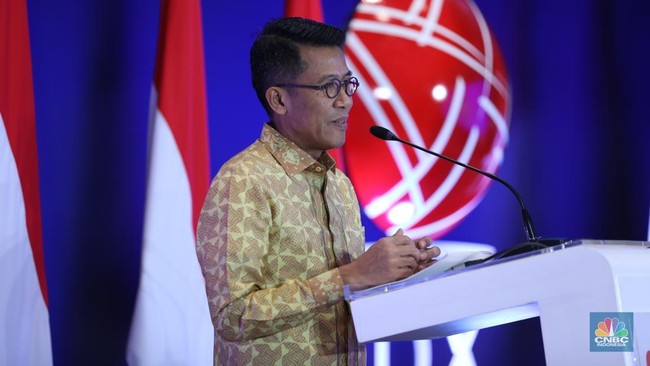
Jakarta, CNBC Indonesia — Chairman of the House of Representatives’ Commission XI, Mukhammad Misbakhun, criticised the suboptimal management of state assets by the State Asset Management Agency (LMAN). He argued that private sector involvement would improve asset management efficiency. The remarks were made during a hearing on the 2025 performance report of the Ministry of Finance’s General Service Agency (BLU) on Monday, 26 May 2026. During the hearing, Misbakhun questioned why the government opts for direct management of assets via LMAN, from property rentals to strategic asset utilisation. He noted that civil servants lack business-oriented property management expertise. ‘Why not sell such assets to the private sector? Why must the state collect tax payments through LMAN when PNBP could be generated by private entities instead?’ Misbakhun said during the hearing. He argued that state-managed assets originate from public funds, and thus should be utilised more productively by citizens and businesses. ‘Assets seized by the state are funded by taxpayers’ money and become a burden through public debt. Why not return their use to the people?’ he added. Misbakhun also criticised bureaucratic asset management practices, such as renting out apartments and monthly rent collection, arguing these are not core government functions. ‘Imagine civil servants tasked with leasing and repairing apartments, then collecting monthly rent. Is this how we define successful asset management?’ he questioned. In response, LMAN Managing Director Kristijanindyati Puspitasari explained that most assets under LMAN’s management stem from former Bank Indonesia Liquidity Assistance (BLBI), National Banking Debt (PPN), and other problematic assets requiring government resolution. ‘These assets are not free and clear—ex-PPN, ex-BLBI, ex-KPK issues remain. The government must resolve outstanding legal matters,’ she said. She noted that these assets are classified as state property (BMN), managed by the Ministry of Finance via the Directorate General of State Assets (DJKN), with LMAN operating as a General Service Agency (BLU). She added that state asset management involves not just business operations but also resolving legal issues and securing assets long held by third parties. LMAN secures assets through government certification under the Ministry of Finance. Once secured, assets are optimised to generate Non-Tax State Revenue (PNBP). ‘LMAN clears long-standing illegal occupations of state-owned assets, hence the government’s role in resolving these issues. After securing and certifying assets under the Ministry of Finance, they must generate PNBP,’ she explained. In her presentation, Puspitasari stated LMAN’s PNBP increased by 24.5% to approximately Rp940.6 billion in 2025, with Rp66 billion from general property and Rp875 billion from refinery assets.