
Mirae Asset Projects Indonesia's Economy to Grow by 5% in 2026
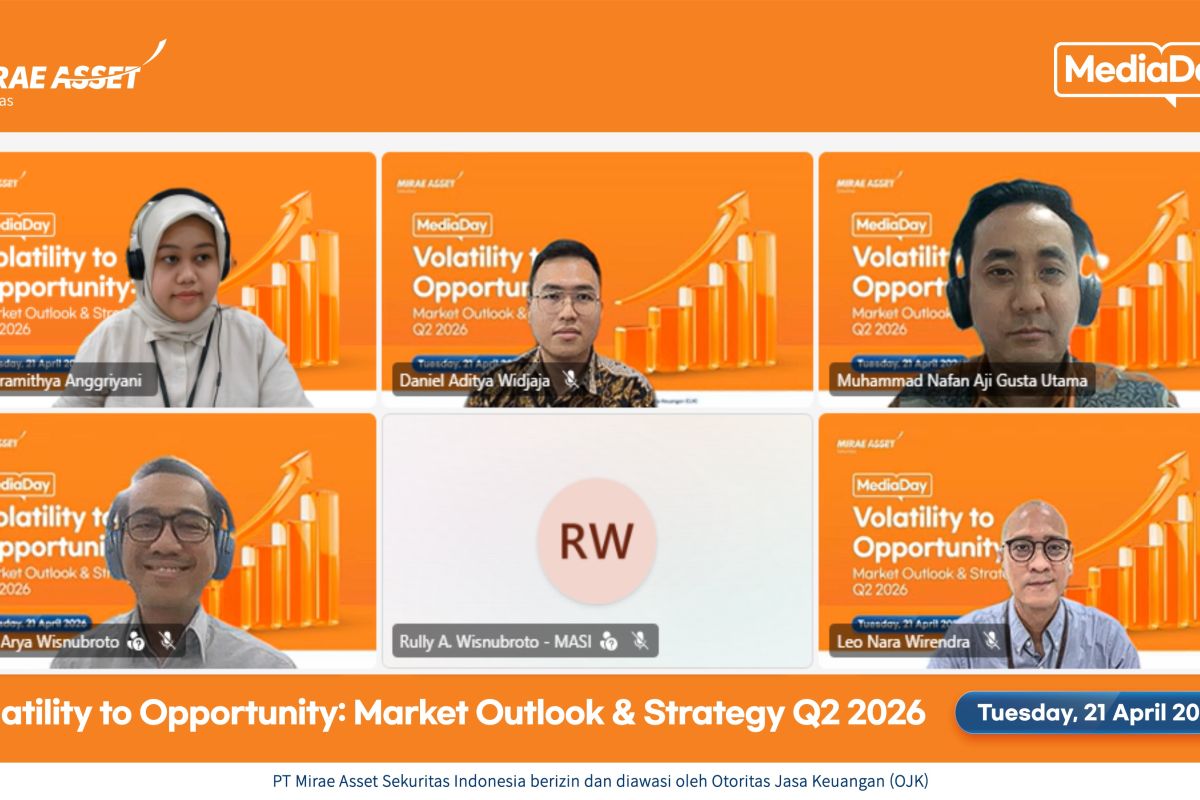
Jakarta (ANTARA) - PT Mirae Asset Sekuritas Indonesia projects national economic growth throughout 2026 to be at the level of 5%. Head of Research & Chief Economist of PT Mirae Asset Sekuritas, Rully Arya Wisnubroto, explained that, in line with the International Monetary Fund’s (IMF) projections, global economic growth will experience a slowdown. However, for Indonesia, the projected slowdown is relatively insignificant. “For Indonesia, it is relatively not too significant, from 5.1% to 5%. This is in line with our previous outlook, to drop to 5% throughout 2026,” Rully said during the virtual “Media Day” event in Jakarta on Tuesday. Rully added that the room for interest rate easing tends to be limited amid inflation pressures and oil prices. For the second quarter of 2026, he stated that global interest rate dynamics and geopolitical uncertainties remain the main factors influencing market direction. Geopolitical conflicts, including tensions in the Middle East impacting global trade routes, are also driving inflation pressures and slowing economic growth. “Volatility is part of global dynamics, but with domestic fundamentals still relatively intact, investment opportunities in the Indonesian market remain open,” Rully said. Meanwhile, Finance Minister Purbaya Yudhi Sadewa expressed optimism that Indonesia’s economy can achieve 5.4-6% growth in 2026 at the IMF-World Bank Spring Meeting. The Finance Minister stated that while many countries are experiencing economic slowdowns, Indonesia’s economy remains resilient with growth of 5.11% in 2025. Stable growth demonstrates that Indonesia’s domestic economy is healthy and capable of handling external pressures. Optimism is also evident in Indonesia’s resilient domestic economy, supported by strong household consumption, ongoing trade surpluses, stable growth, controlled inflation, managed fiscal deficits, low debt-to-GDP ratio, and sustainable downstreaming policies.