
MinyaKita Prices Surge, Zulhas Reveals the Causes
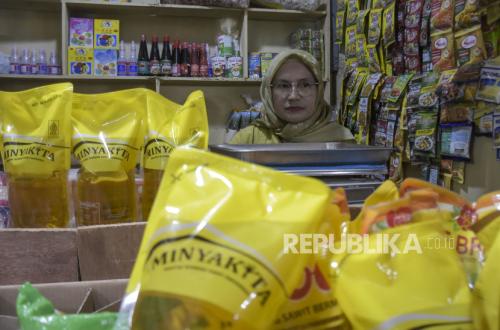
Coordinating Minister for Food Affairs Zulkifli Hasan has revealed the reasons behind the rise in MinyaKita prices in the market. He stated that the price surge was triggered by the diversion of supplies to the food assistance programme over the past two months.
The Coordinating Minister for Food explained that MinyaKita was initially designed as a replacement for bulk cooking oil in traditional markets to make it more hygienic. However, its consumption has since expanded widely to modern retail outlets, thereby reducing availability in people’s markets.
“We’ve identified the reason for the increase. It’s because of the food assistance for 33 million recipients over two months, with two litres each. That’s a very large quantity,” said the man familiarly known as Zulhas during a coordination meeting at Grha Mandiri, Jakarta, on Wednesday (22/4/2026).
He elaborated that the food assistance programme covers around 33 million recipients with an allocation of two litres per month for two months. This volume has absorbed supplies that previously circulated in traditional markets, leading to reduced availability and pushing prices higher.
The government has subsequently decided to increase supplies while changing the food assistance distribution scheme. The assistance will no longer rely solely on MinyaKita but can use various brands at agreed prices with producers.
“Going forward, food assistance will use any brand at the same price. We will ask producers to support this so that MinyaKita is not disrupted in the market,” Zulhas stated.
He conveyed that MinyaKita will be returned to its original function as cooking oil for traditional markets. Perum Bulog will be strengthened to distribute the product to around 500 regencies/cities to make distribution more targeted.
On the same occasion, Trade Minister Budi Santoso stated that the government is open to evaluating the maximum retail price (HET) for MinyaKita, currently Rp 15,700 per litre. “It has been in place for more than three years, so we certainly need to review and adjust it,” Budi said.
He added that decisions regarding the HET are still under discussion across ministries. The government is also evaluating domestic cooking oil distribution, including the portion allocated for the domestic market by producers.
Secretary General of the National Food Agency (Bapanas) Sarwo Edhy emphasised that the price increase cannot be attributed to supply issues. Domestic crude palm oil (CPO) raw material availability is recorded at 5.7 million tonnes. “Production is sufficient, raw materials are secure. So if prices rise, it’s not a supply problem, but uncontrolled distribution,” Edhy said.
The government, together with the Police Food Task Force and the Ministry of Agriculture, will tighten supervision of the distribution chain from producers to retailers to prevent speculative practices. The government assures that national MinyaKita stocks remain secure.
The National Food Agency (Bapanas) highlighted the anomaly of MinyaKita prices reaching Rp 20,000 to Rp 22,000 per litre in several regions despite smooth distribution. In DKI Jakarta, traders state that the current price for 1-litre MinyaKita packaging is Rp 24,000.