
Ministry to Issue New Regulation Strengthening Distance Education
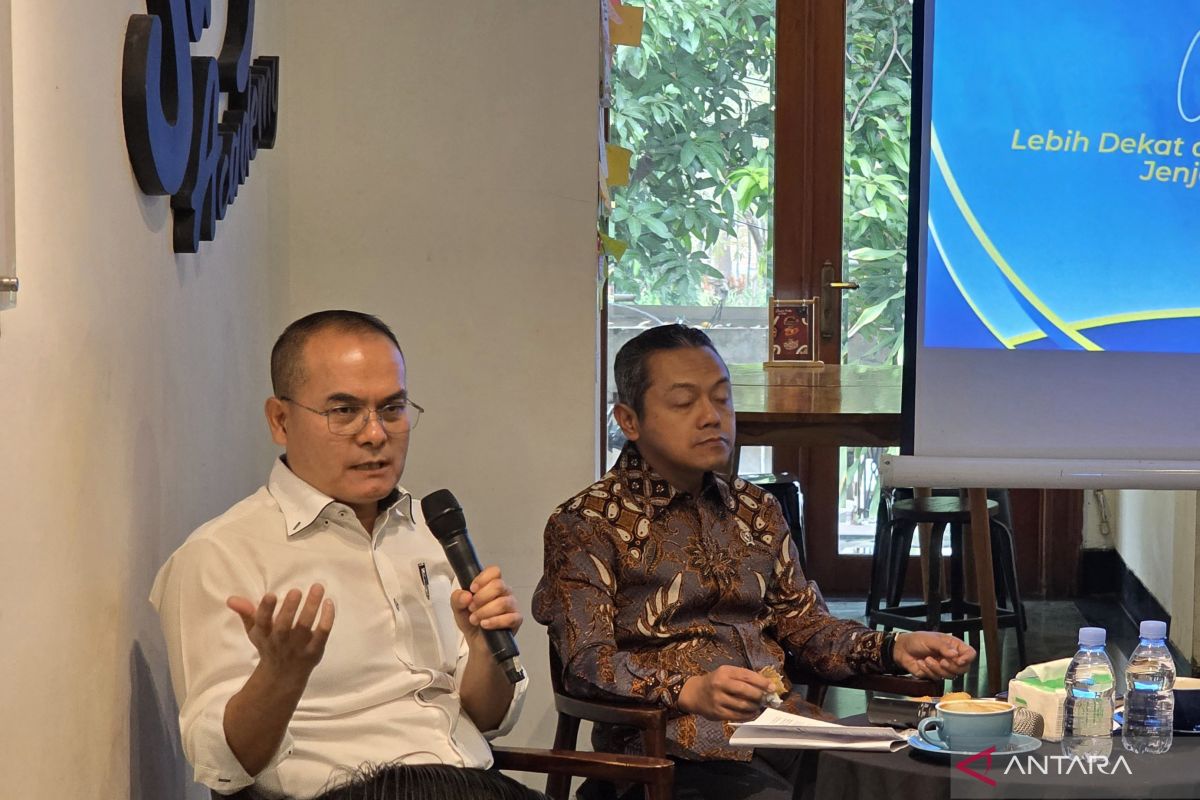
The Ministry of Primary and Secondary Education (Kemendikdasmen) is set to issue a Ministerial Regulation on Primary and Secondary Education (Permendikdasmen) as the latest rules strengthening the provision of Distance Education (PJJ) services, one of the measures to reduce the number of Out-of-School Children (ATS).
Deputy Minister of Primary and Secondary Education Fajar Riza Ul Haq said that PJJ is still governed by the old regulation, Permendikbudristek Number 119 of 2014, and therefore requires a new legal umbrella to make it more relevant to current conditions and challenges.
“The legal umbrella for PJJ that we use as of today still refers to Permendikbudristek Number 119 of 2014, so we are currently preparing a revision for the new Permendikdasmen. From what I have read, this new Permendikdasmen will take a much firmer stance on the position of PJJ,” said Deputy Minister Fajar at a media briefing on Distance Education in Jakarta on Thursday.
Through the issuance of this Permendikdasmen, the ministry affirms the position of PJJ as an alternative formal education service whose learning activities and diplomas are equivalent to regular education units, rather than merely supplementary education.
He said PJJ services may also be extended to children of Indonesian migrant workers who face limitations in accessibility and flexibility in pursuing formal education at regular schools.
“So there will be an expansion of the student groups who will become PJJ participants, not only ATS in the normative sense, but possibly even the children of Indonesian migrant workers abroad, and perhaps also the children of diplomats overseas who experience limitations in accessibility and flexibility regarding education services, can join the PJJ programme. We want to affirm that the quality of PJJ is the same, equivalent to the quality of formal education in general,” said Deputy Minister Fajar.
Therefore, PJJ graduates can use their diplomas and report cards to apply to state universities, either through the National Selection Based on Achievement (SNBP) or the National Selection Based on Tests (SNBT).
“If they have report cards covering three years, they can also take part in SNBP. But if they do not go through SNBP, they can take the UTBK-SNBT route,” said Tatang.