
Ministry: School Revitalisation Programme Boosts Local Stall Incomes
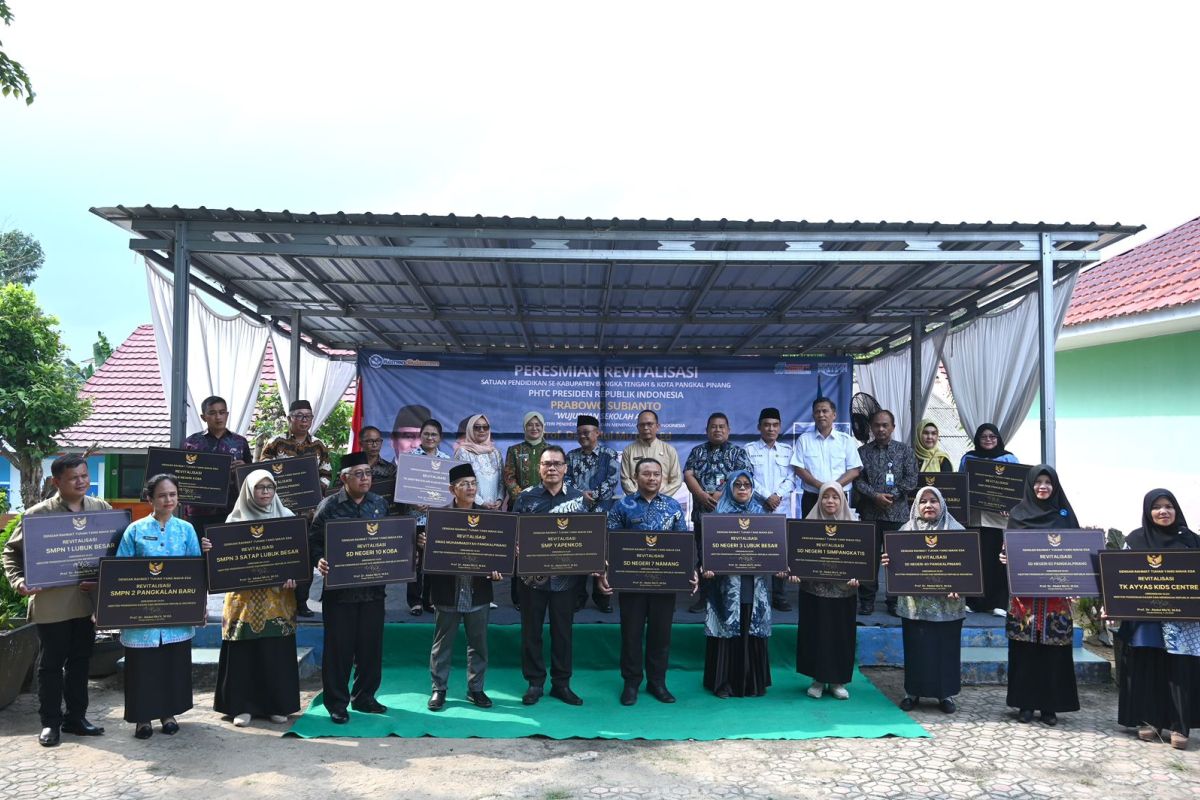
The Ministry of Primary and Secondary Education (Kemendikdasmen) has stated that the implementation of the school revitalisation programme has successfully increased the income of food stalls located near beneficiary schools. Minister of Primary and Secondary Education Abdul Mu’ti said the school revitalisation programme represents the government’s commitment to providing safe and adequate educational facilities. “We all share the view that the quality of education is also determined by good and supportive infrastructure,” Mu’ti said in a written statement in Jakarta on Friday. Mu’ti explained that the self-managed scheme is more efficient, faster to implement, and simultaneously capable of absorbing local labour and driving the regional economy because workforce and construction needs are met from the local area.
One school that has benefited from this approach is SMP Negeri 9 in Pangkalpinang City, Bangka Belitung Islands Province. The revitalisation, carried out by the School Preparation Development Team (P2SP), involved elements from the school and the community. The Head of SMP Negeri 9 Pangkalpinang, Ahmat Yamani, explained that the school received revitalisation assistance worth Rp2.6 billion to rehabilitate eight classrooms along with their furniture, an administration room, a computer room, build three toilet blocks, and rehabilitate one toilet block. “We formed a P2SP team involving the surrounding community for the roles of chairman, security, and technical implementers, supported by a planning team with expertise in their fields. Alhamdulillah, this revitalisation activity has also helped the economy of the surrounding community,” he said.
Similar benefits were felt by SLB Negeri Koba in Central Bangka Regency, which received revitalisation assistance worth Rp1.43 billion to build six new classrooms, rehabilitate three classrooms, a hall, and a dormitory that previously leaked and often flooded when it rained. The Head of SLB Negeri Koba, Musdiyanto, said the construction involved the school committee and local residents as workers. According to him, in addition to improving the quality of educational services, the programme also provided additional income for the community. “This programme has a significant impact on the economy of the local residents involved as labourers because they can work and earn income from this school construction project, which they can then spend at food stalls,” he said. The revitalisation also addressed the shortage of learning spaces previously faced by the school. Before receiving the assistance, several rooms such as the prayer room, culinary arts room, and teachers’ office had to be repurposed as classrooms.