
Ministry Reveals Indonesians Are Marrying at a More Mature Age
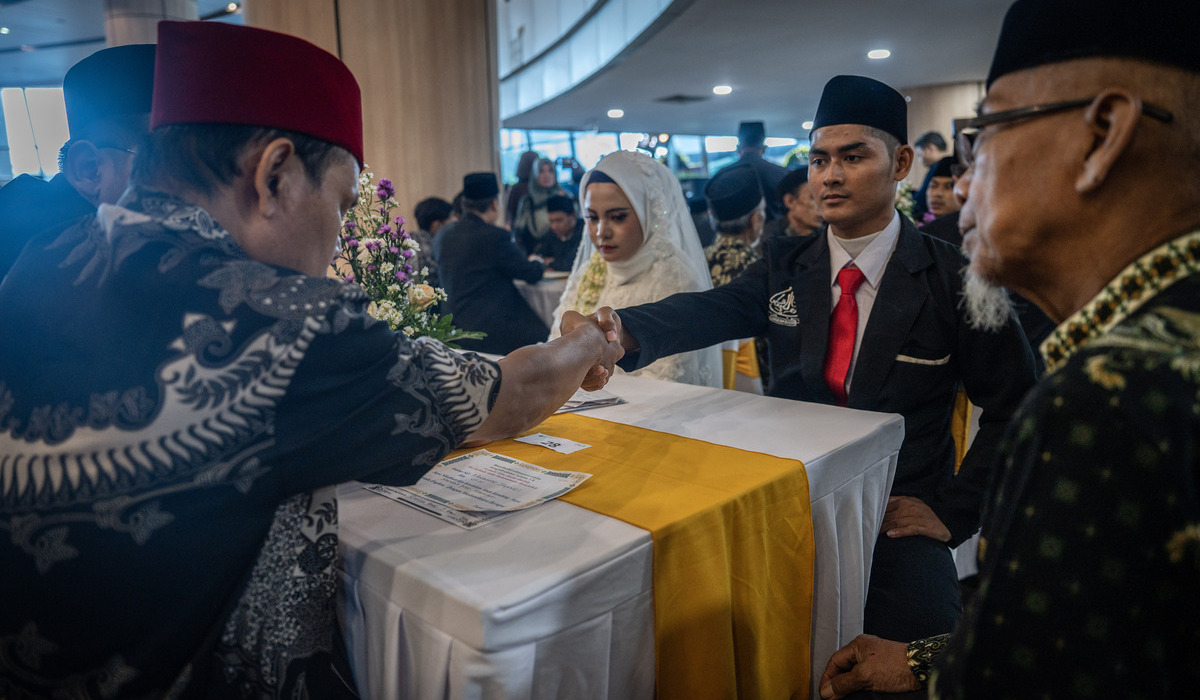
The Ministry of Population and Family Development (Kemendukbangga)/BKKBN has revealed a shifting trend in the age of marriage in Indonesia, which is now tending to become more mature. This phenomenon is considered a positive signal for the maturation of marriage age in the country.
Deputy for Population Control at Kemendukbangga/BKKBN, Bonivasius Prasetya Ichtiarto, explained that marriages in the 15–19 age group are currently relatively few. Conversely, there has been a significant increase in older age groups.
“The trend of marrying at a more mature age is because many young people choose to finish university, work first, or enjoy a period of self-development before getting married,” Bonivasius said during a media briefing ahead of World Population Day in Jakarta on Wednesday (8/7/2026).
Data shows that the number of marriages has increased in the 25–29 age group. In fact, the 35–39 age group is now the cohort with the highest number of married couples. Nevertheless, Bonivasius noted that challenges remain regarding childbirth patterns among women aged 15–19, although the numbers are relatively small.
Regarding birth rates, the majority of families in Indonesia currently have 1–2 children. However, disparities in the total fertility rate (TFR) between provinces are still evident. In some parts of Eastern Indonesia, such as Merauke, families with 3 to 6 children are still common.
Based on the 2025 Inter-Censal Population Survey (SUPAS) by Statistics Indonesia (BPS), Indonesia’s TFR stands at 2.12. This figure is considered to be within the ideal range (2.0–2.2) to ensure balanced population regeneration.
Bonivasius stressed that Indonesia still has a great opportunity through its demographic bonus, with 68.9 percent of the population in the productive age bracket. However, he warned that this opportunity will only become a “demographic dividend” if there is real investment in the quality of human resources.
“Without investment in human quality through education, health, and improving the quality of human resources, this opportunity will not yield economic benefits,” he asserted.
Citing a UNFPA demographic survey in 73 countries, it was found that more than two-thirds of respondents still consider marriage the ideal life path. This dispels the notion that the younger generation is beginning to abandon family values.
Although they still want to get married, the younger generation now sets higher standards. Financial stability and excellent physical and mental health are absolute requirements before entering marriage. Concerns about economic conditions and access to housing remain the main factors causing them to delay having children.