
Ministry of Villages Invites 20 Village Heads to Study Rural Development in China
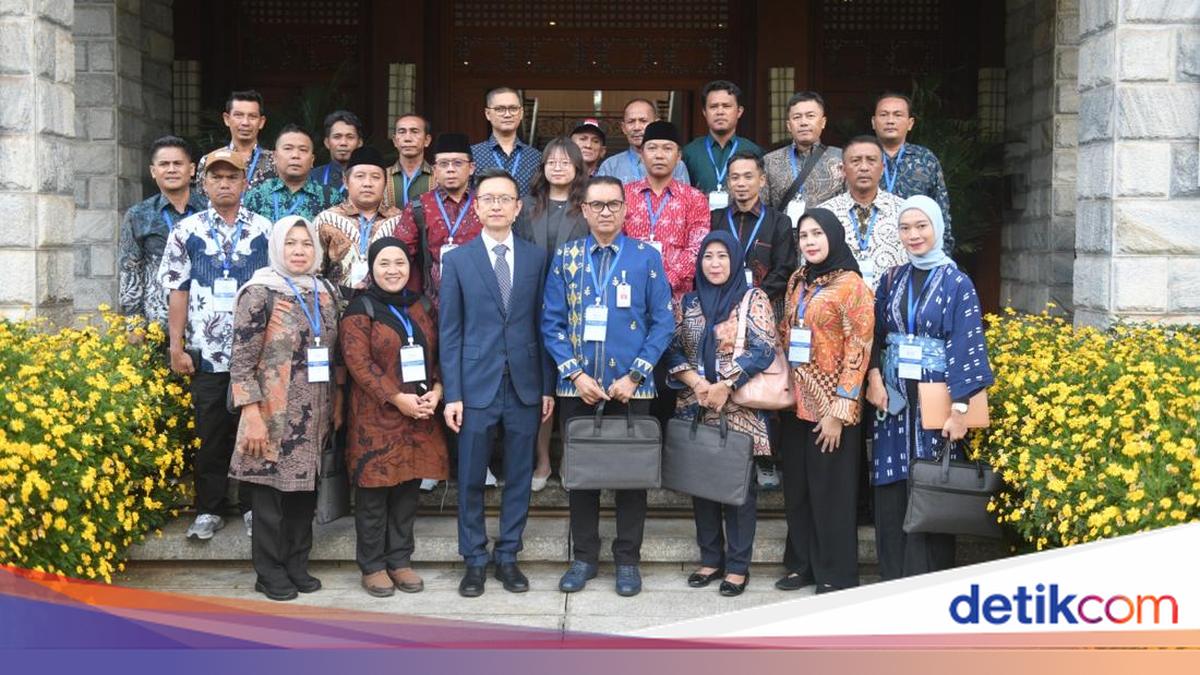
The Ministry of Villages and Disadvantaged Regions (Kemendes PDT) has completed a series of benchmarking activities in Yunnan Province, China. Taking place from 9–15 September 2026, the programme was attended by 20 village heads from various regions across Indonesia.
This series of activities was organised as a platform for learning about best practices in rural revitalisation, local economic development, agricultural innovation, and the downstreaming of village potential.
The benchmarking programme was organised by the Embassy of the People’s Republic of China in Indonesia. The delegation was led by the Head of the Agency for Development and Strengthening of Innovation (BPI) of Kemendes PDT, Mulyadin Malik, accompanied by the Head of the Public Relations Bureau, Andi Nita Arie, and a supporting team.
Head of BPI Kemendes PDT, Mulyadin Malik, stated that the lessons learned from Yunnan provide much inspiration that can be adapted to the characteristics of villages in Indonesia. He noted that village development should not rely solely on physical infrastructure, but also on the ability of villages to manage local potential into sustainable sources of economic growth.
“Villages must be the main actors in development. The experience in Yunnan shows that local potential can generate added value when supported by innovation, strong institutions, and collaboration between various parties,” Mulyadin said in a written statement on Thursday (17/9/2026).
The activities began with an official welcome by the Yunnan Provincial Government, represented by an official responsible for provincial administration. This reception was part of an effort to strengthen relations and the exchange of experience regarding rural development between Indonesia and Yunnan.
While in Yunnan, the delegation visited Haiyan Village, a pilot village for rural revitalisation that has successfully integrated cultural preservation, environmental management, and community-based economic development. The village heads studied how integrated village planning can improve the quality of life for residents without erasing local identity.
The delegation also participated in discussions with various institutions in Yunnan regarding rural development strategies, innovation, and community empowerment as the primary drivers of village development.
In Xishuangbanna, participants studied various models of rural economic development based on local potential. The delegation visited the coffee industrial area in Pubwen to learn about coffee industry developments, innovations that integrate the coffee sector with tourism, and efforts to encourage rural revitalisation through the development of the creative economy.
The delegation also visited Menghan District to study a model of inter-village development known as the ‘Three Man’ concept. This approach develops collaboration between three villages through a new industrial model that strengthens the ‘industrial development circle’ and the ‘happy life circle,’ aiming to increase community welfare through inter-village synergy.
In Menghai Regency, participants visited the Hekai Ancient Tea Plantation to observe tea plantation management that combines the preservation of cultural heritage, sustainable natural resource management, and the enhancement of value-added for flagship village commodities.
Learning in Xishuangbanna was further supplemented by visits to a wild mushroom processing centre, one of the region’s flagship commodities. The delegation studied the product value chain, ranging from sustainable harvesting by the community and the sorting and processing stages to the marketing of value-added products to international markets. This model demonstrates the importance of downstreaming local commodities to increase village incomes.
Furthermore, the delegation observed the development of modern trading centres and the largest flower market in Yunnan as examples of strengthening the marketing ecosystem for agricultural products and community enterprises.
This benchmarking programme is expected to equip the 20 participating village heads with the knowledge to adapt relevant best practices to their respective regions, ranging from strengthening village governance and developing flagship commodities to community empowerment and local-potential-based tourism.
Through this exchange of experience, Kemendes PDT continues to encourage the emergence of village development innovations oriented towards improving community welfare, environmental preservation, and the sustainable strengthening of the village economy.