
Ministry of Transportation: SMK PAU is a Vital Instrument for Road Transport Safety
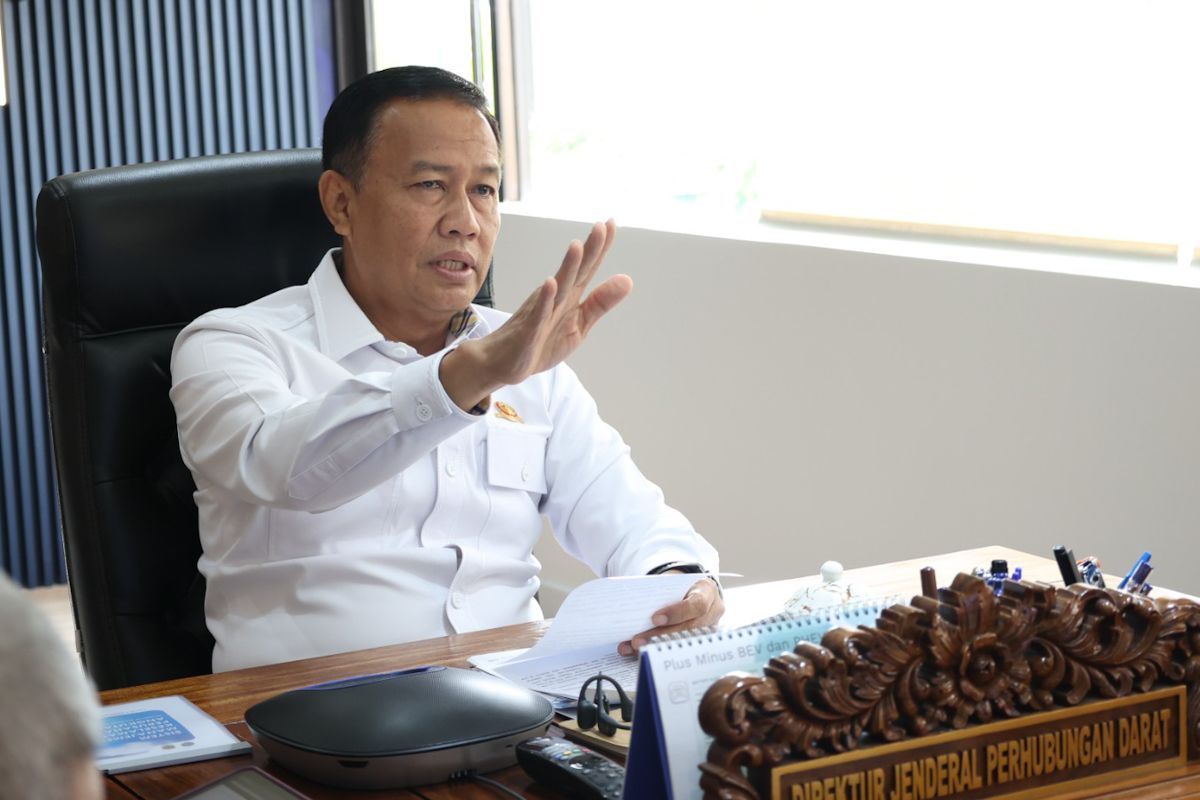
The Directorate General of Land Transportation under the Ministry of Transportation has asserted that the Safety Management System for Public Transport Companies (SMK PAU) is a vital instrument in achieving sustainable road transport safety oriented towards public protection.
“Road safety is a serious issue that has become a national and even global concern because it directly impacts the safety of the wider community,” stated the Director General of Land Transportation, Aan Suhanable, in a statement in Jakarta on Sunday.
According to Aan, strengthening the implementation of SMK PAU is a strategic step to enhance the safety culture within public transport companies, while simultaneously encouraging the creation of a more orderly and safe road transport system. He explained that the commitment to improving road safety is in line with the World Health Organization (WHO) programme through the Decade of Action for Road Safety 2021-2030, which targets a minimum 50 per cent reduction in deaths and injuries caused by accidents. This follows the previous decade (2011-2020).
Aan noted that this global target is also aligned with Target 3.6 of the United Nations Sustainable Development Goals, which encourages all nations to reduce the number of deaths and injuries resulting from traffic accidents. Consequently, the Ministry of Transportation continues to strengthen the socialisation and implementation of SMK PAU so that all road transport stakeholders can contribute to creating a sustainable, high-standard safety ecosystem.
Road transport safety, Aan said, is a shared concern, and safety is the expectation of the public and all parties. “The WHO has made a declaration regarding road safety, categorising traffic accidents as a serious threat to human life and safety,” Aan explained.
He stated that Indonesia has established the National General Plan for Road Traffic and Transport Safety (RUNK LLAJ) as a national policy framework for cross-sectoral road safety management. RUNK is implemented by various ministries and agencies through five main pillars: road safety management coordinated by Bappenas; safe roads coordinated by the Ministry of Public Works; safe vehicles coordinated by the Ministry of Transportation; safe road users coordinated by the National Police; and post-crash response to reduce fatality rates coordinated by the Ministry of Health.
Nevertheless, Aan noted that road safety remains a serious challenge requiring systemic and sustainable handling. According to National Police data for 2025, there were 158,508 recorded traffic accidents across Indonesia, resulting in 24,296 fatalities.
Therefore, he emphasised that SMK PAU is not merely an administrative obligation but a critical instrument in safety management that directly impacts vehicle operations and drivers. “The implementation of SMK PAU should not be viewed solely as an administrative requirement but also as an operational necessity. Through SMK PAU compliance, all operators can ensure their fleets are roadworthy and their drivers are qualified to operate vehicles,” he elaborated.
He further noted that efforts to improve road safety have a clear policy direction, with a national target to reduce accident fatality rates. In accordance with the WHO Decade of Action for Road Safety, the Indonesian government aims to reduce accident fatalities by 50 per cent by 2030.
However, he continued, achieving this target cannot be done sectorally, as it requires the support and collaboration of all stakeholders, including central and regional governments, operators, and the public. He believes transport operators play a vital role in ensuring operational safety on the ground, from vehicle roadworthiness inspections to monitoring driver competence before operations begin.
“It is our shared challenge to realise the established safety targets. We cannot work alone, as the state and the government have limitations in supervision. Therefore, the role and contribution of the community, including operators who are in the field every day, are highly expected—especially to ensure that operated vehicles are truly roadworthy and drivers meet safety standards,” concluded Aan.
Source: jawawa.id (https://jawawa.id/newsitem/ministry-of-transportation-smk-pau-is-a-vital-instrument-for-road-transport-safety-1780830300)
Originally published by Antara (Indonesian) (https://www.antaranews.com/berita/5597928/kemenhub-smk-pau-instrumen-penting-keselamatan-transportasi-jalan), translated from Indonesian